



Hair treatment has become one of the more complicated purchasing decisions American consumers face, not because options are scarce, but because the range of what qualifies as “treatment” has expanded dramatically. What once meant a deep conditioner at a local salon now encompasses prescription-grade therapies at dermatology offices, clinical-grade at-home devices, and everything in between. For most people trying to manage thinning, damage, or scalp conditions, the real challenge is not finding a solution — it is understanding what different price points actually reflect and whether the cost aligns with the intended outcome.
This is especially relevant now, as the US hair care and hair restoration market has matured enough that consumers are no longer comparing apples to apples. A $40 salon gloss treatment and a $400 low-level laser therapy session are both marketed as hair treatments, but they address entirely different problems at entirely different levels of clinical involvement. Without a clear framework for comparing these options, it is easy to overspend on the wrong category or underspend on a situation that actually requires professional medical intervention.
This breakdown is intended for consumers who are making a deliberate, informed decision — not for those browsing casually. The goal is to provide a structured comparison of what each setting offers, what drives costs in each environment, and where the value proposition is strongest depending on the nature of the hair concern.
Understanding What Drives Hair Treatment Price Across Different Settings
Before comparing specific numbers or service categories, it helps to understand the cost-driving factors that are unique to each type of provider. The hair treatment price you encounter is not simply a reflection of the product being applied — it reflects the training level of the professional involved, the overhead of the facility, the regulatory environment the provider operates within, and the expected clinical or cosmetic outcome. These are structurally different across salons, at-home products, and medical clinics, which is why pricing varies as widely as it does.
For those researching this in detail, a structured breakdown by service type is available at hair treatment price, which categorizes options across different provider settings and helps clarify what is typically included in each tier of service.
The Role of Overhead and Regulation in Pricing
Salons operate under state cosmetology licensing, which sets baseline requirements for training and sanitation but does not require medical credentials. Their overhead includes rent in commercial spaces, stylist wages, and product inventory — all of which are passed along to the client. Medical clinics, including dermatology practices and trichology centers, operate under entirely different compliance requirements. They carry malpractice liability, employ licensed medical professionals, use FDA-cleared or prescription-only treatments, and maintain clinical documentation. This is why a clinical hair treatment can cost five to ten times more than a comparable salon service, even if both sessions last the same amount of time.
At-home treatments sit outside both regulatory structures. A consumer purchasing a keratin treatment kit or a hair growth supplement is paying primarily for the formulation and packaging. There is no professional labor cost built in, but there is also no guaranteed outcome, no professional assessment of suitability, and no liability mechanism if the product causes an adverse reaction.
Salon Treatments: What the Pricing Reflects
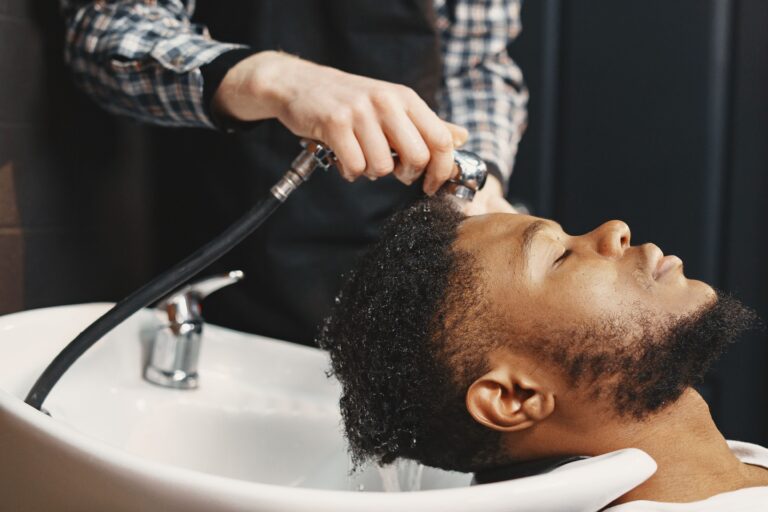
Salon-based hair treatments cover a broad spectrum, from basic conditioning masks and scalp scrubs to chemical smoothing treatments and color correction services. Pricing in this category is most directly tied to the time required for the service, the cost of the products used, and the experience level of the stylist. In most US metro areas, a standard deep conditioning treatment runs between $30 and $80, while more complex chemical services such as keratin smoothing or bond repair treatments can range from $150 to $400 or more depending on hair length and product line.
Specialty Services and Product-Based Pricing
Several high-end salon treatments are priced based largely on the product brand rather than the service itself. Treatments using brands with proprietary ingredient patents — bond builders, protein reconstruction systems, or premium scalp serums — carry higher price points because the salon has paid a premium for the product and access to the brand’s application protocol. In these cases, the consumer is paying for the formulation as much as the application. This is worth understanding because a generic deep conditioner applied by the same stylist would cost considerably less and may produce similar cosmetic results for hair that doesn’t have significant structural damage.
Geographic Variation Within the Salon Category
Salon pricing is more geographically variable than either at-home or clinical pricing. A blowout and conditioning treatment at a salon in midtown Manhattan may cost three times more than the identical service at a comparable salon in a mid-sized Midwestern city. This is not a reflection of product or skill differences — it is a direct function of commercial rent, local labor costs, and market-rate expectations. Consumers in high-cost cities should factor this in when comparing their local pricing to national averages published online, as those figures often underrepresent urban costs significantly.
At-Home Hair Treatments: Cost Structure and Realistic Outcomes
The at-home treatment category has expanded significantly over the past decade. What was once limited to drugstore conditioning masks and hot oil treatments now includes clinical-adjacent devices like laser caps, FDA-cleared topical minoxidil formulations, microneedling rollers, and professional-grade heat tools. The price range is correspondingly wide — a basic protein treatment mask might cost $8, while a laser hair growth cap can cost $600 to $900.
One-Time Cost vs. Ongoing Commitment
A key consideration in the at-home category is the difference between single-use products and device-based solutions. Single-use or routine-use products like masks, serums, and supplements require ongoing purchase, and the true annual cost of a daily or weekly product can exceed what a salon treatment would cost over the same period. Device-based solutions carry a high upfront cost but spread that cost over months or years of use. According to information published by the U.S. Food and Drug Administration, home-use medical devices intended for hair and scalp treatment must meet specific safety clearance requirements before being marketed to consumers — a distinction that separates regulated devices from cosmetic accessories, even if both are sold in similar retail channels.
The Limitation of Self-Diagnosis
The fundamental structural weakness of at-home treatment is that it operates without professional assessment. A consumer purchasing a hair thickening serum may not know whether their hair loss is androgenetic, stress-related, nutritional, or the result of an underlying thyroid condition. Applying the wrong type of treatment — even a safe one — can delay appropriate care. This is not a reason to avoid at-home treatment entirely, but it is a reason to treat at-home solutions as a first step for mild, cosmetic concerns and to seek professional evaluation when the concern persists or worsens.
Medical Clinics and Clinical Hair Treatments: Where the Price Increases Are Justified
Clinical hair treatment settings — which include dermatology practices, trichology clinics, and specialized hair restoration centers — offer a fundamentally different product than salons or retail. The core difference is diagnostic. A licensed dermatologist or trichologist can assess the cause of hair loss or scalp dysfunction, not just the symptom. This changes the nature of the treatment and typically produces more targeted, durable outcomes for conditions that have a clinical root cause.
What Clinical Pricing Typically Includes
Clinical hair treatments are priced to include consultation, diagnostic assessment, and the treatment itself. A platelet-rich plasma (PRP) session for hair restoration, for example, involves a blood draw, centrifugation, and scalp injection — all performed by or under the supervision of a licensed medical professional. A single session can cost between $700 and $1,500 in most US markets, and most treatment protocols require three to six sessions. Prescription compounded topicals, when included in a treatment plan, add further cost but are formulated specifically for the patient’s condition rather than sold as generic products.
Insurance, HSA, and Out-of-Pocket Considerations
Most clinical hair treatments are classified as elective or cosmetic and are not covered by standard health insurance plans. However, treatments prescribed for medically documented hair loss conditions — such as alopecia areata — may be partially covered depending on the insurer and the specific intervention. Health savings accounts (HSAs) can often be used for prescription treatments and clinical consultations, which reduces the effective out-of-pocket cost for consumers who have access to those accounts. This is a meaningful financial consideration that is frequently overlooked when comparing the surface-level hair treatment price between clinical and non-clinical settings.
Comparing the Three Settings: A Practical Framework
The clearest way to compare these three settings is by matching the type of concern to the appropriate level of intervention. Not every hair concern requires clinical involvement, and not every cosmetic goal requires a salon visit. The cost differences between settings exist for structural reasons — they are not arbitrary.
- For cosmetic concerns such as dryness, dullness, or routine maintenance, salon treatments or well-formulated at-home products are appropriate and cost-effective. Clinical intervention at this level would be an unnecessary expense.
- For progressive or noticeable hair thinning that has developed over months rather than days, a clinical consultation is a more reliable starting point than an at-home product, even if the eventual treatment is topical rather than procedural.
- For structural hair damage caused by chemical processing, heat, or mechanical stress, professional salon repair treatments using protein or bond-building formulations typically produce faster visible results than comparable at-home options, because the application technique and product concentration matter significantly.
- For consumers managing ongoing scalp conditions — such as chronic seborrheic dermatitis, psoriasis, or folliculitis — medical treatment is the appropriate category, and the higher cost reflects the involvement of qualified diagnosis and monitored treatment, not simply premium positioning.
Conclusion
Making a sound decision about hair treatment spending requires separating three distinct variables: the nature of the concern, the setting best equipped to address it, and the realistic cost structure of that setting. Salons are appropriate and cost-effective for cosmetic and maintenance goals. At-home treatments offer accessibility and lower per-session costs but require honest self-assessment about the severity of the concern. Medical clinics carry higher costs that reflect legitimate clinical infrastructure and are most justified when the underlying cause of a hair or scalp issue is unknown or ongoing.
The disparity in pricing across these three settings is not evidence that one is overpriced or another is a bargain. It reflects differences in credentials, overhead, liability, and what is actually being delivered in each session. Consumers who approach hair treatment costs with that understanding are far less likely to spend money in the wrong category — and more likely to see consistent, lasting results from wherever they choose to invest.
