



The way a mattress feels depends partly on how a person sleeps. Someone who spends most of the night on their side may want cushioning around the shoulders and hips, while a back sleeper may pay closer attention to lower-back support. Stomach sleepers often have different needs, particularly when it comes to preventing the middle of the body from sinking too deeply.
Memory foam responds to body heat, weight, and pressure, allowing the surface to contour around the sleeper. This can create a close, cushioned sensation that differs from the more buoyant feel of some spring mattresses. However, not every memory foam design feels the same. Foam density, firmness, layer construction, and mattress thickness all influence how the bed responds. Exploring different foam mattress options can help shoppers understand these differences before choosing a mattress for their sleeping habits.
How Memory Foam Responds to Body Weight
Memory foam gradually adapts to the shape of the body under pressure. Rather than immediately pushing back in the way some spring systems do, it can form a shallow impression around areas that carry more weight. This contouring may help spread pressure across a broader surface, especially around the shoulders, hips, and other prominent areas.
The sensation is often described as a gentle hug. Some people enjoy the feeling of being cradled by the mattress, while others prefer a surface that feels easier to move across. Neither preference is unusual; the important question is whether the mattress allows the body to rest comfortably in a supported position.
The amount of contouring varies between models. A softer comfort layer may allow deeper sinking, whereas a firmer construction may create a more level surface with less pronounced body impressions. The mattress also needs a supportive base layer so that the cushioning does not become excessive.
Temperature can affect the experience as well. Traditional memory foam may feel more enveloping than materials with a quicker response, and some sleepers notice that a closely conforming surface retains more warmth. Designs using breathable fabrics or cooling-focused foam aim to address this concern, although individual comfort can still vary.
Side Sleeping: Cushioning Around the Shoulders and Hips
Side sleeping places much of the body’s weight on a relatively narrow area, particularly the shoulder and hip. On a mattress that feels too firm, these areas may experience uncomfortable pressure because they cannot settle naturally into the surface. A suitable memory foam mattress can cushion these points while supporting the rest of the body.
The right balance matters. If the mattress is too soft, the hips may sink much farther than the shoulders, making it harder to maintain a comfortable line through the torso. If it is too firm, the surface may not provide enough give around the body’s wider points. A middle-ground feel often deserves consideration, but body weight and personal preference can change what feels appropriate.
Pillow height is another part of the arrangement. Side sleepers usually need enough space between the head and mattress to keep the neck comfortable. A mattress that allows the shoulder to sink farther into the surface may change the pillow height that feels suitable, so the entire sleeping setup should be considered together.
Back Sleeping: Balancing Contouring and Support
Back sleepers distribute their weight across the shoulders, upper back, pelvis, and legs. A memory foam surface may contour around these areas and create an even, cushioned feeling. For many people, the goal is to have enough give for comfort without allowing the hips to sink disproportionately.
A mattress that is too soft for a particular sleeper may allow the pelvis to settle too deeply, creating an uncomfortable curve through the lower back. An overly firm surface may feel rigid and fail to provide enough cushioning. The ideal balance depends on body shape, weight, and the mattress’s internal construction.
Pay attention to how the mattress feels after several minutes of lying in a normal sleeping position. Immediate softness can be appealing, but the more useful test is whether the body continues to feel supported once the foam responds to pressure. Notice whether there is an urge to shift repeatedly to get comfortable or whether the surface allows a relaxed position.
Some back sleepers also place a pillow beneath their knees to reduce tension around the lower back. This is a personal comfort choice rather than a requirement, but it illustrates why mattress feel should be considered alongside other elements of the sleep setup.
Stomach Sleeping: Avoiding Excessive Sinkage
Stomach sleeping can create different support demands because the abdomen and pelvis may carry a substantial share of body weight. If these areas sink too far into a soft mattress, the lower back may arch in a way that feels uncomfortable. For this reason, stomach sleepers often prefer a firmer, more level surface.
Firmness alone does not tell the whole story. A mattress can feel firm at first contact but still allow significant sinkage under heavier areas of the body. The underlying support layers and the sleeper’s weight affect how the mattress behaves over the course of the night.
Stomach sleepers should also consider pillow thickness. A tall pillow can tilt the head upward while lying face down, potentially adding strain to the neck. Some people find a thinner pillow more comfortable in this position, though personal needs vary.
Anyone who changes positions throughout the night should avoid judging a mattress exclusively by how it feels while lying on the stomach. A surface that feels stable in one position may feel too firm at the shoulder when turning onto the side. The best option should accommodate the sleeper’s actual habits, not just a single posture.
A Quick Guide to Comparing Mattress Feel
When testing or comparing memory foam options, focus on the way the body settles into the surface rather than relying only on the firmness label.
- Side sleepers: Check whether the shoulders and hips receive enough cushioning without allowing the waist or pelvis to sink excessively.
- Back sleepers: Notice whether the lower back feels supported and whether the hips remain comfortably aligned with the upper body.
- Stomach sleepers: Look for a more level feel that limits excessive sinking around the abdomen and pelvis.
- Combination sleepers: Pay attention to how easily you can change positions and whether the mattress remains comfortable across different postures.
- People who sleep warm: Compare breathable covers and cooling-focused materials, while remembering that room temperature, bedding, and personal preferences also affect warmth.
These observations are useful starting points, not strict rules. Two people who sleep in the same position may prefer different firmness levels because their body shapes, weights, and comfort preferences are different.
Why Memory Foam Mattresses Can Feel Different
The label “memory foam” describes a broad category rather than one uniform sleeping experience. Some mattresses use a soft upper layer that produces a more pronounced cradle, while others combine comfort foam with firmer transition and support layers. The resulting feel depends on how these materials work together.
Thickness also influences the experience, although a thicker mattress is not automatically softer or more supportive. Additional layers can change the distance between the sleeper and the support core, but their material and design matter more than the overall measurement alone. A thinner model may feel stable, while a thicker one can still be firm if its construction is designed that way.
When comparing a Novilla mattress, look beyond the product name and check the stated firmness, layer details, mattress height, and intended comfort features. These specifications help explain why two models made from memory foam can respond differently when someone lies down, turns over, or gets out of bed.
It is also useful to consider the foundation. The mattress should rest on a base that meets the manufacturer’s requirements. An unsuitable or uneven support surface can affect how the mattress feels and may interfere with its intended performance.
Exploring Novilla’s ErgoChill Memory Foam Mattress
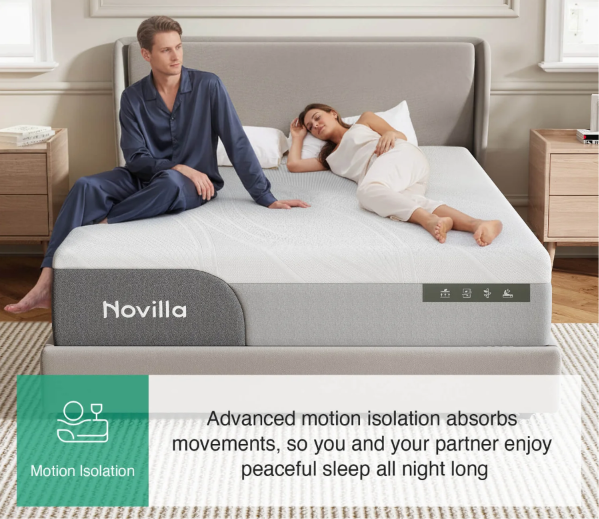
For shoppers interested in a memory foam design with a focus on pressure relief and temperature management, the Novilla ErgoChill Memory Foam Mattress is one model to examine. Its product information describes NanoGEL foam, breathable fabrics, ergonomic comfort layers, and motion isolation. These features are intended to provide cushioning while helping limit the transfer of movement between sleeping partners.
The mattress is offered in 10-, 12-, and 14-inch thickness options, along with several standard sizes. Those choices allow shoppers to consider the bed’s overall height and available room dimensions as well as their preferred sleeping feel. However, greater thickness should not automatically be treated as a guarantee of greater softness; the construction and firmness of the selected version remain important.
Side sleepers may want to pay particular attention to how the comfort layers cushion the shoulders and hips. Back sleepers can focus on whether the mattress supports their preferred position without excessive sinking, while stomach sleepers should assess whether the surface feels sufficiently stable. Product descriptions can help narrow the options, but personal comfort and the mattress’s stated specifications should guide the final decision.
Movement, Temperature, and Sharing the Bed
Sleeping position is not the only factor that affects mattress satisfaction. Some people turn frequently during the night, while others stay in a similar position for long periods. Memory foam’s close contouring may reduce the feeling of movement across the surface, but the same quality can make changing positions feel slower for people who prefer a responsive bed.
Couples may value motion isolation because one person’s movement is less likely to disturb the other. Even so, the experience depends on the mattress construction, the amount of movement, and how sensitive each sleeper is. A mattress should be evaluated for individual comfort as well as how it performs when shared.
Temperature is another consideration. Breathable covers and cooling-focused materials may help manage heat, but bedding, room ventilation, humidity, and personal temperature preferences remain part of the picture. Someone who sleeps warm may benefit from lighter bedding and a well-ventilated room in addition to choosing a mattress designed with airflow in mind.
These details can help explain why a mattress receives different reactions from different people. Comfort is the result of several interacting factors, not just the material used in the top layer.
Give Your Sleeping Position the Final Say
A memory foam mattress can feel cushioning, supportive, or deeply contouring depending on its construction and the person using it. Side sleepers often pay close attention to pressure around the shoulders and hips, back sleepers look for a balance between cushioning and stability, and stomach sleepers may need a surface that limits excessive sinkage.
There is no single firmness level that works for everyone in a particular position. Body weight, shape, temperature preferences, movement during sleep, and personal comfort all influence the decision. Comparing these factors with the mattress’s specifications provides a more useful starting point than choosing by material name alone.
The right mattress is the one that feels comfortable in the positions you actually use and provides suitable support throughout the night. Taking time to assess that relationship can make the difference between a bed that feels appealing for a few minutes and one that remains comfortable during everyday use.
