



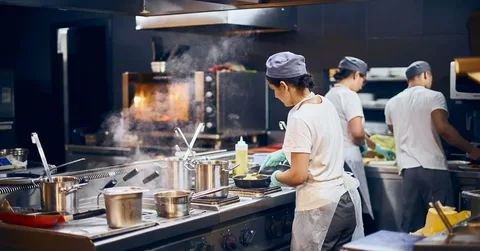
Opening a traditional restaurant is still the dream for a lot of chefs, but the cost can be hard to justify. Between rent, buildout, furniture, staffing, equipment, permits, and marketing, a new restaurant can burn through a huge amount of money before the first customer ever walks in.
That is why more food entrepreneurs are looking at leaner models.
Food trucks, ghost kitchens, and delivery-only brands give chefs a way to test a concept, build a following, and start selling without taking on the full cost of a brick-and-mortar restaurant. The model can work well, but only if the operation is built carefully from the start.
Here is how smart food startups are keeping costs low without cutting corners where it matters.
Build a Tight Menu First
A common mistake new food businesses make is trying to offer too much too soon. A large menu may look impressive, but it usually creates more problems than it solves.
More ingredients means more storage, more prep, more waste, more equipment, and more room for mistakes. In a food truck or shared kitchen, space is limited. Every item needs to earn its place.
A better approach is to build a smaller menu around ingredient overlap. For example, one protein, sauce, or base should be useful in multiple dishes. That lets you buy smarter, prep faster, and move inventory before it goes bad.
A tight menu also helps customers understand what you do best. Instead of trying to be everything to everyone, you become known for a few strong items that are easy to repeat and easy to market.
Know Where to Save and Where to Spend
One of the biggest advantages of a lean food business is that you are not spending money on a dining room, furniture, host stands, or expensive decor. Most of your startup money can go directly into the kitchen, the truck, and the tools that help you sell.
That does not mean everything needs to be brand new.
Many operators save money by buying secondary equipment and business tools where condition matters more than having the newest model. POS tablets, menu screens, lighting, speakers, backup generators, and power tools for truck buildouts can often be found for far less than retail. Trusted local pawn shops can be a useful place to source items like tablets, tools, and electronics without draining your early cash flow.
The key is knowing what is safe to buy used and what should be treated as a serious investment.
| Where to Save | Where to Invest |
| POS tablets and basic tech | Commercial fryers |
| Menu screens and display tech | Combi ovens |
| Exterior lighting and sound systems | Food-safe prep tables |
| Mounting tools and buildout tools | Health-code compliant refrigeration |
| Backup generators and accessories | Reliable cooling and temperature control |
You can often save on tech, tools, and non-food-contact items. But the equipment that cooks, holds, chills, or protects your food needs to be dependable.
Refrigeration is one of the biggest areas where cutting corners can backfire. Food trucks and ghost kitchens deal with tight spaces, hot environments, fast prep cycles, and constant opening and closing of cooler doors. If your cooling system cannot keep up, you risk spoiled inventory, failed inspections, and lost sales.
That is why it makes sense to put saved startup money into high-quality commercial refrigeration. Reliable walk-ins, under-counter coolers, and prep tables help keep ingredients at safe temperatures, even during a busy lunch rush or hot summer event.
3. Treat Your Website and Ordering System Like Your Front Door
A traditional restaurant can rely on street traffic, signage, and a visible dining room. Ghost kitchens and food trucks do not have that same advantage.
For lean food brands, the digital side of the business is often the first impression.
Customers need to find you, understand what you sell, see where you are located, and place an order without confusion. That means your website, ordering system, Google Business Profile, social media, and payment setup all need to work together.
For food trucks, daily location updates are especially important. Customers should be able to see where you are parked, what hours you are serving, and whether the menu has changed. For ghost kitchens, clear delivery zones, strong photos, and simple online ordering can make a huge difference.
A good digital setup does not have to be complicated. It just needs to be clear, fast, and easy to use.
4. Keep the Operation Simple Enough to Repeat
Lean food businesses succeed when they are easy to run over and over again.
That means your menu, prep system, ordering process, storage, cleaning routine, and customer flow should all be simple enough to repeat on your busiest days. If the business only works when everything goes perfectly, it is probably too fragile.
Before scaling, test the basics:
Can the team prep the menu quickly?
Can the equipment handle peak demand?
Can orders move out without confusion?
Can ingredients be stored safely?
Can customers find you and order easily?
A lean model is not just about spending less money. It is about building a business that can operate smoothly without wasting time, space, or inventory.
Final Thoughts
Ghost kitchens and food trucks give food entrepreneurs a practical way to launch without the heavy cost of a full restaurant. But staying lean does not mean buying the cheapest version of everything.
The smartest operators save money on secondary tools, keep their menus focused, invest in reliable kitchen systems, and make ordering as easy as possible. When those pieces work together, a food business can start smaller, move faster, and grow with less risk.
