



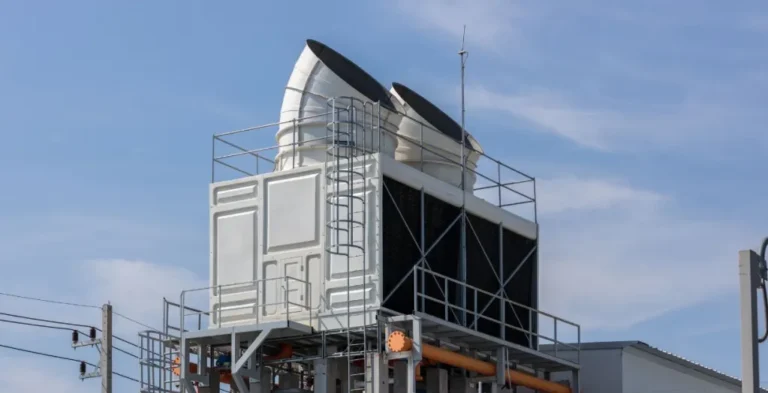
Cooling tower parts lifespan depends on material quality, operating conditions, and maintenance practices. Most critical components, such as fill media, drift eliminators, and mechanical parts, require replacement within 5 to 10 years under industrial conditions.
However, the real challenge is not lifespan. It is knowing when performance loss, structural damage, or repeated repairs justify full replacement instead of temporary fixes. Understanding the cooling tower parts durability ensures your facility maintains a proactive component replacement schedule.
Table of Contents
- Introduction
- Cooling Tower Parts Lifespan Breakdown by Component
-
-
- Fill Media (Heat Transfer Core)
- Drift Eliminators
- Spray Nozzles
- Fan Assembly (Blades + Hub)
- Gearbox & Drive System
-
- The 4 Failure Stages of Cooling Tower Components
- Repair vs Replace Decision Framework
-
-
- When Repair Is the Right Choice
- When Replacement Is the Better Decision
- When Immediate Replacement Is Critical
-
- Hidden Factors That Shorten Cooling Tower Parts Lifespan
- Performance Indicators That Signal Replacement Timing
- Cooling Tower Parts Replacement Decision Matrix
- Preventive Replacement Strategy vs Reactive Repairs
-
-
- Preventive Strategy
- Reactive Strategy
-
- Final Insight
- Frequently Asked Questions
Cooling Tower Parts Lifespan Breakdown by Component
Not all cooling tower components age equally. Each part has a different failure cycle, and operating environments dictate how long a component survives before requiring maintenance.
Fill Media (Heat Transfer Core)
The fill media acts as the heart of the heat transfer process. It maximizes the contact area between air and water. Monitor these variables closely to prevent early failure.
- Typical lifespan lasts 5 to 10 years for PVC materials, while polypropylene (PP) options survive much longer.
- Scaling, biofouling, and extreme temperature variations heavily affect the core structure.
- Efficiency drops significantly before visible physical damage occurs on the surface.
Drift Eliminators
Drift eliminators capture water droplets from the exhaust air. They prevent chemical and water loss into the surrounding environment. Watch for these common degradation patterns.
- The expected lifespan ranges from 3 to 7 years, depending on ultraviolet exposure and constant airflow stress.
- Degradation directly leads to excessive water loss and hazardous chemical carryover.
Spray Nozzles
Spray nozzles distribute water evenly across the fill media. A uniform spray pattern is critical for optimal heat transfer. Notice these operational realities.
- Clogging frequently occurs within 1 to 3 years in facilities with poor water conditions.
- Uneven water distribution drastically reduces thermal performance across the system.
Fan Assembly (Blades + Hub)
The fan assembly, which pulls or pushes air through the tower, endures constant rotational stress. Understanding the cooling tower parts lifespan for this assembly is key, so keep an eye on these mechanical limits.
- The standard lifespan extends from 8 to 15 years under normal operating loads.
- Imbalance, chemical corrosion, and metal fatigue severely impact overall reliability.
Gearbox & Drive System
The gearbox reduces motor speed while increasing torque to the fan. It operates in an extremely harsh, humid environment. Consider these longevity factors.
- Lifespan reaches 10 to 20 years with strict adherence to proper lubrication schedules.
- Failure risk increases sharply with unchecked vibration and excessive load stress.
The 4 Failure Stages of Cooling Tower Components
Cooling tower parts do not fail suddenly. Their degradation follows predictable stages, which directly impact the Cooling Tower Parts Lifespan. Recognizing these stages allows operators to plan interventions early and extend the life of the components.
- Stage 1: Efficiency Loss introduces higher outlet temperatures and reduced heat transfer capacity.
- Stage 2: Mechanical Degradation presents as physical warping, severe clogging, and audible vibration.
- Stage 3: System Stress forces higher energy consumption and critical load imbalance across the drivetrain.
- Stage 4: Critical Failure results in structural collapse, component breakage, and forced emergency shutdown.
Repair vs Replace Decision Framework
Making the correct choice between repairing and replacing is crucial for managing maintenance budgets and maximizing the cooling tower parts lifespan.
This framework is designed to guide your actions based on the specific condition of the components, ensuring you get the most value out of your equipment.
When Repair Is the Right Choice
Sometimes a simple fix extends the component’s life safely. Premature replacement wastes valuable capital. Look for these specific conditions.
- Minor scaling or fouling exists, where aggressive chemical cleaning fully restores original efficiency.
- Isolated component damage occurs without affecting the surrounding structural integrity.
- Early-stage wear presents itself without any sign of impending structural failure.
When Replacement Is the Better Decision
Repairs eventually become a financial drain. Pushing parts past their useful limit risks the entire process. Choose a replacement under these circumstances.
- The efficiency drop exceeds 3 degrees Celsius above original design values.
- Operators experience repeated failures of the exact same component within a short timeframe.
- Structural deformation or severe brittleness compromises the physical stability of the unit.
- Parts remain in service for more than 8 to 10 years under continuous heavy load conditions.
When Immediate Replacement Is Critical
Certain conditions demand immediate action to prevent catastrophic system loss. Ignoring these warnings results in expensive factory downtime. Act immediately if you observe these issues.
- Fill collapse or total blockage completely chokes the airflow.
- Excessive vibration in the fan or gearbox threatens to tear the mechanical assembly apart.
- Major water carryover signals a complete drift eliminator failure.
- The risk of an unplanned plant shutdown becomes imminent.
Hidden Factors That Shorten Cooling Tower Parts Lifespan
Most failures are caused by operational conditions, not time. The environment inside the tower accelerates material decay. Pay attention to these destructive forces.
- Poor water quality accelerates both mineral scaling and aggressive chemical corrosion.
- High temperature stress pushes plastic materials past their thermal limits.
- Biological growth and microbiological fouling restrict water flow.
- Air pollution and airborne debris clog internal water distribution channels.
Performance Indicators That Signal Replacement Timing
Smart operators track performance, not just age. A machine tells you when it struggles to perform. Monitor these technical indicators closely.
- A rising approach temperature indicates failing heat exchange capabilities.
- Increased energy consumption shows the mechanical systems working harder than designed.
- Uneven water distribution points directly to failing spray nozzles or collapsed fill.
- Visible deformation or severe clogging acts as an undeniable visual warning.
- Abnormal vibration levels reveal a mechanical imbalance in the fan or gearbox.
Efficiency decline is often the first warning sign.
Cooling Tower Parts Replacement Decision Matrix
Use this to make fast, data-driven decisions. It provides a clear roadmap for maintenance teams.
| Component | Typical Lifespan | Repair Condition | Replace Condition |
| Fill media | 5–10 years | Light scaling | Collapse, clogging, efficiency loss |
| Drift eliminator | 3–7 years | Minor cracks | High water carryover |
| Spray nozzles | 1–3 years | Partial clogging | Uneven distribution |
| Fan system | 8–15 years | Balance correction | Blade damage, vibration |
| Gearbox | 10–20 years | Lubrication issues | Repeated failure, overheating |
Preventive Replacement Strategy vs Reactive Repairs
This is where cost savings are made. Planning ahead always beats reacting to a crisis. Compare these two fundamental maintenance approaches.
Preventive Strategy
A proactive approach eliminates surprise failures. It keeps the production line moving without interruption. Implement this strategy for the best results.
- Scheduled replacement occurs well before catastrophic failure.
- Consistent performance keeps energy costs strictly managed.
- Minimal downtime maximizes factory output.
Reactive Strategy
Waiting for parts to break is a dangerous game. It often results in secondary damage to healthy components. Avoid this approach to protect your budget.
- Repair happens only after a critical component failure.
- Higher downtime costs destroy quarterly production targets.
- High risk of a total system shutdown threatens the entire facility.
Insight: Preventive replacement reduces long-term cost.
Final Insight
The true measure of a cooling tower’s lifespan isn’t just about how long they’ve been in service, but how well they perform under daily operational stress. Proactive maintenance and strategic part replacement are key. Rather than waiting for a failure, smart operators frequently evaluate their tower part service intervals.
This approach ensures optimal efficiency and minimizes downtime. The decision to replace cooling tower fill, drift eliminators, or nozzles should be based on performance data like efficiency drops, reliability issues, and potential risks, not simply on the age of the component.
Frequently Asked Questions
What is the average lifespan of cooling tower parts?
Most cooling tower parts last between 5 and 10 years, but this varies based on water quality, operating conditions, and maintenance practices. Critical components may require earlier replacement.
How do I know if I should repair or replace a component?
If cleaning or minor repairs restore performance, repair is sufficient. However, repeated failures, efficiency loss, or structural damage indicate that replacement is the better long-term solution.
Which cooling tower part fails the fastest?
Spray nozzles and fill media typically degrade the fastest due to scaling, clogging, and continuous exposure to water and heat, making them the most frequently replaced components.
Can proper maintenance extend lifespan?
Yes, regular cleaning, water treatment, and inspection can significantly extend the lifespan of cooling tower parts by preventing scaling, corrosion, and mechanical stress.
Why is preventive replacement important?
Preventive replacement avoids sudden failures, reduces downtime, and ensures consistent cooling performance, making it more cost-effective than emergency repairs.
