



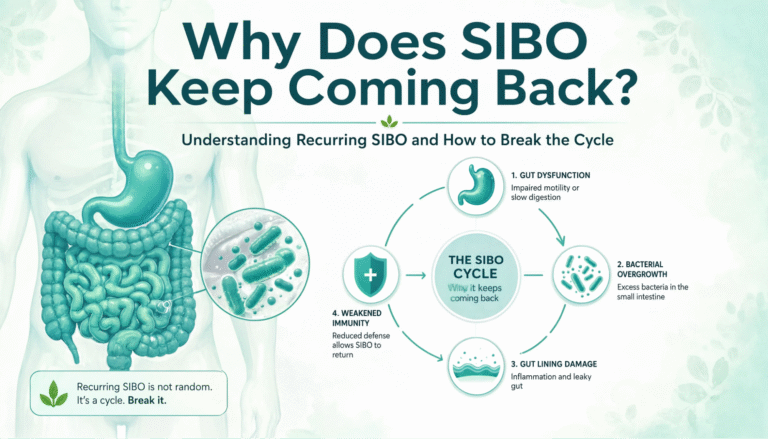
For many people, receiving a Small Intestinal Bacterial Overgrowth (SIBO) diagnosis can feel like finally getting answers after months or even years of digestive discomfort. However, while some individuals experience significant symptom relief after treatment, others find themselves facing a frustrating reality: their symptoms return weeks or months later.
If you’ve successfully completed treatment only to experience bloating, gas, abdominal pain, or digestive issues again, you’re not alone. Recurring SIBO is a common challenge, and understanding why it happens is the first step toward achieving lasting relief.
The good news is that SIBO recurrence does not necessarily mean treatment has failed. In many cases, underlying factors that contributed to bacterial overgrowth in the first place have not been fully addressed. Identifying and managing these root causes can play a critical role in preventing future relapses.
What Is SIBO?
SIBO occurs when excessive bacteria accumulate in the small intestine, an area that normally contains relatively low levels of bacteria compared to the large intestine.
When these bacteria ferment carbohydrates before they can be properly absorbed, they produce gases such as hydrogen and methane. This process can lead to symptoms including:
- Bloating
- Excessive gas
- Abdominal discomfort
- Diarrhea
- Constipation
- Food sensitivities
- Fatigue
- Brain fog
While treatment may successfully reduce bacterial overgrowth, it does not always eliminate the factors that allowed the overgrowth to develop.
Why Is SIBO Recurrence So Common?
Many people focus solely on removing excess bacteria. However, bacterial overgrowth is often a symptom of a deeper issue rather than the primary problem itself.
Think of SIBO as a weed in a garden. Removing the visible weed may temporarily solve the problem, but if the conditions that allowed it to grow remain unchanged, it is likely to return.
For long-term success, treatment must address both the bacterial overgrowth and the underlying causes that contribute to it.
Poor Gut Motility
One of the most common reasons SIBO returns is impaired gut motility.
The digestive tract relies on a process called the Migrating Motor Complex (MMC), often referred to as the gut’s housekeeping system. Between meals, the MMC helps move food particles, bacteria, and waste through the digestive tract.
When this process becomes sluggish, bacteria can remain in the small intestine longer than they should, increasing the risk of overgrowth.
Factors that may affect gut motility include:
- Previous food poisoning
- Chronic stress
- Diabetes
- Certain medications
- Digestive disorders
If motility issues are not addressed, bacterial overgrowth can return even after successful treatment.
The Impact of Food Poisoning
Research has shown that a significant number of SIBO cases may begin after an episode of food poisoning or gastrointestinal infection.
In some individuals, food poisoning can trigger an immune response that damages nerves involved in intestinal movement. This disruption can slow the digestive process and create conditions that encourage bacterial overgrowth.
Even if the original infection has resolved, the effects on gut motility may persist for years.
Chronic Stress and the Gut
The connection between the brain and digestive system is powerful. Chronic stress can affect digestion in several ways, including:
- Slowing digestive function
- Altering gut motility
- Increasing inflammation
- Impacting the gut microbiome
When stress remains unmanaged, it may contribute to recurring digestive symptoms and increase the likelihood of SIBO relapse.
Many patients notice that their symptoms worsen during periods of emotional stress, work pressure, or major life changes.
Dietary Factors
Diet alone does not cause SIBO, but it can influence symptom severity and bacterial activity.
After treatment, some individuals immediately return to eating patterns that aggravate digestive symptoms. While food is not always the root cause, certain dietary habits may create an environment that supports bacterial fermentation.
A personalized nutrition plan can help support digestive function while reducing symptom flare-ups.
It is important to remember that highly restrictive diets are not always the answer. Long-term gut health often requires a balanced and sustainable approach.
Structural Digestive Issues
Certain structural abnormalities within the digestive system can increase the risk of recurrent SIBO.
Examples may include:
- Scar tissue from surgery
- Intestinal narrowing
- Diverticula
- Anatomical abnormalities
These conditions can create areas where bacteria become trapped and multiply.
In such cases, addressing the structural issue may be necessary to reduce the risk of ongoing bacterial overgrowth.
Underlying Medical Conditions
Several health conditions can contribute to recurring SIBO by affecting digestion and intestinal movement.
These may include:
- Diabetes
- Hypothyroidism
- Celiac disease
- Crohn’s disease
- Connective tissue disorders
If underlying conditions are not properly managed, bacterial overgrowth may continue to return despite repeated treatment efforts.
Incomplete Recovery After Treatment
Sometimes symptoms improve significantly after treatment, but bacterial levels are not fully normalized.
This may happen if:
- The treatment duration was insufficient
- The underlying cause was not addressed
- Additional digestive imbalances remain present
Some individuals require ongoing support to fully restore digestive function and maintain long-term improvements.
The Importance of Comprehensive Testing
If symptoms continue to return, further investigation may be necessary.
A sibo breath test canada practitioners commonly use can help evaluate hydrogen and methane gas production associated with bacterial overgrowth.
Testing can provide valuable insights into whether symptoms are related to persistent SIBO, recurrence, or another digestive condition.
Rather than guessing, objective testing can help guide more effective treatment decisions.
Why a Root-Cause Approach Matters
One of the biggest mistakes people make is focusing only on symptom relief.
Temporary improvement may occur when bacterial levels decrease, but long-term success often requires identifying why the overgrowth developed in the first place.
A root-cause approach may include evaluating:
- Gut motility
- Digestive function
- Stress levels
- Nutritional status
- Lifestyle factors
- Underlying health conditions
Addressing these contributing factors can significantly reduce the likelihood of future relapses.
The Role of Naturopathic Care in Recurrent SIBO
Many individuals with recurring digestive symptoms seek a more comprehensive approach to care.
A qualified sibo naturopath can assess factors that may be contributing to repeated bacterial overgrowth and create a personalized strategy aimed at supporting long-term gut health.
Rather than focusing solely on symptom suppression, naturopathic care often emphasizes identifying and addressing underlying imbalances that affect digestion and overall wellness.
For individuals searching for a sibo naturopath near me, working with an experienced practitioner may provide valuable support in uncovering the factors driving recurrent symptoms.
Can SIBO Recurrence Be Prevented?
While not every recurrence can be completely prevented, many people can significantly reduce their risk by addressing underlying causes and maintaining healthy digestive function.
Strategies that may support long-term success include:
- Following personalized treatment recommendations
- Supporting healthy gut motility
- Managing stress effectively
- Maintaining balanced nutrition
- Monitoring digestive symptoms
- Addressing underlying medical conditions
- Seeking professional follow-up care when needed
The goal is not simply to eliminate symptoms temporarily but to create an environment that supports lasting digestive health.
When Should You Seek Further Evaluation?
If your symptoms repeatedly return after treatment, it may be time for a more comprehensive assessment.
Consider seeking professional guidance if you experience:
- Persistent bloating
- Chronic gas
- Recurring constipation or diarrhea
- Ongoing abdominal discomfort
- Food sensitivities
- Fatigue and brain fog
The sooner underlying causes are identified, the greater the likelihood of achieving long-term improvement.
Frequently Asked Questions (FAQs)
-
Why does SIBO keep coming back?
SIBO often returns when the underlying cause, such as poor gut motility, stress, or an underlying digestive condition, has not been fully addressed.
-
How common is SIBO recurrence?
SIBO recurrence is relatively common, especially if factors contributing to bacterial overgrowth remain present after treatment.
-
Can stress cause SIBO to come back?
Yes. Chronic stress can affect digestion, gut motility, and the gut microbiome, which may increase the risk of recurrence.
-
Can diet alone prevent SIBO from returning?
No. While diet can help manage symptoms, addressing the root causes of SIBO is important for long-term results.
-
How do I know if my SIBO has returned?
Common signs include bloating, gas, abdominal discomfort, constipation, diarrhea, food sensitivities, and fatigue that return after treatment.
-
Should I repeat a SIBO breath test?
A sibo breath test canada practitioner may recommend repeat testing if symptoms return or if treatment progress needs to be evaluated.
-
Can poor gut motility cause recurring SIBO?
Yes. Impaired gut motility is one of the most common reasons bacterial overgrowth returns after treatment.
-
Can a naturopath help with recurrent SIBO?
Yes. A sibo naturopath can help identify contributing factors and develop a personalized plan to support long-term digestive health.
Conclusion
At 8 Wellness, we take a comprehensive, root-cause approach to digestive health. Whether you’re dealing with recurring SIBO, IBS, or persistent bloating, our personalized naturopathic care is designed to help you achieve lasting relief.
Recurring SIBO can be frustrating, especially when symptoms return after treatment. However, relapse does not necessarily mean that recovery is impossible. In many cases, recurring bacterial overgrowth is a sign that deeper factors affecting digestive function have not yet been fully addressed.
By looking beyond the bacteria themselves and focusing on gut motility, digestive health, lifestyle factors, stress management, and underlying medical conditions, it is often possible to break the cycle of recurrence.
If you continue to struggle with recurring symptoms, a comprehensive evaluation and personalized treatment approach may help uncover the root causes behind your digestive challenges and support long-term gut health.
