



Introduction
Electronics assembly, inspection and repair require a controlled working environment because many electronic components can be affected by electrostatic discharge. A discharge that is not noticeable to an operator can potentially damage sensitive components, while repeated exposure may contribute to faults that are difficult to identify during routine production checks.
For electronics manufacturers, repair centres, laboratories and technical workshops, an ESD-safe workstation is therefore an important part of workplace infrastructure. The objective is not simply to provide a sturdy surface for equipment. The workstation needs to support appropriate static-control practices while providing enough space for tools, components, instruments and operators.
The design of an ESD workstation should also reflect the nature of the task. Assembly technicians, inspection personnel and repair engineers may have different requirements for working height, storage, lighting and equipment access. A carefully planned setup can help create a consistent working environment while supporting both component protection and efficient workflow.
Understanding How Static Electricity Creates Risks in Electronics Work
Electrostatic charge can accumulate through everyday activities such as walking, handling materials and interacting with equipment. When a charged person or object comes into contact with a sensitive electronic component, the resulting discharge can transfer energy to the component.
The effects are not always immediately visible. Some components may fail during an obvious electrical event, while others can experience damage that does not become apparent until later in their operating life. This makes electrostatic discharge particularly relevant to electronics manufacturing and repair environments, where component reliability is important.
An ESD-controlled area aims to reduce these risks by controlling the electrical environment around sensitive devices. The work surface is one important element because components are frequently placed directly on it during assembly, inspection or repair. A suitable dissipative surface can help control how static charge is handled rather than allowing it to accumulate unpredictably.
The operator is another consideration. Clothing, footwear and movement can contribute to charge generation, meaning that static control cannot depend entirely on the workbench itself. Appropriate grounding procedures, suitable accessories and consistent workplace practices all form part of an effective ESD-control strategy.
For this reason, an ESD workstation should be viewed as a complete working environment. Its surface, grounding arrangements, accessories and surrounding conditions should work together according to the procedures established for the facility.
Selecting the Right ESD Workbench Configuration
The physical configuration of a workstation should correspond with the tasks performed there. Electronics assembly may require room for components, tools and testing equipment, while repair work may involve larger instruments and additional access around the item being serviced.
Different ESD bench configurations provide different practical advantages. Square-tube workbenches can provide a straightforward industrial structure, while cantilever designs may offer greater legroom and flexibility underneath the working surface. Height-adjustable options can allow the working position to be adapted to individual operators or particular tasks.
Bench dimensions are equally important. A surface that is too small can result in tools and components being placed too closely together, increasing the possibility of an untidy or inefficient workflow. An excessively large bench, however, may occupy floor space that could otherwise support additional workstations or storage.
The available room should therefore be assessed before selecting a configuration. Doorways, access routes, adjacent benches and equipment locations all need to be considered. In production environments, consistency can also be valuable. Standardising workstation dimensions and accessories can make it easier for operators to move between work areas without adapting to substantially different layouts.
The selected configuration should ultimately support both the technical requirements of the work and the practical realities of the workplace. A specialist electronics workstation needs to provide an appropriate foundation for static control without compromising access, ergonomics or workflow.
Why the Worktop Material Matters in an ESD-Controlled Area
The worktop is a central component of an ESD workstation because electronic components are routinely placed, inspected and manipulated on its surface. An appropriate dissipative worktop is designed to help control electrostatic charge and provide a more predictable environment for handling sensitive equipment.
Different worktop materials can offer different combinations of electrical properties, durability and resistance to workplace conditions. For example, ESD workstations available through ESD Workbenches ranges can include specialist surfaces such as Lamstat and Neostat, depending on the configuration selected. These surfaces are intended for environments where static control is an important consideration.
Worktop selection should also reflect the physical nature of the task. Electronics assembly can involve soldering, tools, components, cleaning processes and repeated contact with equipment. The surface therefore needs to cope with normal workshop use while retaining its functional properties.
The resistance characteristics of the worktop should be considered alongside the wider grounding arrangement. A dissipative surface does not independently guarantee complete ESD protection. Its effectiveness depends on how the workstation is integrated into the facility’s static-control system and how operators use the equipment.
The condition of the work surface should also be monitored over time. Heavy use, contamination, damage or inappropriate cleaning practices can affect workplace equipment. Establishing suitable maintenance and inspection procedures helps ensure that the workstation continues to perform as intended.
Integrating Grounding and ESD Accessories Into the Workstation
A properly configured ESD workstation involves more than selecting an appropriate bench and worktop. Grounding and related accessories help establish a controlled path for dissipating static charge. These elements should be selected and used according to the technical procedures established by the facility.
Several components can contribute to a practical ESD workstation:
- Earth and grounding leads: Grounding connections can provide a controlled path for dissipating electrostatic charge from suitable workstation components. The exact grounding arrangement should follow the relevant technical requirements and the equipment manufacturer’s guidance.
- Wrist straps: Where required by the facility’s ESD procedures, wrist straps can help connect operators to the grounding system while they handle sensitive components. Their correct use, inspection and connection are important because simply having a wrist strap available does not establish effective protection.
- ESD floor matting: Anti-static or dissipative floor matting can extend static-control considerations beyond the workbench itself. This can be particularly relevant in areas where operators move frequently between workstations or handle sensitive components at several locations.
- Electrical protection accessories: Certain workstation configurations can incorporate items such as sockets and RCD protection. These features address electrical safety considerations alongside the specialist requirements of the workstation and should be installed and used appropriately.
- Insulating and protective accessories: The surrounding equipment and materials should be selected carefully because unsuitable insulating materials can contribute to static accumulation. Workstation accessories should therefore be compatible with the facility’s overall ESD-control approach.
Organising Tools, Components and Equipment for Controlled Assembly
Workstation organisation has a direct relationship with the way electronics assembly and repair activities are performed. A technician may need access to hand tools, components, test equipment, documentation and small parts within the same working area. Poor organisation can result in unnecessary movement and an inconsistent workflow.
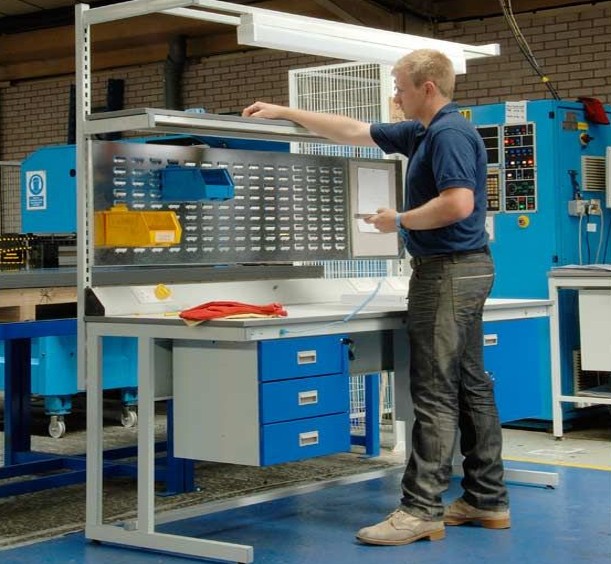
Storage accessories can help establish designated locations for frequently used items. Drawers and cupboards can keep tools and components protected when they are not being used, while shelving can provide accessible storage for equipment that needs to remain close to the operator.
Louvre panels and tool-storage accessories can also support visual organisation by keeping frequently used equipment within reach. The objective is not simply to make the workstation look tidy. A logical arrangement can reduce unnecessary searching and help technicians maintain a consistent sequence of operations.
Lighting deserves attention as well. Electronics assembly and repair frequently involve small components, fine connections and detailed inspection. Suitable task lighting can help operators see the working area clearly without requiring them to adopt awkward positions to compensate for inadequate illumination.
Ergonomics should be considered alongside organisation. The position of monitors, tools and test equipment should allow the operator to work without excessive reaching or twisting. Height-adjustable benches can be particularly useful where multiple operators use the same workstation or where tasks alternate between seated and standing positions.
An organised workstation can therefore support several objectives simultaneously. It can provide controlled component handling, easier access to equipment, improved workspace consistency and a more practical environment for technical personnel.
Designing ESD Workstations for Consistent Production and Future Expansion
ESD workstation planning should take both current operations and future requirements into account. Electronics businesses may expand production, introduce new products or change assembly procedures, so a workstation system that can adapt can be more practical than a completely fixed arrangement.
Several factors can support long-term workstation planning:
- Standardised workstation layouts: Using consistent bench configurations across a production area can make workstations easier for operators to understand and maintain. Standardisation can also simplify replacement and procurement when additional benches are required.
- Modular storage: Storage requirements can change as the tools and components used in production evolve. Modular drawers, shelves and panels allow facilities to adjust storage arrangements without replacing the entire workstation.
- Adjustable working positions: Height-adjustable workbenches can provide greater flexibility when different operators or tasks share the same area. They can also support changes between seated and standing work where the workstation design permits it.
- Expandable work areas: Businesses that expect production growth may need additional bench space or extension arrangements. Planning for expansion from the beginning can reduce disruption when new workstations are introduced.
- Consistent ESD procedures: Equipment works most effectively when operators follow the same static-control procedures throughout the facility. Training, inspections and clearly established handling practices should therefore develop alongside the physical workstation infrastructure.
- Future equipment requirements: New testing instruments, assembly tools or monitoring equipment may require additional surface area, electrical connections or storage. Allowing sufficient flexibility can help the workstation accommodate technological changes without requiring a complete redesign.
Conclusion
An ESD-safe electronics workstation needs to address more than the basic requirement for a durable working surface. Electronics assembly and repair environments require consideration of static generation, dissipative worktops, grounding arrangements, operator practices and appropriate accessories.
Workbench configuration also needs to match the technical task, available floor space and operator requirements. Specialist worktops, grounding equipment, storage accessories and suitable lighting can be integrated to create a controlled and practical working environment.
Long-term planning is equally important. Standardised configurations, modular storage, adjustable working positions and expandable layouts can help businesses adapt as production requirements change. By treating ESD workstations as part of the wider electronics workplace infrastructure, facilities can establish organised work areas that support consistent component handling, efficient workflows and appropriate static-control practices.
