



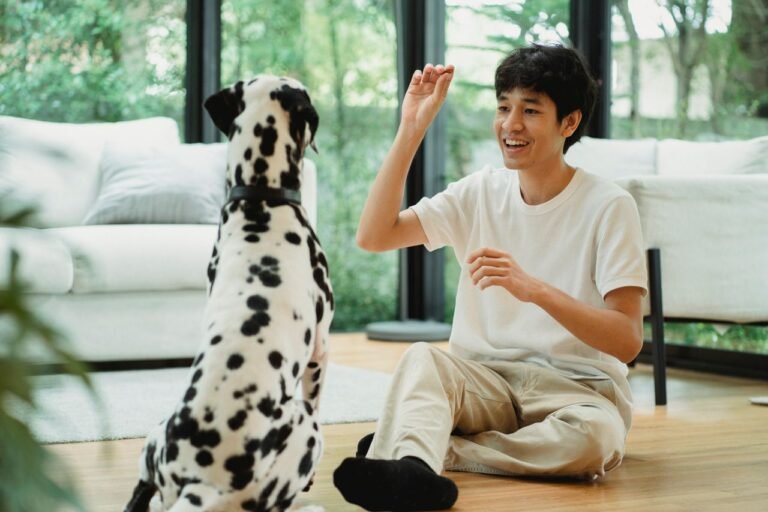
Watching a dog perform in a film, television show, or stage production can be fascinating. These dogs follow commands, respond to handlers, and perform actions in front of unfamiliar people. However, such performances rarely happen by chance. Behind each trained dog are patience, practice, clear communication and a good relationship between the dog and its handler. The same guidelines are relevant in bringing up a good family pet as well.
What Goes Into Training a Dog for Professional Performances?
It takes time and consistency to train a dog for professional performances. Even when their environment is different, dogs need to be taught how to react to the commands. A hectic filming site, bright lamps, new people, and new sounds all may render the concentration of a dog hard.
Building Reliable Responses to Commands
Basic obedience provides the foundation for more advanced training. Dogs are trained to sit, stay, come and wait. These skills are practised until they are able to react in various circumstances. Clarity in instructions enables dogs to know what their handlers expect.
Learning to Work Around Distractions
It takes concentration to do a performance in new settings. Trainers gradually introduce new sounds, people, and surroundings. This assists dogs in becoming familiar with various experiences as they learn to obediently follow their handler’s instructions.
The Skills Behind a Well-Trained Dog
Tricks are not the only thing that professional dog training entails. There are several skills that are essential to dogs to be able to perform tasks successfully and respond to instructions.
Focus and Impulse Control
There are exciting distractions that dogs are very likely to experience. They can learn to wait, stay calm and follow orders, which will help them deal with such situations. Better behaviour is also supported by impulse control even in daily activities.
Patience and Repetition
Dogs learn at different speeds. There are those who grasp new commands very fast and there are those who require practice. Short, consistent training sessions help reinforce learning without overwhelming them. Training can also be a more pleasant experience by rewarding progress.
Trust Between Dogs and Handlers
Communication is facilitated by a good relationship. Dogs should be comfortable with their owners and interpret their signals. This trust is developed with time and with patience, consistency and positive reinforcement.
Can Professional Training Improve Everyday Dog Behaviour?
The skills used in professional dog training can also benefit family pets. There are only a few owners whose dogs are required on TV or stage. However, they want pets that respond to commands and behave appropriately in different situations.
Obedience training is able to assist dogs in having better leash manners, responding when called, and calming down around distractions. It is also capable of simplifying the daily lives of owners.
As an example, a dog that learns the stay command can wait quietly in front of the house before moving on. On the same note, good recall can enable owners to control their dogs better in appropriate outdoor environments. These are acquired using practice and effective communication.
What to Look for in a Professional Dog Trainer
The selection of the appropriate trainer could result in a positive impact on the learning process of a dog. Owners should consider more than just the number of commands a training programme promises to teach.
Find trainers who have appropriate qualifications, experience, and a coherent attitude towards animal welfare. Their techniques must be appropriate to the age, temperament, and needs of the dog. The selection of a programme that includes owners is also useful since training should not be only in the classroom.
Group classes may offer the possibility to practice around other dogs and people. Private lessons may be more suitable when an owner wants individual guidance or needs help with specific training goals.
Learning from Waggie’s Experience in Professional Dog Training
Experience is a significant aspect in the learning needs of various dogs and their understanding. Established in 1985, Waggie Dog Training School in Singapore has built a long history in canine training. Its founder, Patrick Wong, has trained thousands of dogs and performed on television, film and stage.
In addition, the school provides group and individual obedience training to ordinary dog owners. Its programmes assist owners to acquire key skills in a controlled manner with guidance and practice. Those interested in building a stronger foundation with their pets can explore Waggie’s dog obedience training classes.
This professional experience in addition to the daily training offers an opportunity to the owners to learn more about their dogs and achieve a better communication.
Final Thoughts
A well-trained dog is not created through commands alone. Patience, consistency, trust, and clear communication all contribute to lasting progress. A dog will react to everyday activities even better when it is trained properly, whether it is in front of stage lights or when it is walking with its owner and family and enjoying everyday life.
