



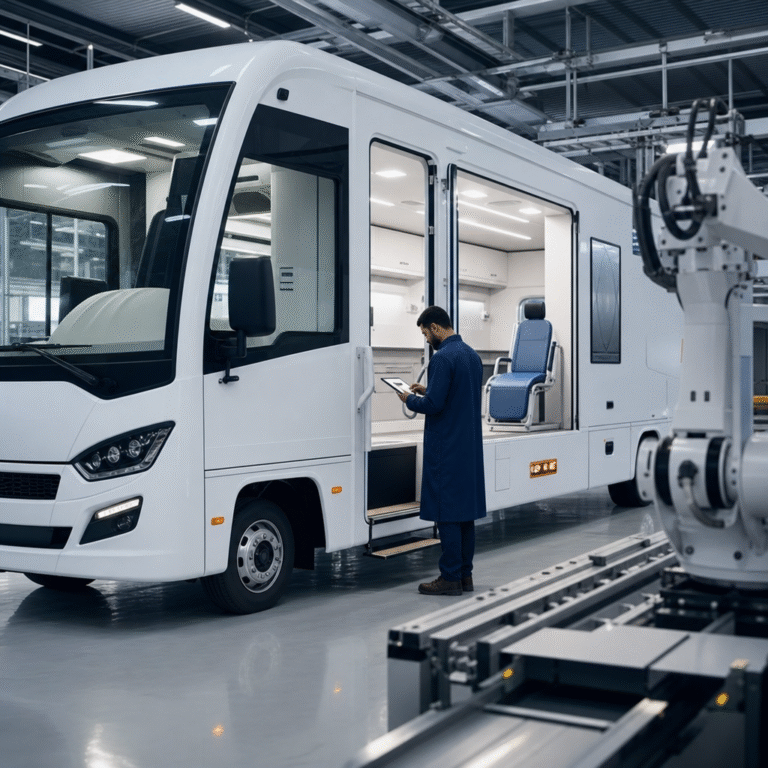
The intersection of precision manufacturing and healthcare delivery has never been more consequential. As communities across the country face growing demand for accessible, on-site medical services, the vehicles that carry those services have become increasingly sophisticated. Behind every well-equipped mobile clinic or diagnostic unit lies a complex fabrication process — one that draws on the same advanced engineering principles transforming industries from aerospace to energy. Understanding how modern fabrication technology drives the design and construction of mobile medical units reveals why quality manufacturing is not just a production concern, but a public health imperative.
The Growing Demand for Mobile Healthcare Infrastructure
Mobile healthcare has evolved far beyond the basic first-aid van. Today’s mobile medical units serve as fully operational clinical environments — equipped with diagnostic imaging, dental chairs, laboratory stations, telemedicine systems, and even surgical preparation areas. This evolution has been driven by a convergence of factors: rural healthcare shortages, aging populations, disaster response needs, and a post-pandemic emphasis on decentralized care delivery.
Healthcare systems, nonprofits, and government agencies are investing heavily in mobile infrastructure as a cost-effective alternative to building permanent facilities. A single well-designed mobile unit can serve thousands of patients annually across multiple locations, making the quality of its construction directly tied to the quality of care it enables. This is why the fabrication standards applied to these vehicles matter enormously — structural integrity, interior layout efficiency, electrical system reliability, and climate control all depend on precision engineering from the ground up.
Fabrication Technology as the Foundation of Mobile Medical Design
Modern fabrication technology has fundamentally changed what is achievable in vehicle-based medical environments. CNC machining, laser cutting, robotic welding, and advanced composite materials allow manufacturers to build interiors that are both structurally sound and ergonomically optimized. Tolerances that once required extensive manual adjustment can now be achieved with repeatable precision, reducing both production time and the risk of structural inconsistencies that could compromise a vehicle’s long-term performance.
One area where this technological advancement is particularly visible is in electrical systems integration. Medical vehicles require complex power distribution networks to support diagnostic equipment, lighting, HVAC systems, and communication technology — all within a confined mobile environment. The same principles explored in CNC busbar fabrication for electrical manufacturing are directly applicable here: precise, automated production of electrical components ensures consistent performance, reduced failure rates, and safer operation in high-stakes environments where equipment reliability is non-negotiable.
Structural Engineering and Material Selection
The structural demands placed on a mobile medical vehicle are unique. Unlike standard commercial vehicles, medical units must support heavy equipment loads while maintaining a stable, vibration-resistant interior environment. Walls, floors, and ceilings must be fabricated from materials that are durable, easy to sanitize, and capable of withstanding repeated deployment cycles across varied terrain and weather conditions.
High-strength aluminum alloys and composite panels have become standard in premium mobile medical construction, offering an optimal balance of weight reduction and structural rigidity. Welding quality is equally critical — poorly executed welds can create stress points that lead to premature failure, particularly in chassis modifications required to accommodate medical equipment weight distributions. Advanced fabrication shops use non-destructive testing methods to verify weld integrity before a vehicle ever leaves the production floor.
Interior Customization and Workflow Optimization
Effective mobile medical design is as much about interior workflow as it is about structural construction. Medical professionals working in confined spaces need environments that minimize movement inefficiency, reduce contamination risks, and accommodate the specific equipment required for their specialty. This demands a level of customization that goes far beyond standard vehicle conversion.
Cabinetry, countertops, examination tables, and equipment mounting systems must all be fabricated to exact specifications, often integrating directly with the vehicle’s structural frame. Modular design approaches allow operators to reconfigure interiors as their service needs evolve, extending the operational lifespan of each unit and maximizing the return on a significant capital investment.
The Role of Industrial Innovation in Healthcare Mobility
The broader industrial manufacturing sector has been undergoing a period of significant transformation, with new materials science and process automation reshaping what fabricators can deliver. Research into foundational industries — including steel and advanced alloy production — continues to yield materials with superior performance characteristics that benefit downstream manufacturers. Efforts to innovate foundational industries like steel manufacturing are creating stronger, lighter, and more sustainable base materials that directly improve the quality and longevity of specialized vehicles like mobile medical units.
This upstream innovation matters because mobile medical vehicles are expected to operate reliably for a decade or more, often under demanding conditions. The quality of raw materials used in their construction has a compounding effect on long-term performance, maintenance costs, and ultimately, the continuity of healthcare services they support. Manufacturers who stay current with advances in materials science and fabrication technology are better positioned to deliver units that meet these long-term expectations.
Craftsmen Industries: Setting the Standard in Mobile Medical Fabrication
Few manufacturers have demonstrated the depth of expertise required to consistently deliver high-performance mobile medical units at scale. Craftsmen Industries has established itself as a recognized leader in this specialized field, combining industrial fabrication capabilities with a thorough understanding of healthcare operational requirements. Their approach integrates structural engineering, custom interior design, and systems integration into a cohesive production process that prioritizes both clinical functionality and long-term durability.
What distinguishes Craftsmen Industries is their commitment to treating each project as a purpose-built solution rather than a modified standard vehicle. Their team works closely with healthcare organizations to understand the specific clinical workflows, equipment requirements, and deployment environments that will define how each unit is used — then engineers a vehicle that performs optimally within those parameters. This level of engagement at the design stage prevents costly modifications after delivery and ensures that the finished unit genuinely serves its intended purpose from day one.
Matching Fabrication Capability to Healthcare Mission
The context paragraph below reflects how purpose-driven fabrication connects directly to healthcare outcomes. Choosing the right manufacturing partner is not simply a procurement decision — it is a strategic choice that affects patient access, clinical staff effectiveness, and the long-term sustainability of a mobile health program.
Organizations evaluating mobile medical solutions should prioritize manufacturers with demonstrated experience in healthcare-specific fabrication, robust quality assurance processes, and the engineering depth to handle complex customization requirements. The ability to produce custom mobile medical vehicles that meet both regulatory standards and real-world clinical demands requires a rare combination of industrial manufacturing capability and healthcare sector knowledge — a combination that separates truly capable fabricators from general-purpose vehicle converters.
Conclusion: Precision Manufacturing as a Healthcare Enabler
Mobile medical vehicles represent one of the most demanding applications in specialty vehicle fabrication. They must perform reliably as both transportation assets and clinical environments, often in challenging conditions and remote locations where equipment failure has direct consequences for patient care. Meeting that standard requires fabrication technology, materials expertise, and design sophistication that have only become available through decades of industrial innovation.
As healthcare systems continue to expand their mobile service capabilities, the manufacturers who can deliver precision-built, purpose-designed vehicles will play an increasingly important role in shaping how and where care is delivered. The convergence of advanced fabrication technology and healthcare mission is not incidental — it is the foundation on which effective mobile medicine is built.
