



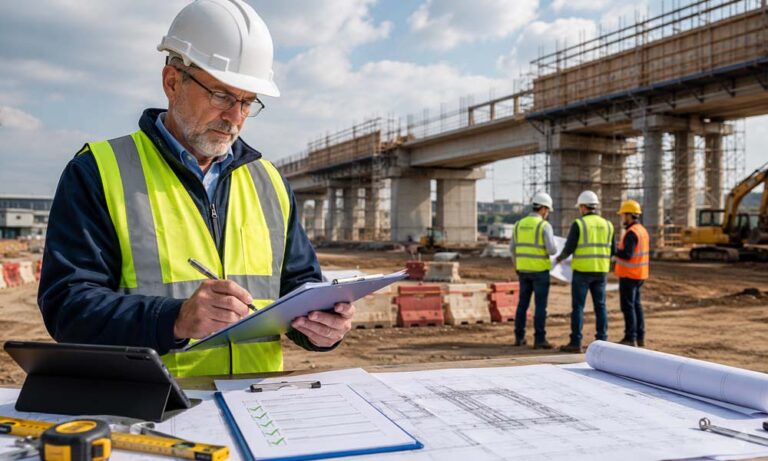
Big projects look strong from the outside. A bridge, road, building, factory, or public system may seem simple when it is complete. But behind every safe project, there are many small checks. These checks decide whether the project is honest, strong, and useful for many years.
A small mistake in a tender file can create unfair competition. A small mistake in a Measurement Book can lead to overpayment. A missing test report can raise doubt about quality. This is where a Chief Technical Examiner becomes very important.
A Chief Technical Examiner works like a technical watchdog. The role is to check whether work is done as per rules, standards, and approved plans. In government projects, this role becomes even more serious because public money is involved.
In this article, we will discuss what a Chief Technical Examiner is, why this role matters, how the audit process works, what documents are checked, and how project teams can prepare in a simple and smart way.
What Is a Chief Technical Examiner?
A Chief Technical Examiner is a senior technical expert who checks projects, tenders, contracts, and technical work. The main job is to make sure that everything is done in the right way. This includes checking quality, safety, rules, records, and payments.
The Chief Technical Examiner does not usually do the main project work. For example, the examiner does not build the road or manage the full construction site. Instead, the examiner checks whether the road was built properly, whether the right material was used, and whether the records match the real work.
In simple words, a Chief Technical Examiner is like a careful checker. The role is not only about finding faults. It is also about helping systems become better. When mistakes are found early, teams can fix them before they become big problems.
This role is mostly seen in public works, government tenders, construction projects, procurement work, and technical departments. In some cases, similar roles also exist in manufacturing, IT, safety systems, and private companies where quality and compliance are very important.
Why the Chief Technical Examiner Role Matters
The Chief Technical Examiner role matters because large projects involve large money, many people, and many rules. If no one checks the work properly, small errors can turn into serious losses. Public projects especially need strong checking because they use public funds.
Think about a road project. The file may say that a certain thickness of road layer was laid. But what if the actual road layer is thinner? The project may look fine at first. But after some time, it may crack, break, or become unsafe. A Chief Technical Examiner helps catch such issues.
The role also builds trust. When tenders are checked, payments are verified, and quality is tested, people feel more confident that the project is fair. This is very important in government work because people expect honesty and transparency.
A Chief Technical Examiner also helps protect departments and officers. When records are clear and work is checked properly, there is less chance of future complaints, disputes, or vigilance cases. So, this role supports both public interest and good project management.
Chief Technical Examiner and CVC Connection
In India, the Chief Technical Examiner has an important link with the Central Vigilance Commission, also called the CVC. The CVC works to reduce corruption and improve honesty in public systems. The CTE helps the CVC by checking the technical side of public works and procurement.
The Chief Technical Examiner under the vigilance system reviews government projects, tenders, contracts, and payments. The aim is to find whether the rules were followed and whether public money was used in the right way.
For example, if a tender is written in a way that helps only one company qualify, the CTE may flag it. If a department accepts a single tender without a strong reason, the CTE may ask why. If work shown in the bill is more than the work done at site, the CTE may point it out.
This makes the Chief Technical Examiner a strong part of public accountability. The role helps stop favoritism, poor work, false records, and misuse of funds. It also encourages departments to follow proper tender rules and technical standards from the start.
Main Duties of a Chief Technical Examiner
The duties of a Chief Technical Examiner are wide. The examiner checks both documents and physical work. This means the role is not limited to sitting in an office and reading files. It also includes site visits, inspection, and real-world checking.
One major duty is tender scrutiny. The Chief Technical Examiner checks whether tender terms are fair and clear. The examiner looks for restrictive conditions, brand-based terms, vague eligibility rules, and unfair bid decisions. This helps keep competition open and honest.
Another key duty is technical inspection. The examiner checks drawings, specifications, materials, test reports, and workmanship. If a building is being made, the CTE may check concrete quality, steel records, and site registers. If a road is being made, the CTE may check road layers, bitumen quality, and actual measurements.
The Chief Technical Examiner also reviews payments. This includes checking running bills, Measurement Books, recoveries, bank guarantees, insurance, and extra items. If payment is made for work that is not done, it becomes a serious issue. The CTE helps find and prevent such problems.
Chief Technical Examiner Audit Process
The Chief Technical Examiner audit process usually starts with document review. Before visiting the site, the examiner studies the project file. This includes approvals, tenders, estimates, agreements, test reports, payment records, and other important documents.
After this, the examiner may inspect the project site. During the site visit, the CTE compares the records with the actual work. This is one of the most important parts of the audit. A file may look perfect, but the real truth is often seen at the site.
For example, the Measurement Book may show that 100 units of work were completed. But if the physical check shows only 90 units, this becomes a red flag. The Chief Technical Examiner may then report the difference and suggest recovery or action.
After the inspection, the examiner prepares a report. This report may include mistakes, missing records, poor quality work, extra payments, tender issues, or system gaps. The report may also suggest corrective steps. In many cases, departments must reply and show what action they have taken.
Key Documents Checked by a Chief Technical Examiner
Documents are very important in any Chief Technical Examiner audit. Good work without proper records can still create trouble. In government projects, every decision must have a clear paper trail. This means every approval, payment, test, and change should be recorded.
The examiner usually checks administrative approval, expenditure sanction, technical sanction, Detailed Project Report, estimates, tender notice, bid files, and the signed agreement. These documents show whether the project was approved properly before work started.
The Chief Technical Examiner also checks execution records. These may include the Measurement Book, site order book, hindrance register, cement register, steel register, material test register, inspection notes, and quality reports. These records help prove what happened at the site.
Payment records are also checked carefully. Running bills, final bills, statutory deductions, advance recovery, bank guarantees, insurance policies, and completion certificates must be clear and updated. If any record is missing, incomplete, or doubtful, it can raise serious questions during the audit.
Chief Technical Examiner Checklist for Projects
A Chief Technical Examiner checklist is very useful for project teams. It helps them prepare before an official audit. Without a checklist, teams may miss small but important items. Later, those small items can become big audit objections.
The checklist should start from the pre-tender stage. Teams should check whether administrative approval, expenditure sanction, technical sanction, and estimates are available. They should also make sure the tender terms are fair and not written to favor one party.
At the tender stage, the checklist should include tender publicity, bid opening records, reasons for accepting or rejecting bids, and justification for single tender cases. These points are very important because tender mistakes can create major vigilance problems.
During execution, the checklist should cover agreement signing, bank guarantee verification, insurance policy validity, material testing, site records, hindrance register, and quality control. At the payment stage, it should include Measurement Book checking, advance recovery, statutory deductions, and bill verification.
A good Chief Technical Examiner checklist gives peace of mind. It helps engineers, officers, contractors, and departments stay ready. More importantly, it helps them build a habit of clean and honest work from day one.
Common Red Flags Found by Chief Technical Examiner
A Chief Technical Examiner looks for red flags that may show weak control, poor quality, or unfair practice. These red flags do not always mean corruption. Sometimes they happen because of poor planning or weak record keeping. But they still need serious attention.
One common red flag is missing approval. If work starts without proper sanction, it becomes a problem. Another common issue is a weak Detailed Project Report. If the DPR is not clear, later changes and extra costs may become hard to justify.
Tender-related red flags are also very serious. These include restrictive eligibility terms, brand-favoring clauses, poor tender publicity, and rejection of lower bids without clear reasons. These issues can make a tender look unfair.
Site and payment red flags are also common. These include wrong measurements, missing test reports, poor material quality, incomplete registers, hidden work without proof, and overpayment. A Chief Technical Examiner may also question extra items if their rates are not justified properly.
Chief Technical Examiner and Tender Checking
Tender checking is one of the most important parts of the Chief Technical Examiner role. A tender decides who will get the work, how much money will be spent, and what rules must be followed. If the tender is not fair, the whole project can start on the wrong path.
A Chief Technical Examiner checks whether the tender terms are clear, fair, and open to real competition. The examiner looks at eligibility rules, technical conditions, bid documents, and reasons for selecting a contractor. The goal is simple. No tender should be made in a way that quietly favors one company or one brand.
For example, a department may write a tender condition that only one specific brand can meet. On paper, it may look normal. But in reality, it may stop other good companies from taking part. A Chief Technical Examiner can flag this as a restrictive condition. This helps protect fair competition.
The examiner also checks single tender cases. Sometimes only one bid is received. This does not always mean something is wrong. But the department must record a strong reason before accepting it. If there is no clear reason, the CTE may raise a question.
Tender checking also includes the review of rejected bids. If a lower bid was rejected, the reason must be clear and fair. The Chief Technical Examiner checks whether the decision was based on rules or personal choice. This keeps the tender process honest and transparent.
Chief Technical Examiner and Quality Control
Quality control is another major area checked by the Chief Technical Examiner. A project may look good from far away. But real quality is found in the details. The strength of concrete, the grade of steel, the thickness of road layers, and the quality of material all matter.
The Chief Technical Examiner checks whether the work matches the approved technical specifications. This means the work must follow the contract, drawings, standards, and safety rules. If the contract says a certain material must be used, then the same quality of material should be found at the site.
Material test reports are very important in this part. The examiner may check cement test reports, steel test reports, concrete cube test results, soil test reports, bitumen test reports, and other records. These reports help prove whether the material used in the project was safe and suitable.
The Chief Technical Examiner also checks site records. These may include the site order book, material registers, field lab records, and quality control files. If these records are missing or incomplete, it becomes difficult to prove that proper quality checks were done.
Hidden work is also checked very carefully. Some work gets covered after completion. For example, steel inside concrete, underground pipes, foundation work, cables, and road layers may not be visible later. That is why photos, measurements, test reports, and approvals should be recorded before the work is covered.
In 2026, many project teams also use geo-tagged photos and digital records for quality control. This makes the checking process easier. It also gives stronger proof that the work was done at the right place and at the right time.
Skills Needed to Become a Chief Technical Examiner
A Chief Technical Examiner needs strong technical knowledge. This role is not for beginners. The person must understand engineering work, technical standards, project documents, contracts, and inspection methods. Good judgment is very important.
The examiner must be able to read drawings, estimates, tender files, test reports, and Measurement Books. These documents can be detailed. So, the person must have patience and sharp attention. A small number, date, or clause can change the full meaning of a case.
Another important skill is clear thinking. A Chief Technical Examiner must compare what is written in the record with what is actually found at the site. If there is a difference, the examiner must understand whether it is a mistake, poor work, or a serious violation.
Good communication is also needed. The examiner must write clear reports. These reports should explain the issue, the evidence, the rule involved, and the action needed. A confusing report can create more confusion. A clear report helps everyone understand the problem.
The Chief Technical Examiner must also be honest and fair. This role depends on trust. The examiner should not favor any side. The job is to check facts and give an independent view. This is why ethics and courage are very important in this field.
Leadership is also useful. In many cases, the Chief Technical Examiner guides other technical staff, inspectors, and audit teams. The role may also include training others and helping departments improve their systems.
Chief Technical Examiner Qualifications and Career Path
The Chief Technical Examiner position usually needs a strong technical background. In most cases, the person has an engineering degree or a related technical qualification. Civil engineering is common in public works, but other fields may also be needed depending on the industry.
Experience matters a lot in this role. A person may spend many years as a junior engineer, project engineer, inspection officer, quality officer, executive engineer, or senior engineer before reaching this level. In many cases, the role may need 10 to 20 years of practical experience.
This is because the Chief Technical Examiner must understand real project problems. Books and rules are important, but field experience is just as important. A person who has worked on sites can better understand delays, material issues, design changes, and contractor claims.
The career path usually starts with basic technical work. Then the person moves into project work, inspection work, quality control, contract handling, or audit work. Over time, they gain the knowledge needed to check large and complex projects.
After becoming a Chief Technical Examiner, a person can also grow into higher roles. These may include senior audit roles, compliance leadership, technical advisor roles, policy roles, or training positions. The experience gained in this role is useful because it covers quality, safety, finance, rules, and public trust.
For young engineers, this role can be inspiring. It shows that engineering is not only about building things. It is also about protecting quality, saving money, and making sure work is done honestly.
How Technology Helps Chief Technical Examiner Audits
Technology has made the Chief Technical Examiner audit process much better in 2026. Earlier, many records were kept only on paper. Paper records can be lost, changed, or delayed. Digital tools now make tracking and checking easier.
E-tendering is one of the most useful tools. It helps make the tender process more open. It records bid dates, bidder details, documents, and decisions. This reduces the chance of hidden changes or unfair handling.
Digital Measurement Books, also called e-MBs, are also helpful. They allow measurements to be recorded in digital form. This can reduce errors and make it easier to check who entered the measurement and when it was entered.
ERP systems also help in financial control. They can track bills, payments, recoveries, bank guarantees, taxes, and deductions. This reduces the risk of duplicate payments and missed recoveries.
Geo-tagged photos are very useful for hidden work. For example, if steel is placed before concrete is poured, a geo-tagged photo can show the location and time. This gives stronger proof during a Chief Technical Examiner inspection.
Project dashboards are also becoming common. They help teams track delays, progress, cost, and quality in real time. In the future, CTE audits may depend more on live data instead of only post-project checks.
AI and data tools may also help detect tender risks. For example, they can compare many tenders and find unusual bidding patterns. They may also help find repeated bidders, similar rates, or possible cartel activity. This can make public projects more transparent.
Best Ways to Prepare for a Chief Technical Examiner Audit
The best way to prepare for a Chief Technical Examiner audit is simple. Do not wait for the audit notice. Good preparation starts from the first day of the project. If records are kept daily, there is less stress later.
Every approval should be saved properly. Every change should be recorded. Every payment should have support. Every test should have a report. Every site instruction should be written in the site order book. This may sound basic, but these small habits can protect a project from big problems.
Project teams should also keep their registers updated. The Measurement Book, hindrance register, cement register, steel register, material test register, and site order book should not be filled at the last moment. Last-minute records often create mistakes.
Another smart step is internal audit. Departments and contractors can use a Chief Technical Examiner checklist before the official inspection. This helps them find weak points early. If a test report is missing, they can search for it. If a bank guarantee is near expiry, they can renew it. If a deviation needs approval, they can get it in time.
Training is also important. Engineers, accountants, site staff, and project managers should know the latest rules. They should understand tender conditions, quality standards, payment rules, and documentation needs.
Honesty is the most important preparation. If there is a genuine site problem, record it clearly. If a change is needed, take approval. If there is a delay, enter it in the hindrance register. Trying to hide things usually creates more trouble later.
Conclusion
The Chief Technical Examiner plays a powerful role behind safe and honest projects. This role protects quality, public money, and trust. It helps make sure that projects are not only completed, but completed in the right way.
A Chief Technical Examiner checks tenders, documents, measurements, materials, payments, and site work. The role may seem strict, but its purpose is useful. It helps stop weak work, unfair tendering, overpayment, and poor record keeping.
For departments and project teams, a CTE audit should not be seen only as a scary inspection. It should be seen as a chance to improve. When the audit finds a mistake, the team gets a chance to fix the system and avoid the same problem in the future.
In 2026, the role is even more important because projects are larger, rules are stricter, and public expectations are higher. People want safe roads, strong buildings, fair tenders, and honest use of money. The Chief Technical Examiner helps make this possible.
The best lesson is simple. Compliance should be a daily habit, not a last-minute task. If teams keep records clean, follow rules, test quality, and stay honest from the start, a Chief Technical Examiner audit becomes much easier.
In the end, the Chief Technical Examiner is not just a checker. The role is a protector of safety, fairness, and public trust. That is why this position remains so important in public works, government tenders, infrastructure projects, and many technical fields.
You may also read: vRealize Infrastructure Navigator: The Simple Guide to Virtual Management
