



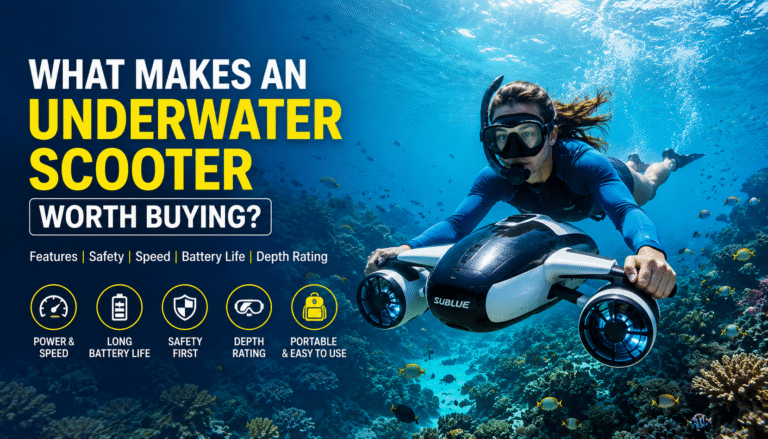
There’s a moment every new diver or beach-lover remembers: the first time a piece of gear turns tired arm-paddling into effortless gliding. That’s exactly what a good underwater scooter does. It takes the physical grind out of exploring the water and replaces it with pure, weightless fun. But not every scooter on the market earns its price tag. So what actually separates a worthwhile investment from an overhyped toy that ends up in the garage after one summer?
If you’ve been scrolling through options and feeling overwhelmed by specs, battery claims, and marketing buzzwords, you’re not alone. This guide breaks down the real factors that matter build quality, power, safety, and value so you can buy with confidence instead of guesswork, using brands like Sublue as a real-world benchmark for what a well-engineered scooter should offer.
Why People Are Switching to Underwater Scooters
Snorkeling and freediving are incredible on their own, but they’re limited by how far your legs can carry you before fatigue sets in. An underwater scooter changes that equation entirely. Instead of burning energy just to move forward, you conserve it for the part that actually matters, taking in the reef, the wreck, or the quiet blue underneath your boat.
Brands like Sublue have helped redefine what modern water adventures look like by creating underwater scooters for every type of explorer. Whether you’re enjoying a luxury yacht getaway, planning a beach escape, spending a fun afternoon in the pool with family, or venturing into open-water snorkeling and diving, there’s a model designed to suit every experience. From beginner-friendly options to advanced pump-jet scooters that deliver greater speed, range, and depth, Sublue combines premium design with intuitive controls to make underwater exploration more accessible, exciting, and enjoyable.If you’re planning to invest in an underwater scooter, it’s a smart idea to check the latest Sublue discount codes before placing your order. You may find an available offer that helps you save on your purchase.
Power and Speed Should Match Your Use Case
Not everyone needs a scooter that hits 10 km/h. A parent looking to entertain kids in the shallow end of a pool has very different needs than a certified diver planning a 40-meter descent along a reef wall. Higher-end models typically offer multiple speed gears, letting you dial performance up or down depending on conditions, visibility, and your own comfort level. Look for scooters that clearly state their thrust output and top speed rather than vague marketing language real numbers tell you whether the motor can actually handle currents or if it’s built purely for calm, flat water. Sublue’s own lineup is a good example of this range: the beginner-friendly Mix tops out around 1.5 m/s for easy pool and beach use, while the flagship Sublue VAPOR pushes up to 10 km/h across three distinct gears for advanced riders.
Battery Life Determines How Long the Fun Lasts
Nothing cuts a dive short faster than an underwater scooter running out of power halfway through your adventure. Battery life varies significantly between models, with lightweight scooters typically offering around 30 minutes of runtime, while more advanced options can last up to an hour or longer. If you plan to spend full days on the water or explore larger reefs, choose a scooter with a removable, high-capacity battery. It’s also worth checking whether the brand offers spare batteries, allowing you to extend your time in the water without interruption.
To save money on your purchase, it’s worth checking DiscountCodez before placing your order. You can often find verified promo codes, discounts, and vouchers for tech and travel gadgets, fashion, golf enclosures, beauty, home essentials, and many other online purchases, helping you get better value for your money.
Depth Rating and Build Quality
A scooter’s depth rating tells you where it’s actually safe to use, with most quality models rated to around 40 meters (131 feet), which comfortably covers recreational diving limits. Following basic diving safety prevention tips, such as staying within your certification level and never exceeding your equipment’s rated depth, is just as important as choosing the right scooter. Depth rating alone doesn’t guarantee durability, so pay attention to the housing material, the sealing around the battery compartment, and whether the brand provides independent testing or certification data. A well-built scooter should withstand repeated saltwater exposure without corroding or losing pressure integrity over time. Sublue models, for instance, consistently carry a 40-meter depth rating across their range, from the compact Mix to the intelligent, OLED-equipped Navbow+, giving riders a dependable margin whether they’re exploring a shallow pool or a deeper reef dive.
Safety Features Aren’t Optional
This is where cheaper, unbranded scooters often cut corners. Reputable models include automatic shut-off to prevent motor overheating, an emergency stop trigger, positive buoyancy so the unit floats rather than sinks if released, and an anti-loss lanyard as a physical backup. Some advanced scooters go further with depth-change alerts that warn you if you’re ascending or descending too quickly, a genuinely valuable safety layer for less experienced divers. When evaluating any scooter, safety hardware should weigh as heavily in your decision as speed or runtime. Sublue’s Navbow+, for example, pairs positive buoyancy and an anti-loss lanyard with a built-in digital compass and real-time depth-change alerts, giving riders more situational awareness than most scooters in its class.
Portability and Ease of Use
A scooter that’s a nightmare to carry, charge, or store loses its appeal fast. Compact, lightweight designs with detachable batteries and removable buoyancy tanks make travel and storage far easier, especially if you’re taking it on a boat or flying with it. Intuitive trigger controls also matter more than people expect fumbling with a complicated interface underwater is frustrating and can even be unsafe. The best scooters are the ones a first-time user can pick up and operate confidently within minutes. Sublue’s Mix line is built around exactly this idea: a lightweight, travel-friendly design with a detachable battery and removable buoyancy tank, so it’s just as easy to pack for a flight as it is to grab for a spontaneous pool day.
Versatility Across Environments
The most worthwhile scooters aren’t single-purpose. A unit that performs well in a swimming pool, adapts to beach conditions, and still holds up during open-water dives gives you far more value per dollar than a niche product. Camera mounts are another underrated feature worth checking, since many riders want to document their dives or family pool sessions without buying separate mounting gear. This is where Sublue’s range stands out; the same brand covers yacht platforms, beach days, pool play, and open-ocean dives, with most models including action-camera compatibility as standard.
Brand Reputation and After-Sales Support
Underwater scooters are technical products with moving parts, batteries, and waterproof seals, all things that can eventually need servicing. Buying from an established brand with authorized service centers, clear warranty terms, and responsive customer support protects your investment long after the initial purchase. It’s worth researching how a company handles repairs, replacement parts, and battery degradation before you commit, rather than finding out the hard way. Sublue has built its reputation as an established name in underwater intelligent equipment, with authorized service centers and a full product ecosystem from scooters to pool-cleaning robots that backs up the initial purchase with ongoing support.
Final Verdict: Is It Worth Buying?
An underwater scooter is worth buying when it matches your actual use case, comes from a brand with proven build quality and safety standards, and offers enough runtime and power to make the experience genuinely better than swimming unaided. It’s not about buying the fastest or most expensive model on the shelf, it’s about buying the right one for how, where, and how often you’ll actually use it. Brands like Sublue make that decision easier by covering the full spectrum, from casual pool models to serious pump-jet performers, all under one dependable ecosystem.
Frequently Asked Questions
Are underwater scooters safe for beginners?
Yes, most modern underwater scooters are designed with beginner-friendly safety features like automatic shut-off, emergency stop triggers, and positive buoyancy. Beginners should still start in shallow, calm water and use the included anti-loss lanyard.
How fast do underwater scooters typically go?
Speeds vary by model, generally ranging from about 1.5 m/s on entry-level scooters up to 10 km/h (roughly 2.8 m/s) on high-performance pump-jet models with multiple speed gears.
How long does an underwater scooter battery last per charge?
Runtime typically ranges from 30 to 60 minutes depending on the model, speed setting, and battery capacity. Most batteries take around 2-3 hours to fully recharge.
Can underwater scooters be used for snorkeling and pool fun, not just diving?
Absolutely. Many scooters are specifically designed for versatile use across pools, beaches, lakes, and open water, making them just as suited to casual snorkeling and family pool days as to serious diving.
What depth rating should I look for in a good underwater scooter?
A depth rating of around 40 meters (131 feet) is standard for quality recreational scooters and comfortably covers most recreational diving limits.
Is it worth waiting for a discount before buying?
If you’re not in a rush, checking for seasonal promotions or coupon codes before purchase can meaningfully reduce the cost of a premium scooter, especially on higher-end models with bundled accessories.
