



Many people face issues such as IP blocks, CAPTCHAs, rate limits, and geographic restrictions when collecting online data. As websites update their anti-scraping systems, a local IP address or a basic proxy cannot handle stable tasks. Therefore, a reliable web scraping proxy becomes the key to keeping your data workflow continuous.
This review compares major options on the market from a real user experience. We evaluate IP quality, pricing, and stability to help you choose the right proxy service for scraping for your data tasks. You can also see how IPcook stands out.
Overview of Web Scraping Proxy Services
Simply put, a web scraping proxy is an intermediary between your crawler and the target website. It hides your real IP address so that each request appears to come from a different regular user. In modern data collection projects, proxies are an essential foundation. Without proxies, target servers can easily identify and block your crawler.
In all types, residential proxies are highly suitable as a proxy for scraping because they belong to real home broadband users, and target websites rarely block them. To help you get a clear overview, we provide a quick comparison of the major proxy services for scraping options.
Quick Comparison of Popular Proxy Providers
| Provider | Lowest Price (per GB) | IP Pool Size | Speed | Network Stability | Best For |
| IPcook | $0.50 | 55M+ | <0.5s | Highly Stable | Cost-Effective Projects |
| Bright Data | $2.50 | 400M+ | ~0.7s | Highly Stable | Large Enterprises |
| Oxylabs | $2.50 | 175M+ | 0.41s | Stable | Enterprise Data Scraping |
| IPRoyal | $4.90 | 32M+ | ~0.5s | Moderate | Small Projects |
| SOAX | $2.00 | 155M+ | 0.55s | Stable | Growing Businesses |
When you choose a proxy for scraping, you must evaluate several key metrics. A large IP pool allows frequent rotation to reduce the risk of blocks. Fast response times minimize wait times. Wide geographic coverage helps you get localized content. In addition, flexible session control and reasonable costs are core factors. The most expensive service is not always the best choice, as your setup must match your budget and project requirements.
IPcook Is Best for Budget-Conscious Scraping Projects
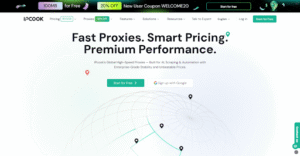
High monthly fees often create financial pressure for small teams. Unlike industry giants, IPcook offers highly cost-effective web scraping proxy plans. For its payment model, the platform uses a pay-as-you-go system with no monthly minimum commitments, and the traffic you buy never expires. This is suitable for small or occasional scraping tasks.
On the technical side, the platform provides real home residential IPs through its globally distributed premium proxies for scraping. This decentralized network helps you bypass geographic restrictions and anti-scraping systems so you can maintain high network connectivity and data delivery rates during complex tasks.
Pros
- Great price advantage with the lowest rate down to 0.5 dollars per GB.
- Access to over 55 million IPs across more than 185 countries and regions.
- Fast response times with a global average under 0.5 seconds and under 50 milliseconds in main regions.
- Support for rapid rotation with automatic IP changes every minute or after each request.
- Sticky session support to maintain the same IP connection for up to 24 hours.
Cons
- The number of advanced custom scraping APIs is smaller than that of some high-priced competitors
- Brand recognition is currently lower than established providers like Bright Data or Oxylabs
How to Use IPcook for Web Scraping
You can configure your web scraping proxy in a few minutes, even if you do not have professional proxy experience.
Step 1: Create an Account
Go to the official website and sign up for a free account.
Step 2: Choose a Proxy Plan
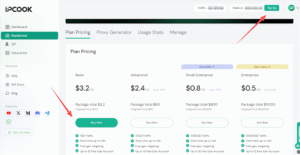
Select a package of this proxy for scraping based on your project needs, and start with a small package to test performance.
Step 3: Generate Proxy Credentials
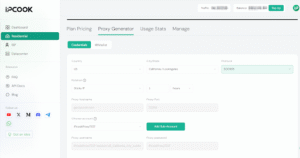
Choose your target country and protocol in the control panel, and then generate your proxy username and password.
Step 4: Integrate with Your Scraper
Now we can directly put the generated credentials into our script to test. Before you run your proxy server for web scraping, review this simple Python requests example.
| # Python requests example import requests proxy_host = ‘your-proxy-host’ proxy_port = ‘your-port’ username = ‘your-username’ password = ‘your-password’ proxies = { ‘http’: f’http://{username}:{password}@{proxy_host}:{proxy_port}‘, ‘https’: f’http://{username}:{password}@{proxy_host}:{proxy_port}‘ } response = requests.get(‘https://httpbin.org/ip’, proxies=proxies) print(response.text) |
For the Scrapy framework, you can add these proxy parameters in the middleware settings. If you use Selenium, you only need to configure the proxy host and port before you start the browser driver to write the web scraping proxy into your code.
IPcook Web Scraping Proxy Pricing
Here are the four main residential plans from this provider, which can support different scales of web scraping proxy tasks.
- Basic Plan: 3.2 dollars per GB, suitable for small tests and personal study
- Advanced Plan: 2.4 dollars per GB, suitable for small businesses with regular collection needs
- Small Enterprise Plan: 0.8 dollars per GB, highly cost-effective for medium data collection projects
- Enterprise Plan: 0.5 dollars per GB, great value for large-scale data collection teams
FAQ about IPcook Proxy
Is IPcook free to use?
Yes, IPcook offers a 100 MB free trial plan to test network performance. However, you need to buy a paid package if you want to run large data extraction tasks or use the service for a long time. The paid tiers are flexible with no monthly commitment, so you only pay for the traffic you actually consume.
Is IPcook safe to use as a web scraping proxy?
Yes, this provider offers a secure network environment for data collection. The service encrypts your connection and routes your requests through real residential nodes, which keeps your crawler anonymous. To maintain compliance, you must follow the terms of service of your target websites and respect local data privacy regulations.
Who should use IPcook?
This platform is an excellent fit for SEO teams, e-commerce analysts, market researchers, and independent developers. If you need to monitor search engine rankings or gather competitor prices across different regions, you will benefit from these features. It serves as one of the best proxies for scraping when you want high network stability but have a limited operational budget.
Final Verdict
You do not have to spend a fortune when you look for a high-quality web scraping proxy. Although some established competitors provide many complex custom features, their high monthly fees can be discouraging. IPcook offers a cost-effective alternative that maintains excellent speed and stability at a very low cost.
If you want to collect data without IP blocks or high budget pressure, IPcook is a reliable partner. You get wide global IP coverage, flexible auto-rotation, and long sticky sessions. You can sign up and start a trial today to evaluate these residential IPs and see why they are some of the best proxies for scraping.
