



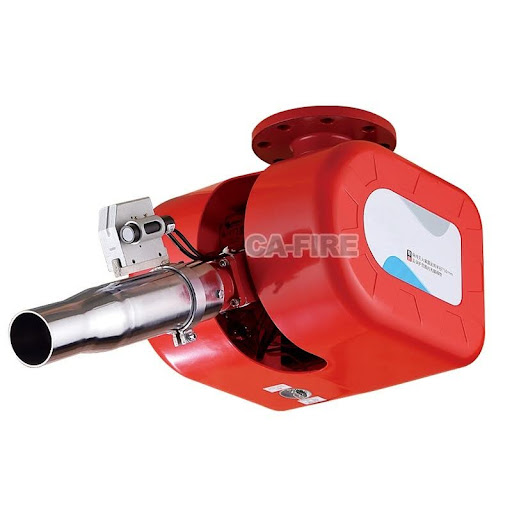
Fire safety is something every property owner, business manager, and facility planner should take seriously. While most people are familiar with smoke alarms and handheld fire extinguishers, there is a category of firefighting equipment that operates on a much larger scale — the fire monitor. Designed to deliver huge volumes of water or foam over long distances, fire monitors play a vital role in protecting warehouses, factories, fuel storage sites, and other large facilities. Here is a simple explanation of what they are, how they work, and why they matter.
What Is a Fire Monitor?
A fire monitor — sometimes called a water cannon or deluge gun — is a device that shoots a powerful, controlled stream of water or fire-suppressing foam at a fire. Unlike a standard fire hose, which a firefighter must hold and aim by hand, a fire monitor can be mounted on a fixed base, a vehicle, or a remote-controlled platform. This allows it to deliver far more water than any person could manage manually, and to do so from a safe distance.
Modern fire monitors can handle flow rates ranging from a few hundred to tens of thousands of liters per minute, making them essential wherever there is a high fire risk or large amounts of flammable material.
How Do Fire Monitors Work?
The idea behind a fire monitor is simple. Pressurized water or foam travels through a pipe to the monitor, which has an adjustable nozzle. The operator — or an automatic system — can change the spray pattern from a long, focused jet to a wide protective fog, depending on the situation.
Fixed monitors are permanently installed at key points around a building or site. When a fire is detected, they can be switched on by hand or triggered automatically by the building’s fire control system. Some monitors even oscillate, sweeping back and forth to cover a wide area without anyone needing to be present — a major safety advantage when a fire zone is too dangerous to approach.
Where Are Fire Monitors Used?
Fire monitors are found in many environments where ordinary firefighting equipment would not be enough. Oil refineries and chemical plants use them to protect storage tanks and processing areas. Airports rely on vehicle-mounted monitors for rapid response to aircraft emergencies. Large warehouses and logistics centers install fixed monitor systems to protect tall storage racks, while ports, power stations, and offshore platforms depend on them to safeguard high-value infrastructure and personnel.
Even some large commercial buildings and public venues incorporate fire monitors into their overall fire protection strategy, particularly where open spaces require coverage that sprinklers alone cannot provide.
Choosing the Right Equipment
For businesses investing in fire protection, selecting quality, certified equipment is essential. Important factors include the flow rate, nozzle type, materials used in construction — such as bronze or stainless steel for durability — and whether the system needs to handle foam as well as water. Working with a professional, certified manufacturer ensures the equipment will perform reliably when it matters most, and that it meets the relevant safety standards.
Ultimately, fire monitors represent one of the most powerful tools available in fire protection. Whether safeguarding an industrial complex or a large commercial property, they provide the capacity for rapid, large-scale fire suppression that can save both lives and valuable assets.
