



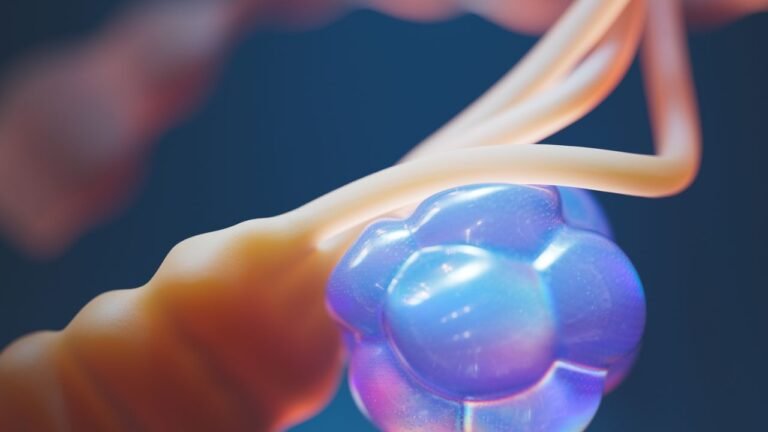
Few research peptides are as closely tied to ageing research as Epithalon (also spelled Epitalon). It is a tiny synthetic peptide, just four amino acids long, but it has been the subject of decades of laboratory work on telomeres and the pineal gland.
What Is Epithalon?
Epithalon is a synthetic tetrapeptide made of alanine, glutamic acid, aspartic acid and glycine. It was developed in Russia, based on research into epithalamin, a natural extract from the pineal gland, a small gland in the brain involved in producing melatonin and regulating daily body rhythms.
Telomeres and Telomerase
Telomeres are protective caps on the ends of chromosomes. They shorten a little each time a cell divides, and short telomeres are linked to cellular ageing in research models. Telomerase is the enzyme that can rebuild them. Much of the interest in Epithalon comes from laboratory studies that looked at whether it influences telomerase activity in cultured cells.
Other Areas of Research
- Melatonin production and circadian rhythm in animal models
- Antioxidant activity in cell studies
- Cellular ageing markers in long-term animal research
Most of the published work comes from a small number of research groups, and much of it is in cell and animal models. That is why Epithalon is treated as a research compound, and why independent replication remains an important goal.
Handling and Sourcing
Epithalon is supplied as a freeze-dried powder and should be stored cold and dry. As with any peptide, look for an independent certificate of analysis showing HPLC purity and mass spectrometry identity with a matching batch number. This Epithalon UK research guide covers the background and storage, and Revial Labs supplies Epithalon 10mg research vials from UK stock.
The Bottom Line
Epithalon sits at an interesting point in ageing research, linking the pineal gland, circadian rhythm and telomere biology. Careful, well-sourced laboratory work is what will show how much of that early promise holds up.
All compounds discussed are supplied for in vitro laboratory research only. They are not licensed medicines in the UK, and nothing here is medical advice.
