



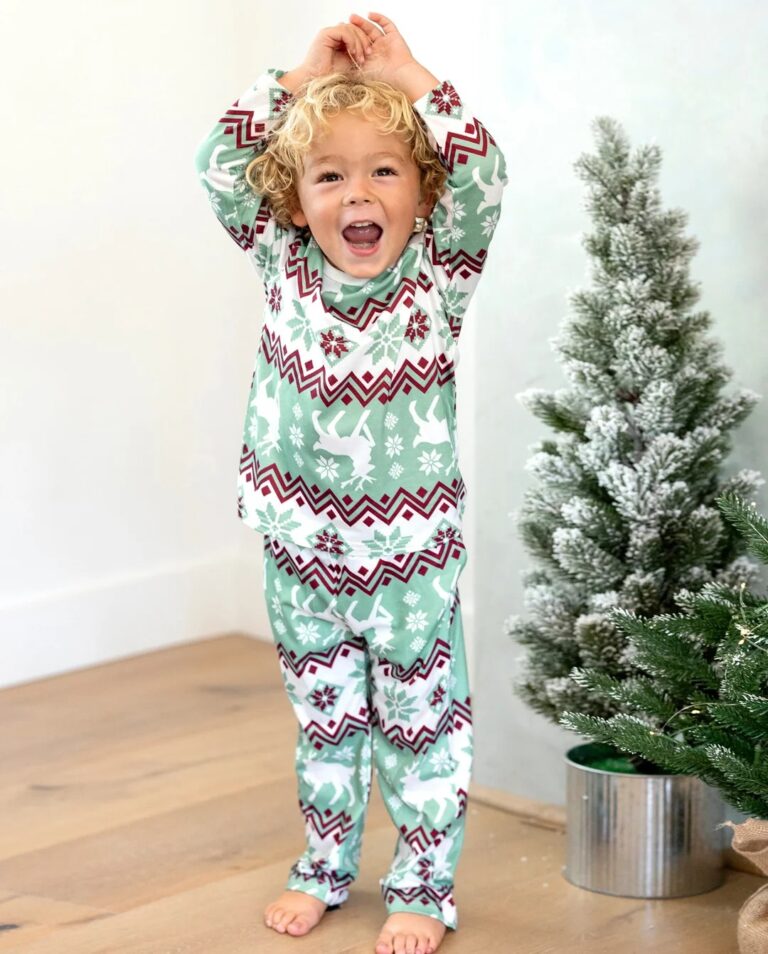
Christmas fashion has always had its recognizable uniforms. There are party dresses, novelty sweaters, velvet bows, tartan shirts, and the polished outfits families save for dinner or photographs. What has changed is where seasonal style now happens. The living room, breakfast table, kitchen, and sofa have become just as visually important as the formal gathering, and relaxed clothing has moved into the center of the holiday wardrobe.
The trend also reflects a broader move toward group styling that does not depend on formal dress codes. A family can look connected through one motif while adults, children, babies, and pets wear different garment shapes. The visual link is obvious, but the experience remains relaxed. That combination—easy to understand, easy to photograph, and easy to fold into an at-home celebration—is what has allowed matching sleepwear to move from a cute idea into a recurring part of Christmas fashion.
The Holiday Wardrobe Has Expanded Beyond Going-Out Clothes
Seasonal dressing used to have a clear hierarchy: special clothes for the event, everyday clothes for everything around it. Now the hours around the event matter more. Families document breakfast, baking, wrapping, game nights, and quiet moments at home, so the wardrobe has followed.
That shift is particularly visible at Christmas because the season already has such a strong visual language. Reindeer, snowflakes, trees, gingerbread, red, green, cream, and winter patterns are instantly recognizable, so a simple pajama silhouette can still look unmistakably festive.
Social Media Did Not Create the Look, but It Changed Its Reach
Families have coordinated holiday clothing for years, but social media gave the idea a larger stage. A shared print reads quickly on a phone screen. It makes a group photograph visually organized without requiring a complicated backdrop, and it works just as well in a candid kitchen photo as in a posed portrait by the tree.
The best versions do not look like they were designed only for posting. Families exploring matching family christmas pajamas can use the shared print as a visual shortcut, then keep the setting and accessories much more personal. The look should still make sense once the phone is put down and everyone returns to the actual evening.
Color Is Doing More Work Than People Realize
A coordinated family look can feel very different depending on the base color. Deep red and forest green lean traditional. Navy can make whimsical prints feel calmer. Black creates contrast. Pale green, cream, and soft blue offer a lighter direction that can work well with natural wood, warm lighting, or neutral interiors.
This is one reason seasonal sleepwear keeps producing new variations without changing the basic concept. The silhouettes may remain simple while color and print provide the trend update.
A softer palette can also make a busy Christmas motif easier to wear across several generations. The group still looks festive, but the clothing does not compete as aggressively with a decorated room.
The Trend Works Best When Every Generation Is Not Styled the Same Way
A family photograph usually looks stronger when different ages are allowed to look like different ages. Grandparents do not need the same accessories as teenagers, and toddlers do not need to be styled like miniature adults.
It also keeps the trend from becoming too rigid. A family can participate at different levels while still sharing the same seasonal idea. Someone might add a robe, another person may keep familiar slippers, and an older child can bring their own style into the picture without breaking the visual connection.
One Pale-Green Set Shows How the Trend Gets Updated
The supplied PatPat URL currently resolves to Christmas Matching Family Pajamas Reindeer Print Light Green, with the color listed as Pale Green; the page’s image metadata still carries the older “Christmas Spirit and Snowflake” product wording. The current U.S. page shows selections for women, kids, babies, men, and pets, with multiple size choices across those wearer groups. It is presently marked out of stock.
Its verified selling points show how a familiar Christmas idea can be refreshed through color and construction:
- Pale-green holiday palette: a softer alternative to the usual dark red or forest green.
- Several family-member choices: women, men, kids, babies, and pets appear on the current page.
- Two-piece design: long-sleeve top and full-length pants with a relaxed pull-on fit.
- Matching Christmas socks: included according to the current product details.
- Flat-seam construction and a heat-pressed tagless label: listed interior details.
- Pre-shrunk construction: stated on the exact page.
- Soft stretch knit: the current fabric description, without a disclosed fiber-percentage breakdown.
- Simple care: machine wash cold and tumble dry low, with no bleach or dryer sheets.
The page is a useful example of how the category changes without abandoning its basic formula. A familiar seasonal motif, a lighter color direction, and wearer-specific sizing can make a long-running group-dressing idea feel visually fresh again.
Christmas Morning Has Become Its Own Fashion Moment
Christmas morning used to be the unstyled part of the day—the hours before anyone changed into something presentable. Now it is one of the most photographed parts of the holiday.
That has created a natural place for coordinated sleepwear. The look suits the setting because it does not ask people to dress formally before breakfast, yet it gives the morning a clear visual identity. Wrapping paper, mugs, gifts, and the tree already create the backdrop.
The strongest trend pieces often emerge when fashion meets an existing habit. Families were already spending Christmas morning together. Matching sleepwear simply gave that moment a recognizable dress code.
The Look Now Moves Across the Whole Season
The appeal is no longer tied only to December 25. The same coordinated look may appear at an early family gathering, a Christmas Eve film, a weekend breakfast, a sibling reunion, or a gift-wrapping night.
That wider window makes the category feel less like a one-picture purchase. A family does not have to create a special event just to justify wearing the clothes. They can join activities that were already going to happen.
This also changes how people think about the photograph. Instead of one “official” image, a shared print may recur across several days, creating a visual thread through the season.
Pet Options Changed the Meaning of “Whole Family”
As christmas pajamas ranges expand across more wearer types, pet options have become more than a novelty detail. They reflect how many households now include pets in family rituals and holiday photographs.
From a fashion perspective, the pet piece can also make the group concept feel more complete. The visual joke works because the same seasonal language crosses different ages and, sometimes, species.
Not every household wants that option, but its presence shows how flexible the matching concept has become. The group can be defined by the people—and animals—who actually share the home rather than by a traditional portrait formula.
Seasonal Trends Still Need Practical Fit Decisions
A fashion trend does not replace product-specific sizing, particularly for children’s sleepwear. U.S. Consumer Product Safety Commission guidance explains that children’s sleepwear is subject to federal flammability requirements, with specific provisions for qualifying infant garments and tight-fitting sleepwear.
Parents should follow the exact garment’s labels and size chart rather than deliberately choosing oversized children’s sleepwear simply to gain extra wear time. The visual theme can be flexible; the child’s intended garment fit should not be improvised for the sake of a photograph.
Adult sizing and styling can be handled separately. A shared print does not require every family member to use the same fit preference.
The Trend Is Becoming Less About Perfection
Early matching-family images often emphasized perfect symmetry: everyone lined up, every item visible, every person looking at the camera. The more current interpretation can be looser.
Someone can sit on the floor. Another person can add a cardigan. Children can move. The group can be photographed while opening gifts rather than standing still beside them.
That relaxed approach may actually strengthen the fashion idea because the clothes stop looking like costumes reserved for a staged photograph. They become part of the celebration itself.
Why the Look Keeps Returning Every December
Many seasonal trends disappear because they depend on novelty alone. Matching holiday sleepwear has something more durable behind it: it fits an activity families already repeat.
Christmas brings people into the same rooms, creates a reason to take photographs, and gives even relaxed clothing permission to become more playful. Coordinated pajamas sit comfortably at that intersection. They are visually obvious enough to feel festive but informal enough to belong to the quieter parts of the holiday.
The details will continue to change—new colors, new prints, different silhouettes, more or fewer participants—but the basic appeal does not depend on one specific design. The trend works because it turns an ordinary category of clothing into a temporary group identity.
That is the real reason the look has moved beyond novelty status. Christmas fashion is no longer only about what people wear when they go out. It is also about what they wear when everyone finally comes home.
