



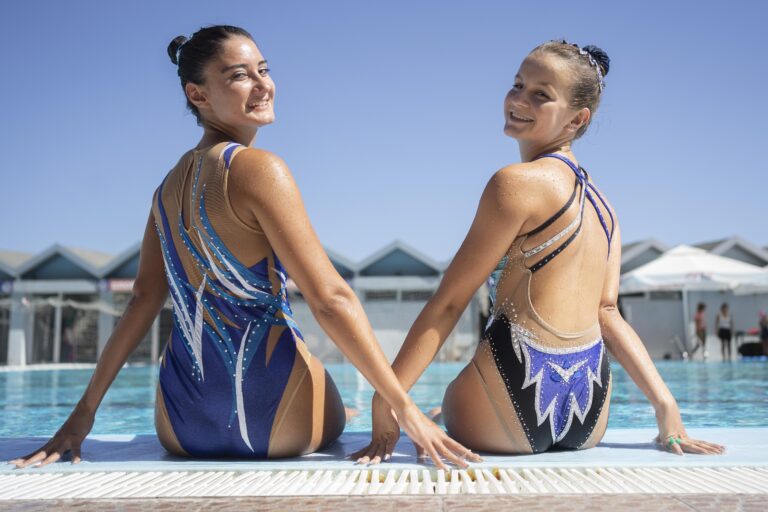
The secret to swimwear that doesn’t fall apart after a month isn’t just a “premium” label it’s a series of very specific engineering choices. For anyone moving from fast fashion to professional-grade production, the goal is solving a classic chemistry problem: how do you stop chlorine from eating the elastic and the sun from bleaching the color?
When high quality swimwear manufacturers build a collection, they aren’t just looking at patterns; they are looking at fiber cross-sections and chemical bonds. Here is how the industry actually tackles the elements to ensure a suit stays vibrant and tight, swim after swim.
Moving Beyond Standard Spandex
The biggest enemy of swimwear is “spandex rot.” Traditional elastane is incredibly sensitive to the oxidizers found in pool water. Within a dozen swims, those tiny elastic fibers start to snap, leading to that dreaded sagging in the seat and straps.
To fix this, industry experts skip the basic stuff and move toward PBT (Polybutylene Terephthalate) or specialized, chlorine-resistant branded elastics. PBT is essentially a texturized polyester with a natural stretch. It feels a bit differentslightly less “rubbery” and a bit more substantialbut it is nearly immune to chemical breakdown. When a custom clothing manufacturer develops a high-performance line, they prioritize these specialized blends because they maintain “memory,” meaning the suit snaps back to its original shape even after a long day at the beach.
The Science of “Solution Dyeing”
Most people think fading is just part of life, but it’s actually a failure in the dyeing process. In standard manufacturing, the fabric is knitted and then “dip-dyed.” The color sits on the surface. Chlorine acts like a bleach, stripping that surface pigment away.
The pro-grade workaround is solution dyeing. In this process, the color pigment is added to the liquid polymer before the fiber is even created. The color is baked into the very DNA of the thread. When the sun hits it or chlorine tries to oxidize it, there is no surface layer to strip. The color goes all the way through, which is why a high-end black swimsuit stays deep midnight black while a cheap one turns a rusty purple by mid-July.
Sublimation: Locking in the Visuals
Sublimation Printing is the best choice if a brand desires loud, elaborate patterns that will not suffer wear and tear, like peeling or fading. This process differs from screen printing because it does not have an “iron-on” effect.
In sublimation, the ink transforms into a gaseous form, bonding with polyester fiber molecules. As it cools down, the pattern becomes fused with the material, meaning that the fabric could be pulled to its maximum extent and would remain fully intact without any cracks or white spaces. Since the dye is protected within the fiber itself, it is resistant to UV light and any other harmful substances – perfect for swimwear manufacturers that require quality prints to stand the test of time.
Tight Knits and UV Defense
UV resistance isn’t just a chemical coating that can wash off; it’s a mechanical feature. The UPF (Ultraviolet Protection Factor) of a garment is largely determined by the density of the knit. If you hold a cheap swimsuit up to the light, you can often see pinpricks of sun shining through the gaps in the weave. That’s where UV rays get in to break down the fabric’s molecular structure.
Premium production uses high-gauge knitting machines to create a much tighter, flatter surface. This physical barrier blocks the vast majority of UVA and UVB rays. Some manufacturers also incorporate UV absorbers, essentially mineral blockers, directly into the finishing bath, ensuring the protection is permanent and doesn’t disappear after five cycles in the wash.
Structural Reinforcement
The fabric usually gets the credit, but the construction is what keeps it together. Saltwater and chlorine don’t just attack the Lycra; they attack the thread. If a custom clothing manufacturer uses standard cotton or low-grade nylon thread, the seams will rot long before the fabric does.
High-end suits use “woolly nylon” or specialized polyester threads that are bulked for soft-to-skin contact but treated for chemical resistance. Flatlock stitching is used to ensure that even when the fabric is under extreme tension, like during a dive or a high-impact water sport, the stress is distributed across four or six needles rather than just one. It prevents that “popped seam” look and ensures the suit moves with the body rather than against it.
The Reality of the “Life Cycle”
At the end of the day, creating durable swimwear is about respect for the environment it lives in. Between the high-octane heat of a summer day and the harsh alkalinity of a pool, a swimsuit is technically being “attacked” the moment it’s worn.
By focusing on PBT fibers, utilizing sublimation printing for deep-set color, and insisting on high-density knits, manufacturers can extend the life of a garment from months to years. It’s a combination of smart chemistry and precise mechanical engineering that separates a piece of “disposable” fashion from a piece of high-performance apparel. For the end user, that means a suit that fits just as well on the last day of summer as it did on the first.
