



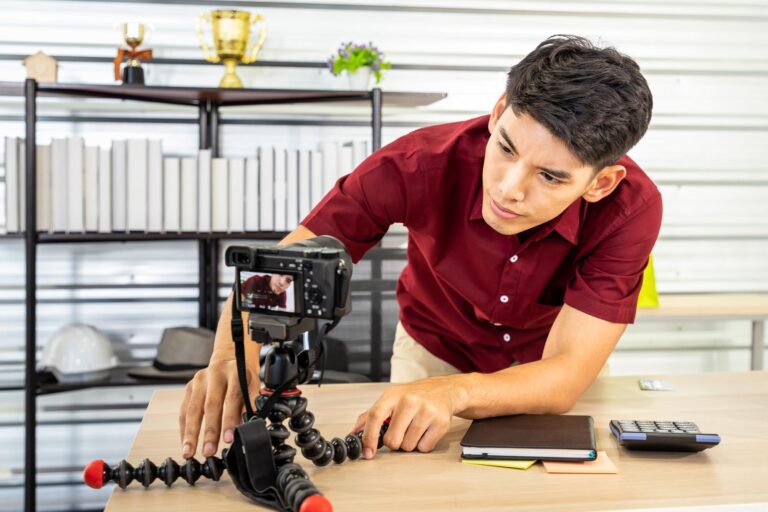
Creating content quickly has become one of the biggest challenges for modern creators. Social media platforms reward consistency, speed, and relevance, but traditional video production often slows creators down. Filming, editing, and refining even short videos can take hours, which makes it difficult to keep up with demand.
This is why many creators are shifting toward image-to-video AI. By turning static images into animated videos, this technology allows creators to produce content faster without sacrificing engagement. Understanding why this shift is happening can help creators and businesses adapt to the new pace of content creation.
Why is speed becoming the most important factor in content creation?
Speed determines whether content is relevant when it reaches the audience. On fast-moving platforms, timing often matters more than perfection.
According to DataReportal’s 2024 Global Digital Report, users spend an average of 95 minutes per day consuming short-form video content. Platforms like TikTok prioritize content that captures attention quickly and maintains high completion rates. Creators who publish frequently and respond to trends early are more likely to gain visibility and engagement.
What challenges do creators face with traditional video production?
Traditional workflows involve multiple steps, including planning, filming, editing, and exporting. Each step requires time, effort, and often specialized tools.
A 2024 Wyzowl report found that while 91 percent of businesses use video, many struggle with production time and cost. For individual creators or small teams, producing content at scale becomes difficult. This limitation reduces the ability to experiment and slows overall growth.
How does image-to-video AI solve these challenges?
Image-to-video AI simplifies the process by generating motion directly from images. This removes the need for filming and reduces editing complexity.
Creators can upload a single image and turn it into a short video within minutes. This drastically shortens production time and allows for faster iteration. Instead of focusing on technical execution, creators can focus on ideas, storytelling, and audience engagement.
Why are creators using image-to-video AI for content testing?
Testing ideas is essential for growth, but traditional production makes it time-consuming. Image-to-video AI allows creators to test multiple ideas quickly.
A Social Media Examiner study shows that 68 percent of creators test new formats weekly. With image-to-video AI, a single visual can be turned into multiple video variations with different captions or motion styles. This enables creators to identify what works without investing hours into each concept.
How does faster content creation improve engagement?
Faster production allows creators to respond to trends in real time. This increases the chances of content being seen and shared.
Hootsuite’s 2024 analysis found that content posted within the first 48 hours of a trend receives significantly higher engagement. Image-to-video AI enables creators to act quickly, ensuring their content remains relevant and competitive in fast-moving feeds.
Where does image-to-video AI fit into a creator’s workflow?
Image-to-video AI typically sits between ideation and publishing. It acts as a bridge that turns ideas into finished content quickly.
In the middle of many creator workflows, tools like image to video AI by Viggle AI help convert static visuals into animated videos ready for social platforms. This allows creators to skip time-intensive editing steps while maintaining output quality.
What types of content benefit most from image-to-video AI?
Certain content formats are especially suited for fast, motion-based creation. These formats rely more on creativity than production complexity.
Short-form videos, memes, reaction clips, educational snippets, and product highlights perform particularly well. According to Later.com analytics, motion-based content receives up to 34 percent more shares than static posts. Image-to-video AI enhances these formats by adding movement and visual interest.
How does image-to-video AI help creators stay consistent?
Consistency is critical for building an audience, but maintaining it can be exhausting with traditional workflows. Image-to-video AI reduces that burden.
Hootsuite’s benchmark data shows that creators who post three to five times per week experience higher growth rates. By reducing production time, image-to-video AI allows creators to maintain a steady posting schedule without burnout.
Does this shift reduce the importance of creativity?
Creativity becomes even more important as production becomes easier. When execution is simplified, ideas become the main differentiator.
AI can generate motion, but it cannot replace original thinking or cultural awareness. Creators who focus on storytelling, humor, and audience insight will stand out. Image-to-video AI simply gives them more opportunities to express those ideas quickly.
What limitations should creators be aware of?
While image-to-video AI is powerful, it is not suitable for every type of content. Certain limitations still exist.
Long-form storytelling, complex scenes, and highly detailed visuals often require traditional production. AI-generated motion can also feel repetitive if overused. Creators need to balance speed with creativity to avoid producing generic content.
How are creators combining AI with traditional methods?
Many creators are adopting hybrid workflows. They use AI for speed and traditional production for depth.
For example, a creator might use AI to test ideas and identify high-performing concepts. Once a concept proves successful, they may invest in a more polished version using traditional methods. This approach maximizes efficiency while maintaining quality.
What does the future look like for content creation speed?
Content creation is becoming faster and more data-driven. Image-to-video AI will play a central role in this evolution.
Industry forecasts suggest that by 2027, over 80 percent of social video content will involve some level of AI assistance. As tools improve, creators will be able to produce content in near real time, adapting quickly to audience preferences and platform trends.
Conclusion
Creators are switching to image-to-video AI because it solves one of the biggest challenges in modern content creation: speed. By reducing production time and simplifying workflows, this technology allows creators to focus on ideas, experimentation, and audience engagement.
The shift is not about replacing creativity but enhancing it. Creators who embrace image-to-video AI can produce more content, test ideas faster, and stay relevant in a highly competitive environment. As the demand for content continues to grow, this approach will become an essential part of successful content strategies.
