



Most drivers drop their keys off at the garage and wait for a phone call. What actually happens in between is a mystery to many, and that uncertainty is exactly what puts people off booking a service in the first place. Whether you’re based in Fleet or anywhere in between, understanding what a car service involves helps you make better decisions about your vehicle and your safety.
If you’re unsure when your car is due or what type of service you need, speaking to a trusted car servicing centre in Fleet, Hampshire can help you plan and avoid unexpected issues.
This guide walks you through the whole process, clearly and without jargon.
What Is a Car Service?
Think of a car service as a health check for your vehicle. A doctor doesn’t wait for you to collapse before running tests, and a good mechanic doesn’t wait for your car to break down either. A service is a scheduled inspection and maintenance routine designed to catch problems early, keep your car running efficiently, and protect you on the road.
It is not the same as an MOT. An MOT tests whether your car is legally roadworthy at a single point in time. A service goes deeper, checking wear and tear, fluid levels, filters, and components that the MOT doesn’t touch.
The 3 Types of Car Service
Not every service is the same. The right one for you depends on your mileage, your car’s age, and when you last had it checked.
- Interim Service Recommended every 6 months or 6,000 miles, whichever comes first. It covers the core essentials, oil and filter change, fluid top-ups, tyre checks, and a visual inspection of key components.
- Full Service Recommended every 12 months or 12,000 miles. This is more comprehensive and can include up to 80 individual checks. It covers everything in the interim service plus spark plugs, air filters, brake fluid, steering, suspension, and more.
- Major Service Recommended every 24 months or 24,000 miles. This is the most thorough option, covering all checks in the full service alongside deeper inspections and replacements of wearable parts. It typically takes around four hours to complete.
Car Service Types Comparison
| Service Type | Frequency | What’s Included |
| Interim Service | Every 6 months / 6,000 miles | Oil, filter, fluid checks, basic inspection |
| Full Service | Every 12 months / 12,000 miles | 70–80 checks, brakes, filters, fluids |
| Major Service | Every 24 months / 24,000 miles | Full service + deeper inspections & replacements |
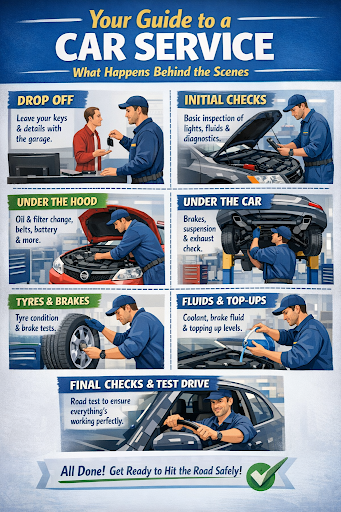
What Actually Happens During a Car Service?
This is the part most drivers never see. Here is a clear breakdown of what a qualified technician works through during a typical full service.
1. Oil and Filter Change
Old engine oil becomes thick, dirty, and less effective at lubricating moving parts. The technician drains the old oil completely, replaces the oil filter, and refills with fresh oil suited to your engine. This is one of the single most important things you can do for engine longevity.
2. Brake Inspection
Your brakes are checked thoroughly: pads, discs, calipers, and brake fluid levels. Worn pads or low fluid are common findings, particularly in cars driven regularly around busy areas like Ash Vale or Tongham. If anything is flagged, you’ll be told whether it’s urgent or advisory.
3. Tyre Check
Tyres are inspected for tread depth, pressure, and visible damage. The legal minimum tread depth in the UK is 1.6mm, but most technicians recommend replacing tyres at 3mm for safer stopping distances. You can find out more about keeping your tyres in good shape with a professional car service.
4. Fluid Levels
Your car relies on several fluids to function correctly. During a service, the technician checks and tops up:
- Engine coolant, to prevent overheating
- Brake fluid, essential for safe stopping
- Power steering fluid, for smooth handling
- Windscreen washer fluid, for visibility
5. Filter Replacements
Depending on the service type, the air filter, cabin filter, and fuel filter may be inspected or replaced. A blocked air filter restricts airflow to the engine and can reduce fuel efficiency noticeably.
6. Battery Check
The battery is tested for charge and inspected for corrosion around the terminals. Cold weather is particularly tough on batteries, something drivers in Fleet and Farnborough know well during the winter months.
7. Lights and Indicators
Every light on your car is checked, including headlights, brake lights, indicators, fog lights, and reversing lights. A faulty bulb can result in an MOT failure and, more importantly, put you at risk on the road.
8. Steering and Suspension
The technician inspects suspension components for wear, checks wheel alignment visually, and looks for any play in the steering. Poor suspension doesn’t just affect ride comfort — it affects how safely your car responds in an emergency.
9. Diagnostic Scan
Modern vehicles are connected to an onboard computer. A diagnostic scan reads any stored fault codes from the engine management system, ABS, and other electronic systems. If your dashboard has a warning light showing, this is where the cause is identified.
10. Road Test
Many services conclude with a short road test. This lets the technician check for unusual noises, vibrations, or handling issues that don’t show up during a stationary inspection.
How Long Does a Car Service Take?
The time varies depending on the service type and whether any additional work is needed.
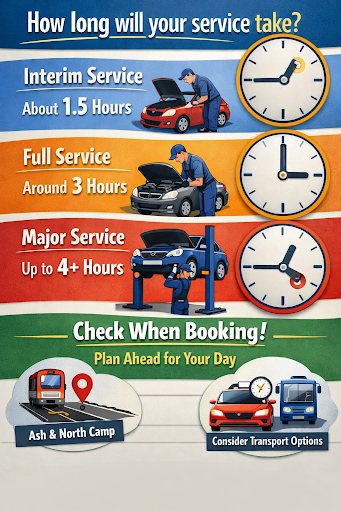
- An interim service typically takes around 1.5 hours
- A full service usually takes around 3 hours
- A major service can take up to 4 hours or more
It is always worth asking when you book so you can plan your day accordingly, especially if you’re commuting from Ash or North Camp and need alternative transport arranged.
| Service Type | Estimated Time |
| Interim Service | ~1.5 hours |
| Full Service | ~3 hours |
| Major Service | 4+ hours |
Why Regular Servicing Matters
Skipping a service might feel like a saving in the short term. In reality, it often leads to far more expensive repairs down the line. Here is why keeping on top of servicing is worth it:
Safety comes first. Worn brakes, low fluid levels, and failing tyres are all things a service picks up before they become dangerous.
It protects your engine. Old oil causes friction and heat. Fresh oil keeps everything moving as it should, extending the life of your engine significantly.
It improves fuel efficiency. A well-maintained engine doesn’t have to work as hard. Clean filters and fresh oil mean better miles per gallon.
It supports your car’s resale value. A full service history reassures buyers that the car has been looked after. It is one of the first things a knowledgeable buyer checks.
It keeps your warranty valid. Many manufacturer warranties require servicing to be carried out at the recommended intervals. Gaps in your service history can void that protection.
For drivers looking for reliable servicing and honest advice, you can check reviews or get directions via TJ Services Fleet to see how local garages handle routine maintenance and inspections.
Conclusion
A car service is not a luxury or an optional extra, it is routine maintenance that keeps your vehicle safe, efficient, and reliable. From the oil change to the final road test, each check serves a purpose. Drivers across Farnham, Tongham, and the wider Hampshire area who stay on top of regular servicing consistently avoid the costly surprises that come from neglect. Book your next service before the warning signs appear, not after.
Frequently Asked Questions
Is a car service the same as an MOT?
No. An MOT is a legal safety test required annually for vehicles over three years old. A service is a maintenance check that goes beyond what an MOT covers, inspecting wear and tear, fluids, and components that the MOT does not assess.
How often should I get my car serviced?
Most manufacturers recommend a full service every 12 months or 12,000 miles, whichever comes first. High-mileage drivers may benefit from an interim service every six months or 6,000 miles.
Will the garage contact me if they find something wrong?
Yes. A reputable garage will always call you before carrying out any additional work. You should receive a clear explanation of what was found, whether it is urgent or advisory, and an estimate before anything is agreed.
Does a car service affect my car’s resale value?
It does. A full, stamped service history demonstrates the car has been properly maintained and gives buyers confidence. It is one of the most effective ways to protect the value of your vehicle over time.
Can I drive my car straight after a service?
In most cases, yes. If a road test has already been completed by the technician, your car is ready to drive. If any parts were replaced or additional work carried out, the garage will advise you accordingly.
