



Not every change in the face happens where people expect to look. Two of the most transformative procedures in feminizing surgery actually work at the edges of what most patients initially consider, one at the very top of the face where hair meets skin, and one on the neck where the thyroid cartilage rises into view. These two procedures, hairline advancement and tracheal shave, often get mentioned almost as afterthoughts during early consultations, and yet patients who have completed them frequently describe them as the changes that mattered most in daily life. The quiet power of tracheal shave surgery and hairline lowering is that they address features people see constantly without consciously registering, and shifting them rewrites the visual story the body tells in ways that keep surprising patients months after recovery.
The Neck Tells A Story Before Words Arrive
There is something specific about the throat that the human eye tracks without permission. A prominent Adam’s apple, medically known as the thyroid cartilage prominence or laryngeal prominence, reads as masculine almost universally across cultures. The cartilage itself is larger and tilts forward at a sharper angle in most adult male bodies, and that shape projects through the skin in a way that voice training and clothing cannot fully hide. For transgender women, that small triangle of cartilage can become an outsized source of daily frustration, drawing attention in photographs, catching light during video calls, visible above almost every neckline. Reducing it is a relatively quick procedure from a surgical standpoint, but the psychological relief patients describe afterward is often disproportionate to the technical complexity of what was done. Wearing a scoop neck top without self consciousness, turning your head freely during conversations, catching your reflection in a store window without flinching, all of these small daily moments change permanently.
The Technical Considerations That Make This Procedure Delicate
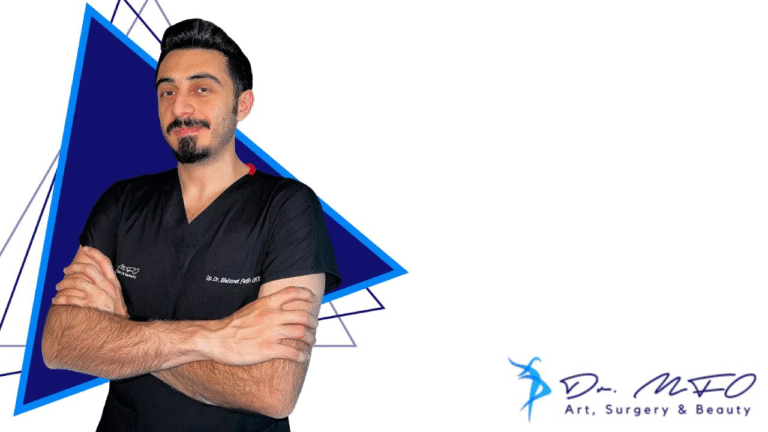
Shaving the thyroid cartilage sounds simple until you remember what sits right behind it. The vocal cords attach to the inner surface of this cartilage, and removing too much bone can permanently alter the voice in ways nobody wants. A surgeon who approaches this procedure casually risks taking away vocal range that patients have often spent years developing through voice training. Dr. Mehmet Fatih Okyay approaches the thyroid cartilage with the restraint that only comes from understanding exactly what cannot be undone. The incision is typically placed in a natural skin crease where scarring will fade into invisibility over time, and the amount of cartilage removed is calculated precisely to leave the vocal cord attachment completely undisturbed. This kind of careful measurement reflects thirteen years of plastic surgery experience, during which caution becomes something closer to instinct than deliberate choice.
Why The Hairline Carries So Much Visual Weight
The other procedure patients underestimate is hairline advancement, sometimes combined with scalp advancement surgery. A high forehead with a receded or M shaped hairline reads as masculine almost immediately, even in people whose hair is otherwise full and healthy. Feminine hairlines tend to sit lower on the forehead, with a more rounded shape rather than the classic temporal recession pattern that appears in many male faces. Lowering the hairline by a centimeter or two fundamentally changes the proportions of the upper face, making the forehead look shorter, the face look softer, and the overall impression read as feminine without any single feature drawing conscious attention. The procedure can be performed alone or combined with forehead contouring, which is often the more powerful approach because a single incision allows both changes to happen during one recovery period.
The Credentials And Story Of Dr. Mehmet Fatih Okyay
Dr. Okyay founded Dr. MFO Clinic as its owner on June 1st, 2021, after more than a decade of plastic surgery practice. His academic journey began with ranking eighth in his term in the Turkish Medical Specialization Examination, which gave him his choice of training programs. He selected Istanbul University Cerrahpaşa Faculty of Medicine for his residency in Plastic, Reconstructive, and Aesthetic Surgery. The European Association of Medical Specialists recognized his work with the Fellow of the European Board of Plastic, Reconstructive and Aesthetic Surgeons distinction in Brussels in 2018, and the Turkish Plastic, Reconstructive and Aesthetic Surgery Association granted him the Turkish Board equivalent the same year. He maintains permanent memberships in the International Society of Aesthetic Plastic Surgeons, the Turkish Plastic Surgery Association, the Turkish Aesthetic Plastic Surgery Association, and the World Professional Association of Transgender Health. Away from the operating room he writes songs and poetry, plays classical guitar, the ney, and electric guitar, raises three children with his wife, and communicates academically in English, fluently in Spanish, and conversationally in French.
Where These Procedures Fit Inside Facial Feminization Surgery
Neither hairline advancement nor tracheal shave tends to stand alone in a treatment plan. They usually appear alongside forehead contouring, rhinoplasty, jaw and chin reshaping, and sometimes lip lift or brow lift, all working together to produce a coherent outcome rather than a disconnected series of changes. Planning the sequence and combination requires compositional thinking, because each procedure affects how the others will ultimately read. A face that has been fully feminized from hairline to chin but still carries a prominent thyroid cartilage ends up feeling incomplete in ways that are hard to articulate but impossible to ignore. Dr. Okyay’s clinical range across forehead contouring, facelift, nose aesthetics, breast feminization, and body contouring including tummy tuck and liposuction gives him an unusually wide compositional view, which translates into treatment plans that consider the whole rather than fragments.
The Recovery Most Patients Handle Better Than Expected
Compared to bone work on the forehead or jaw, these two procedures tend to heal relatively quickly. Tracheal shave recovery usually involves a small amount of neck swelling, some temporary difficulty swallowing, and occasional mild voice hoarseness that typically resolves within a few weeks. The incision line fades gradually and is almost always invisible within a year. Hairline advancement recovery involves some scalp numbness along the incision, temporary swelling that can migrate down into the forehead and eye area, and a period of patience while the scar matures enough to be hidden entirely by hair regrowth across the incision line. Most patients return to normal daily activities within a week or two, though exercise and heavy lifting remain restricted for longer. Understanding this timeline in advance turns what could feel like frightening milestones into expected steps along a predictable path.
Why The Journey So Often Leads To Istanbul
Patients considering these procedures eventually encounter the same pattern of reviews pointing toward Turkey, and specifically toward https://www.dr-mfo.com/. The all inclusive package structure bundles surgery fees, hospital stay, anesthesia, medications, accommodation, airport transfers, and post operative follow up into one transparent plan that removes the administrative exhaustion of coordinating international medical travel. The cost advantage makes surgical care accessible at a level of quality that many patients could never achieve in their home countries, without any compromise in the quality itself. Istanbul as a city brings something that no surgical skill can replicate, which is an atmosphere of genuine welcome, layered history, and instinctive hospitality that turns the recovery period into something more meaningful than convalescence. For procedures that reshape how patients move through the world, landing in a city that itself has reinvented itself across two thousand years carries a kind of symbolic weight that many patients only recognize after they have been there.
