



Quick Overview
- Why choosing the right safety shoes matters
- Understanding workplace hazards before buying
- Different types of safety toe protection
- Essential safety features to consider
- Choosing safety footwear by industry
- Common mistakes first-time buyers make
- How comfort impacts safety and productivity
- FAQs about selecting safety shoes
Choosing Safety Shoes Isn’t as Simple as It Looks
Walk into any safety footwear store and you’ll quickly realize something.
There are dozens of options.
Steel toe. Composite toe. Waterproof boots. Lightweight safety sneakers. Slip-resistant work shoes. Electrical hazard footwear.
Suddenly, what seemed like a simple purchase becomes surprisingly complicated.
And honestly, that’s not a bad thing.
Modern safety footwear is designed to address specific workplace risks. The challenge isn’t finding a safe shoe—it’s finding the right safe shoe for your job.
A construction worker’s needs are very different from those of a warehouse picker. An electrician faces hazards that a delivery driver rarely encounters. Even climate and shift length can influence the ideal choice.
So before spending money on your next pair, let’s walk through everything you should know.
Why the Right Safety Shoes Matter
Most workers spend between 8 and 12 hours a day wearing safety footwear.
That’s a lot of time on your feet.
The wrong pair can cause:
- Foot pain
- Blisters
- Knee strain
- Lower back discomfort
- Fatigue
- Reduced productivity
The right pair can improve comfort, reduce workplace injuries, and help you stay focused throughout your shift.
Think of safety shoes as an investment rather than an expense.
After all, your feet do most of the work.
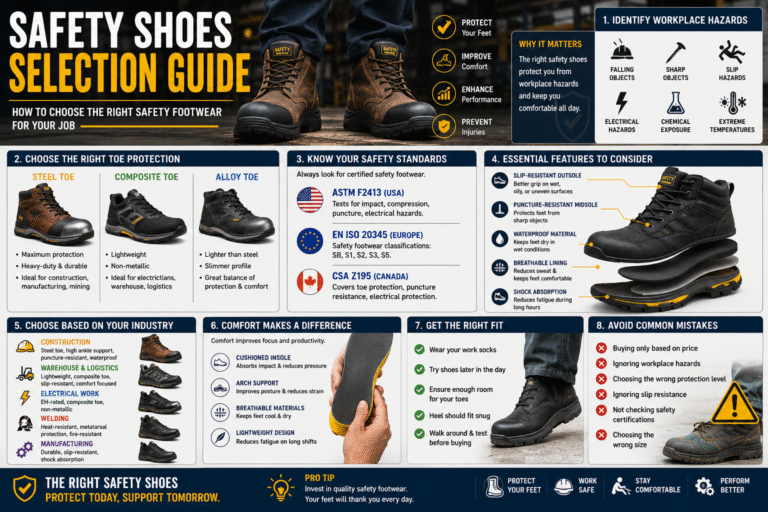
Step 1: Identify Workplace Hazards
Before looking at brands or styles, identify the risks your feet face daily.
Ask yourself:
Could Heavy Objects Fall on My Feet?
If yes, you’ll need protective toe caps.
Common industries include:
- Construction
- Manufacturing
- Warehousing
- Mining
Do I Work Around Sharp Objects?
If nails, scrap metal, or sharp debris are present, puncture-resistant midsoles become important.
Common environments include:
- Construction sites
- Demolition projects
- Industrial facilities
Is Electrical Exposure a Risk?
Electricians and utility workers should prioritize EH-rated (Electrical Hazard) footwear.
These shoes help reduce the risk of electrical shock.
Do I Frequently Walk on Wet Floors?
Slip-resistant outsoles are critical for:
- Warehouses
- Food processing plants
- Commercial kitchens
- Logistics centers
One slip can cause more injuries than a falling object.
Step 2: Choose the Right Toe Protection
The toe cap is often the first thing buyers consider.
Let’s compare the main options.
Steel Toe Safety Shoes
Steel toe footwear remains the traditional choice for heavy-duty industries.
Benefits include:
- Excellent impact protection
- High compression resistance
- Long-term durability
Best for:
- Construction
- Mining
- Heavy manufacturing
- Steel fabrication
The trade-off?
Extra weight.
Composite Toe Safety Shoes
Composite toe caps are made from materials such as:
- Carbon fiber
- Fiberglass
- Kevlar
- Reinforced plastics
Advantages include:
- Lightweight construction
- Non-metallic design
- Better insulation in cold weather
- Comfortable for long shifts
Popular among:
- Warehouse workers
- Electricians
- Service technicians
- Logistics employees
Alloy Toe Safety Shoes
Alloy toes typically use aluminum or titanium.
They offer:
- Lighter weight than steel
- Slimmer profile
- Strong protection
Many workers see alloy toes as a middle ground between steel and composite options.
Step 3: Understand Safety Ratings
A safety shoe should always meet recognized industry standards.
ASTM F2413 (United States)
This certification covers:
- Impact resistance
- Compression protection
- Electrical hazards
- Puncture resistance
EN ISO 20345 (Europe)
European safety footwear is classified as:
- SB
- S1
- S2
- S3
- S5
Each category provides different levels of protection.
CSA Z195 (Canada)
Canadian standards evaluate:
- Protective toe caps
- Puncture-resistant soles
- Electrical protection
Always verify certifications before purchasing.
Step 4: Don’t Ignore Comfort
This is where many buyers make mistakes.
Protection matters.
Comfort matters too.
A safety shoe can meet every standard in the book, but if it hurts your feet, you’ll notice it every single day.
Look for:
Cushioned Insoles
These reduce impact on:
- Feet
- Knees
- Lower back
Arch Support
Good support improves posture and reduces fatigue.
Especially important if you’re standing for long periods.
Breathable Materials
Modern linings help manage:
- Sweat
- Heat
- Moisture
Your feet will thank you after a summer shift.
Step 5: Choose Based on Your Industry
Different jobs require different features.
Construction Workers
Recommended features:
- Steel toe protection
- Puncture-resistant sole
- Waterproof upper
- High-cut ankle support
Warehouse Workers
Recommended features:
- Composite toe caps
- Lightweight construction
- Slip-resistant outsole
- Shock absorption
Workers often walk several miles per shift.
Weight matters.
Electricians
Recommended features:
- EH-rated certification
- Composite toe protection
- Non-metallic construction
Welders
Recommended features:
- Heat-resistant materials
- Metatarsal guards
- Fire-resistant uppers
Manufacturing Employees
Recommended features:
- Impact protection
- Slip resistance
- Comfortable midsoles
- Durable construction
Step 6: Consider Weather Conditions
Here’s a detail buyers frequently overlook.
Weather affects comfort.
A lot.
Cold Weather Work
Look for:
- Insulated linings
- Waterproof membranes
- Composite toe caps
Composite materials don’t transfer cold temperatures like steel.
Hot Weather Work
Choose footwear with:
- Breathable uppers
- Moisture-wicking linings
- Lightweight construction
Heavy boots in extreme heat can become uncomfortable quickly.
Step 7: Get the Right Fit
Even the best safety shoe won’t perform properly if it doesn’t fit.
When trying on footwear:
- Wear your usual work socks
- Test shoes later in the day
- Walk around before buying
- Check toe room carefully
A good fit should feel secure without squeezing.
Your toes should have room to move naturally.
Common Safety Shoe Buying Mistakes
Let’s save you from a few expensive errors.
Buying Solely Based on Price
Cheap safety shoes often wear out faster.
The initial savings may disappear quickly.
Choosing the Wrong Protection Level
Too much protection can create unnecessary weight.
Too little protection creates safety risks.
Match the shoe to the job.
Ignoring Slip Resistance
Many workplace injuries result from slips and falls.
Don’t overlook outsole performance.
Prioritizing Style Over Safety
Modern safety shoes look great.
But certification and protection should always come first.
Signs You’ve Found the Right Safety Shoe
A properly selected safety shoe should:
- Meet workplace safety requirements
- Feel comfortable throughout the shift
- Reduce fatigue
- Provide reliable traction
- Protect against job-specific hazards
You shouldn’t spend all day thinking about your footwear.
That’s usually a sign it’s doing its job well.
Final Thoughts
Choosing safety shoes doesn’t have to be complicated.
Start by identifying workplace hazards. Understand the protection level you need. Verify safety certifications. Then focus on comfort, fit, and durability.
The right safety footwear helps protect your feet, supports your body, and improves your overall work experience.
The wrong pair?
You’ll probably notice before your lunch break.
Taking a little extra time before buying can make a huge difference over the months ahead.
FAQs About Choosing Safety Shoes
1. What type of safety shoes are best for warehouse work?
Lightweight composite toe safety shoes with slip-resistant soles are often preferred because they reduce fatigue during long walking shifts.
2. Are composite toe shoes as protective as steel toe shoes?
Yes. Certified composite toe footwear can meet the same safety standards as steel toe shoes while offering lighter weight and better insulation.
3. How do I know if safety shoes fit properly?
Your toes should move comfortably, your heel should stay secure, and there should be no pressure points when walking.
4. What safety certification should I look for?
Look for ASTM F2413, EN ISO 20345, or CSA Z195 certifications depending on your region and workplace requirements.
5. How long do safety shoes usually last?
Most safety footwear lasts between 6 and 24 months depending on usage, work environment, and maintenance practices.
As a professional safety shoes manufacturer, zstep provide good safety shoes for you!
