



Silicone injection molding has become a key manufacturing method for producing high-performance, flexible, and durable components. It is widely used across industries that require precision, consistency, and resistance to extreme environments. One of the most important variations of this method is Liquid Silicone Rubber (LSR) injection molding, which allows manufacturers to create complex parts with excellent mechanical properties.
What Is Silicone Injection Molding?
Silicone injection molding is a process used to shape silicone materials into finished products by injecting them into a mold cavity under controlled temperature and pressure. Once inside the mold, the material cures and solidifies into the desired form.
Silicone itself is a synthetic elastomer known for its flexibility, heat resistance, and chemical stability. These properties make it ideal for applications where traditional plastics or rubber materials might fail.
Key Characteristics of Silicone Materials
- High thermal stability, maintaining performance in extreme temperatures
- Resistance to UV radiation and weathering
- Excellent electrical insulation properties
- Biocompatibility, making it suitable for medical use
- Flexibility and elasticity over long periods
Understanding LSR Injection Molding
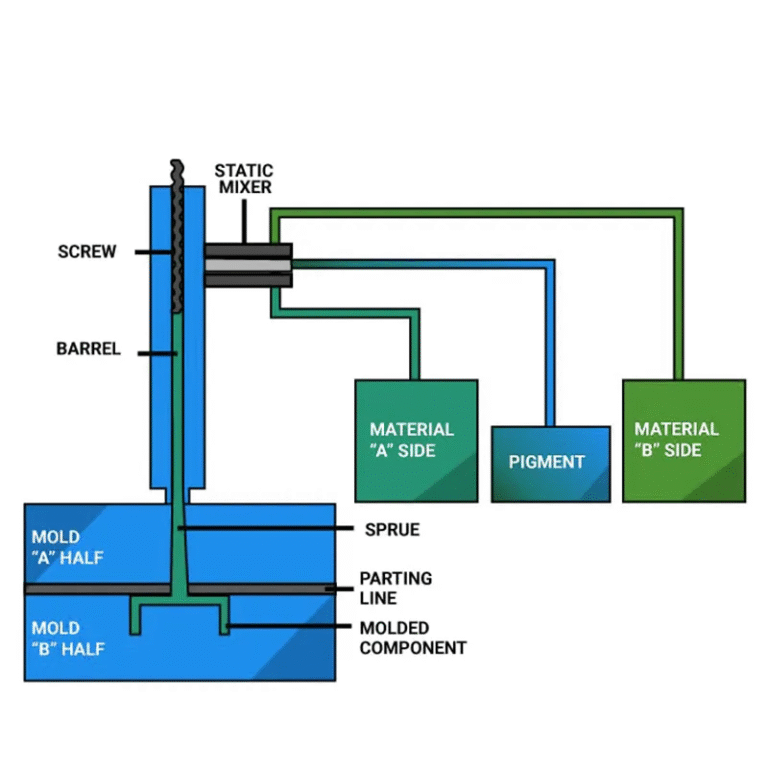
Liquid Silicone Rubber (LSR) injection molding is a specialized form of silicone molding that uses a two-part platinum-cured silicone. The material starts as a liquid and is injected into a heated mold where it rapidly cures. LSR injection molding is highly automated, allowing for efficient production with minimal human intervention. This reduces errors and improves consistency across large production runs.
How LSR Differs from Traditional Silicone Molding
Traditional silicone molding often involves high-consistency rubber (HCR), which requires more manual handling and longer curing times. In contrast, LSR offers:
- Faster cycle times
- Better precision for intricate designs
- Lower material waste
- Cleaner production environment
The Silicone Injection Molding Process
The process involves several key stages, each contributing to the final product’s quality and performance.
Material Preparation
In LSR injection molding, two liquid components are stored separately and mixed just before injection. Additives such as pigments or curing agents may also be introduced at this stage.
Injection Phase
The mixed silicone is injected into a mold cavity under pressure. The mold is typically heated, which initiates the curing process immediately after the material enters.
Curing and Solidification
Heat causes the silicone to cross-link and solidify. This step is crucial, as it determines the mechanical strength and durability of the final part.
Demolding
Once cured, the part is removed from the mold. Due to silicone’s flexibility and non-stick properties, demolding is usually straightforward and does not require release agents.
Advantages of Silicone and LSR Injection Molding
Silicone injection molding offers several advantages that make it a preferred manufacturing method in many industries.
Precision and Consistency
The process allows for tight tolerances and repeatable results. This is especially important for components used in medical devices or electronics.
Durability and Longevity
Silicone parts can withstand harsh environments, including high temperatures, moisture, and chemical exposure. This ensures a long service life with minimal degradation.
Design Flexibility
Complex geometries, thin walls, and intricate details can be achieved without compromising performance. This opens up possibilities for innovative product designs.
Cost Efficiency in High Volumes
While initial tooling costs can be high, the efficiency of automated production makes it cost-effective for large-scale manufacturing.
Common Applications
Silicone injection molding is used across a wide range of industries due to its versatility.
Medical Industry
LSR is widely used in medical devices because of its biocompatibility and ability to be sterilized. Applications include:
- Catheters
- Seals and gaskets
- Respiratory masks
- Surgical instruments
Automotive Sector
In the automotive industry, silicone components are used for their heat resistance and durability. Examples include:
- Engine seals
- Connectors
- Vibration dampeners
Consumer Products
Everyday items also benefit from silicone molding, such as:
- Kitchenware
- Wearable devices
- Baby products
Electronics
Silicone’s insulating properties make it ideal for electronic components, including:
- Keypads
- Connectors
- Protective covers
Design Considerations for Silicone Injection Molding
Designing parts for silicone injection molding requires careful planning to ensure optimal results.
Wall Thickness
Uniform wall thickness helps prevent defects such as air traps or incomplete filling. Thin walls are possible but must be designed carefully to maintain strength.
Venting
Proper venting allows trapped air to escape during injection, reducing the risk of voids or imperfections.
Part Geometry
Smooth transitions and rounded edges improve material flow and reduce stress points in the final product.
Tooling Design
Mold design plays a crucial role in determining product quality. High-quality tooling ensures accurate replication of the desired shape and reduces production issues.
Future Trends in Silicone Injection Molding
The industry continues to evolve with advancements in materials and technology.
Automation and Smart Manufacturing
Increased use of robotics and real-time monitoring systems is improving efficiency and reducing waste.
Sustainable Materials
Efforts are being made to develop more environmentally friendly silicone materials and reduce energy consumption during production.
Micro-Molding
The demand for smaller, more precise components is driving innovation in micro-molding techniques, particularly for medical and electronic applications.
Conclusion
Silicone injection molding, especially LSR injection molding, offers a reliable and efficient way to produce high-quality components for a wide range of industries. Its unique combination of flexibility, durability, and precision makes it an essential manufacturing method in today’s industrial landscape. As technology continues to advance, the capabilities of silicone molding are expected to expand even further, opening new possibilities for innovation and product development.
