



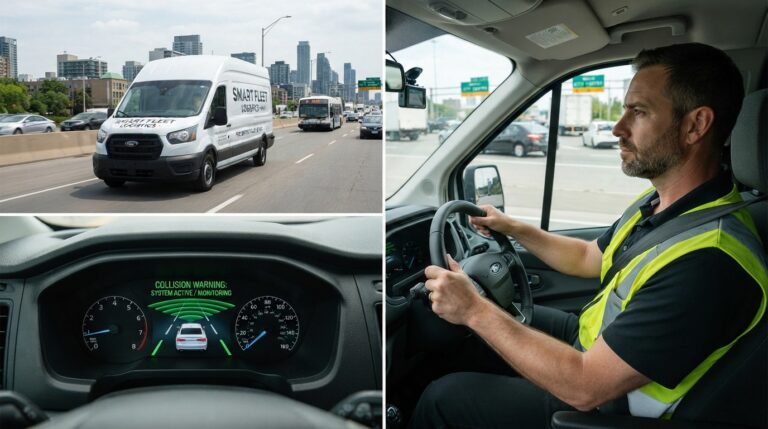
A delivery driver is cruising down a clear, open highway when suddenly the dashboard blares a collision warning and the automatic emergency braking system engages hard. There is no vehicle ahead, no pedestrian, and no obstacle in sight. This dangerous phenomenon—often called “phantom braking”—is becoming a growing headache for commercial fleet managers and delivery drivers alike.
For commercial vans, false forward collision warnings are more than just a nuisance. Unintended braking events put drivers at risk of rear-end crashes, cargo damage, and severe driver fatigue. Understanding why these high-tech safety systems trigger falsely is the first step toward keeping your fleet vans operating safely and efficiently.
1. The High Stakes of False Collision Warnings in Fleet Operations
Quick Answer: False collision warnings occur when Advanced Driver Assistance Systems (ADAS) misinterpret environmental objects, road conditions, or sensor angles, causing unnecessary driver alerts or sudden emergency braking.
Modern commercial vans—such as the Ford Transit, Mercedes-Benz Sprinter, and RAM ProMaster—rely heavily on Advanced Driver Assistance Systems (ADAS) to protect drivers and reduce insurance liability. These safety suites use a combination of windshield-mounted optical cameras and front bumper radar sensors to monitor the road ahead.
When functioning properly, collision avoidance systems save lives. However, when these sensors feed incorrect physical data to the vehicle’s central computer, the system panics. Repeated false alarms cause “warning fatigue,” leading drivers to ignore real emergency alerts or attempt to manually disable vital safety features altogether.
2. Common Triggers Behind Commercial Van Phantom Braking
Quick Answer: Dirt buildup, physical sensor misalignments, road debris, and reflective road surfaces are primary drivers of false collision alerts in working vans.
Commercial vans log thousands of heavy-duty miles every month across job sites, gravel roads, and highway corridors. This constant exposure to tough conditions introduces several physical variables that confuse radar and camera sensors:
- Dirty Camera or Radar Lenses: Road grime, bug splatters, dried mud, or salt spray can coat the bumper radar sensor or the windshield area housing the optical camera.
- Potholes and Minor Bumper Contact: In fleet operations, backing into loading docks or hitting deep potholes can subtly bend the front bumper radar bracket out of alignment by just one or two degrees.
- Environmental Glare and Reflections: Low morning sun reflecting off wet asphalt, metal construction barriers, or overhead highway signs can create optical illusions that look like stationary obstacles to early-generation camera software.
3. The Critical Link Between Windshield Quality and Camera Accuracy
Quick Answer: Optical ADAS cameras look directly through the upper portion of the windshield; chipped, pitted, or poorly installed glass distorts camera vision and causes false alerts.
Because high-roof commercial vans feature large, upright windshields, they are prone to frequent rock chips and gravel cracks on the highway. When a fleet van requires a new windshield, simply replacing the glass is only half the job.
The forward-facing ADAS camera attaches directly to a mounting bracket on the inside of the glass. If the glass has optical distortion, or if the mounting bracket is slightly misaligned during installation, the camera’s perception of distance and lane placement will be skewed. Fleet operators who schedule a professional windshield replacement in Salt Lake City must ensure the service includes precise camera bracket placement and mandatory digital recalibration. Partnering with certified auto glass specialists guarantees the camera reads the road ahead with complete accuracy, preventing false warnings before the van returns to its delivery route.
4. How Heavy Cargo and Suspension Sag Alter Sensor Calibration
Quick Answer: Loading heavy cargo depresses the rear suspension, pitching the front bumper and windshield upward, which misaims forward radar beams into overhead signs or bridges.
Unlike passenger sedans, commercial vans experience dramatic changes in vehicle pitch based on daily payload weight. A van fully loaded with heavy tools, construction supplies, or delivery pallets sits significantly lower in the rear.
This suspension compression angles the front-end sensors upward. As a result, a radar beam designed to track vehicles 200 feet ahead now points slightly up toward overhead highway overpasses, metal road signs, or hanging tree branches. The system misinterprets these elevated objects as stationary vehicles in the van’s lane, triggering sudden automatic braking. Maintaining balanced cargo distribution and verifying your commercial fleet ADAS recalibration parameters under typical load conditions helps prevent height-induced false alarms.
5. Aftermarket Upgrades: Bull Bars, Grille Guards, and Ladder Racks
Quick Answer: Installing aftermarket bumper guards, winch mounts, or oversized ladder racks without checking sensor clearance frequently obstructs radar and camera fields of view.
Upfitting commercial vans with exterior hardware is standard practice for trades and delivery fleets. However, adding aggressive front grille guards, bull bars, or plow mounts can partially block the radar unit hidden behind the front emblem or lower grille.
Even if a metal bar does not completely cover the sensor, metallic interference or vibration from a loose accessory can scatter radar signals. Always verify that aftermarket upfits are explicitly rated as ADAS-compatible and do not protrude into the radar’s conical field of view.
6. Myth vs. Fact: Commercial Van Sensor Maintenance
Clearing up common misunderstandings helps fleet managers maintain system reliability:
| Misconception | Fleet Operational Reality |
| “If there are no error lights on the dash, sensors are aligned.” | Radar and cameras can be misaligned by several degrees without triggering a fault code, causing continuous false alerts. |
| “A basic car wash is enough to maintain sensor accuracy.” | Radar units often require dedicated manual cleaning to remove stubborn metallic dust and caked-on road grime. |
| “Sensors only need recalibration after a major collision.” | Windshield replacements, suspension modifications, and wheel alignments all require ADAS recalibration. |
7. A Fleet Operator’s Checklist for Eliminating False Alerts
Use this practical guide for commercial van sensor maintenance to keep your fleet’s safety systems performing smoothly:
- [ ] Daily Sensor Wipedown: Train drivers to wipe down front bumper radar emblems and the upper windshield glass during pre-trip inspections.
- [ ] Post-Glass Service Verification: Always confirm that static or dynamic camera recalibration was completed following glass repairs.
- [ ] Inspect Bumper Brackets: Check front bumper covers and radar mounting brackets for cracks, loose bolts, or dock-impact dents.
- [ ] Check Cargo Distribution: Secure heavy cargo evenly across axles to prevent extreme rearward vehicle pitch.
- [ ] Audit Aftermarket Hardware: Ensure grille guards, license plate frames, and winch kits do not overlap sensor zones.
- [ ] Follow Up on Driver Feedback: Establish a system for drivers to immediately log forward collision warning troubleshooting issues when phantom braking events occur.
Eliminating false collision warnings in commercial vans requires a combination of routine driver maintenance, proper cargo loading, and professional service protocols. By keeping sensor lenses clean, ensuring aftermarket accessories do not block radar paths, and completing certified recalibration whenever windshields or suspensions are serviced, fleet managers can protect their drivers from dangerous phantom braking events. Maintaining calibrated, accurate safety systems ensures your fleet stays safe, compliant, and productive on every route.
