



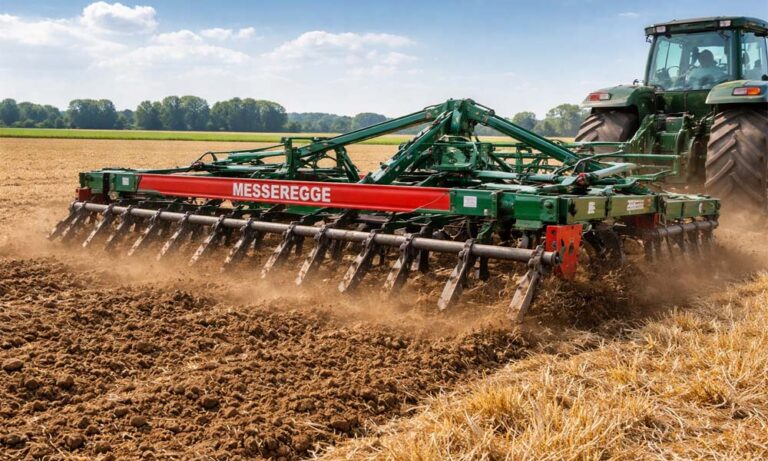
Have you ever looked at a field after rain and felt a little worried? The top looks hard. Some crop residue is still sitting there. Maybe there are also light wheel marks or small rough spots left from earlier field work. At first, it may not seem like a big problem. But when planting time is close, even small surface problems can lead to poor seed-to-soil contact.
That matters more than many people think. If seeds do not sit well in the soil, crop growth may start unevenly. Some plants may come up fast, while others may come up late. And when emergence is uneven, the whole field can suffer. That is why farmers in 2026 are paying more attention to gentle tools that fix the top layer without hurting the soil below.
This is where the Messeregge comes in. It is a simple but smart tool that helps farmers make a better seedbed with less heavy soil movement. It works close to the surface. It cuts light residue, breaks crust, and smooths the top layer in a clean and careful way. It is not made for deep tillage. It is made for fine surface work.
In this article, we will talk about what a Messeregge is, how it works, when farmers use it, and why it is getting more interest around the world. We will also look at its main parts, its best jobs in the field, and how it helps build a better seedbed. By the end of this first half, you will have a clear and simple understanding of why this tool matters.
What Is Messeregge?
The word Messeregge comes from German. It is made from two words: Messer, which means knife, and Egge, which means harrow. So in simple words, Messeregge means knife harrow. That name already tells us a lot. It is a harrow that uses knife-like blades to work the top layer of the soil.
A Messeregge is a shallow tillage tool. It is made to work near the surface, not deep down in the field. Its job is to break hard crust, cut light crop residue, level small ruts, and leave the top of the soil smoother and more ready for planting. It helps prepare a seedbed without turning the whole soil profile upside down.
That is one of the biggest reasons people like it. Many old-style tillage tools move a lot of soil. They mix deeply, bury residue, and can leave the ground more open to moisture loss or erosion. A Messeregge is different. It does a lighter job. It focuses on the top few centimeters of the field, where the surface often needs help before seeding.
In modern farming, this kind of tool fits very well with reduced tillage, conservation farming, and residue-friendly systems. Farmers do not always want to disturb more soil than needed. They want clean field conditions for planting, but they also want to protect structure, save fuel, and keep residue on the surface. That is why the Messeregge has become such an interesting tool.
What Does a Messeregge Do?
The main job of a Messeregge is to improve the soil surface. Think about a field that got a rain and then dried out. The top can turn hard and tight. That hard layer can slow water movement and make it harder for young plants to push through. A Messeregge helps by breaking that crust in a gentle way.
It also cuts and spreads light crop residue. After harvest, or after cover crop work, the top of a field may have straw, stalk pieces, or plant matter sitting unevenly on the surface. A Messeregge slices through that material and helps spread it more evenly. This can make the field easier to plant and help the next pass go more smoothly.
Another useful job is leveling. Fields do not always stay nice and even. Wheel tracks, shallow ruts, or rough top spots can make planting harder. A Messeregge helps tidy up those small surface problems. It will not fix deep damage, but it can improve light unevenness and leave a cleaner top layer behind.
Most of all, this tool helps create better seed-to-soil contact. That may sound simple, but it is very important. Seeds need good contact with moist soil so they can start growing well. When the surface is smoother, softer, and better prepared, the planter can do a better job. That is one big reason why many farmers see the Messeregge as a smart tool for better seedbeds.
How a Messeregge Works
A Messeregge works with rows of sharp steel blades. These blades are often flat or slightly curved, and they sit in staggered rows across the frame. As the tractor moves forward, the blades cut into the top layer of the field. They do not dig deep like some heavier tillage tools. Instead, they work in a shallow and controlled way.
Most of the time, the working depth is only around 1 to 5 centimeters. That is one reason the tool is called gentle. It focuses on the upper surface where crust, light clods, and thin residue mats often cause problems. By staying shallow, it helps keep the deeper soil layers more stable and less disturbed.
Blade angle also matters a lot. Some Messeregge models let the farmer change the angle of the knives. A steeper angle gives more cutting action. A flatter angle gives lighter surface grooming. This lets the tool fit different field needs. If the crust is harder, the farmer may want a more active setting. If the top only needs light finishing, a softer setting may be better.
Forward speed is also part of good performance. A Messeregge often works well at moderate to fairly quick speeds, around 8 to 15 kilometers per hour, depending on field conditions. If the setup is right, the blades slice residue, break crust, and smooth the surface in one clean pass. That simple action is what makes the tool so useful.
Main Parts of a Messeregge
Even though the Messeregge is a simple tool, its parts each play an important role. The first main part is the frame. This is the strong body of the machine that holds everything together. Some frames are fixed, while others can fold for easier road transport. The frame must be strong enough to stay steady across the whole working width.
The next key part is the blades or knives. These are the real working parts of the tool. They do the cutting, crust breaking, and surface leveling. Some are straight. Some are a little curved. Some may even be serrated. The blade style can affect how strongly the tool works and how well it handles residue.
Another important part is the mounting system. Some Messeregge tools are front-mounted. Some are carried on the tractor’s three-point hitch. Others may be used in a combined setup with rollers or drills. The type of mounting changes how the tool fits into the farm’s full working system. Farmers often choose based on tractor size, field flow, and the jobs they do most.
Many models also include a roller behind the blades or can be paired with one. The roller helps press and finish the soil after the blades pass through. This can leave the surface smoother and more even. Some tools also have manual or hydraulic controls for angle and pressure. These small features can make a big difference in how well a Messeregge works in different conditions.
When Farmers Use a Messeregge
One of the best times to use a Messeregge is before planting, when the top layer of the field needs light finishing. Maybe the main tillage is already done. Maybe the field is mostly ready. But the top still has crust, small clods, or uneven residue. That is where this tool shines. It gives the surface a final cleanup without doing too much.
It is also very useful after rain. A late spring rain can leave fields sealed over at the top. That hard surface can be a problem for air, water, and young plants. Instead of using a heavier tool that moves too much soil, some farmers use a Messeregge to lightly open that top layer and improve the field before seeding.
Another common use is after harvest or in cover crop systems. Crop residue often stays on the field for good reason. It protects the soil. But when that residue lies in clumps or thin mats, it may need a little help. A Messeregge can cut and spread that top material without burying all of it. That makes it useful in residue-friendly farming systems.
Farmers also use it in stale seedbed work and other light surface jobs. In these cases, the goal is not deep soil movement. The goal is to keep the soil calm while improving the top. That makes the Messeregge a good fit for modern farms that want more control, less extra fuel use, and better soil care at the same time.
Best Jobs for a Messeregge
A Messeregge is best at shallow surface work. One of its top jobs is breaking crust. When the top of the field gets hard and tight, the tool can slice through that thin layer and help open the surface again. This is one of the main reasons many farmers keep this kind of tool in mind during spring seedbed work.
Another strong job is light residue handling. It is not a deep mixing tool, and that is actually one of its best points. It cuts through light straw, cover crop remains, or plant matter on the surface. It helps spread and manage that material while still leaving much of it near the top, where it can help protect the soil.
The Messeregge is also useful for leveling light wheel marks and shallow ruts. Planting is easier when the surface is even. A bumpy or rough top layer can create small problems all across the field. This tool helps smooth those little trouble spots without needing a heavy and costly tillage pass.
It also fits well in conservation farming, reduced tillage, and regenerative systems. These systems often focus on doing only the work that truly needs to be done. A Messeregge fits that idea very well. It handles important surface problems while leaving the deeper soil more protected. That is why so many people see it as a smart and balanced field tool.
Why a Messeregge Helps the Soil
One big reason farmers like the Messeregge is that it works gently. Some tools fix one problem but create another. They may bury too much residue, dry out the field, or disturb the soil more than needed. A Messeregge tries to avoid that. It does its job on the surface while leaving much of the deeper soil structure alone.
That matters because soil is not just dirt. Healthy soil has pores, roots, air spaces, tiny living things, and layers that work together. When soil is moved too much, those natural parts can be disturbed. A Messeregge helps farmers avoid extra disruption when the real problem is only at the top of the field.
It also helps leave more residue on the surface. This is important for many farms in 2026, especially where moisture loss and erosion are real concerns. Surface residue can help protect the soil from wind, strong rain, and heat. A Messeregge can manage that residue without fully burying it, which is a big plus for soil-friendly farming.
For many farmers, that is the real value of the tool. It is not just about making the field look nice. It is about solving surface problems in a smarter way. The Messeregge helps create a better top layer for planting while still respecting the health of the soil. That is a strong reason why this tool keeps getting more attention today.
Messeregge and Better Seedbeds
A good seedbed gives every seed a fair start. That is one of the biggest reasons farmers look closely at tools like the Messeregge. When the soil surface is smoother and lighter, the planter can place seed at a more even depth. That may sound like a small thing, but it can make a big difference in how a crop begins.
Think about two fields. In one field, the top is rough, crusted, and full of small lumps. In the other field, the surface is cleaner and more even. Which one gives the planter a better chance to do a good job? Most farmers already know the answer. A better top layer usually means a better start for the crop.
The Messeregge helps by fixing the small surface problems that often hurt planting quality. It breaks the crust, cuts light residue, and smooths the top without going too deep. That makes the seed zone more uniform. When conditions are more even across the field, crop emergence can also become more even.
Of course, no tool can promise perfect results in every field. Weather, soil type, seed quality, and planter setup all matter too. But the Messeregge can improve the surface conditions that affect planting. That is why many farmers see it as a simple tool that supports a stronger and more even crop start.
Messeregge vs Other Field Tools
Many farmers ask the same simple question. Why use a Messeregge instead of another tool already sitting in the shed? That is a fair question. The answer depends on what kind of field problem needs to be fixed. Not every tool does the same job, and not every field needs deep tillage.
Take a disc harrow, for example. A disc harrow is usually stronger and more aggressive. It mixes more soil and often works much deeper. That can be useful in some cases, but it can also move more soil than needed. If the real issue is only surface crust or light residue, a Messeregge may do the job with less soil disturbance.
A chain harrow or spike-tooth harrow can also help in some situations, but they often give more of a dragging or scratching action. A Messeregge is different because its blades are made to slice. That slicing action is one of its strongest points. It cuts the top cleanly instead of only brushing across it.
So the real advantage of the Messeregge is balance. It is not too heavy for light surface work, and it is not too weak to do anything useful. It sits in a very helpful middle space. For farmers who want to slice, level, and prepare the top layer without deep inversion, it can be a very smart choice.
How to Use a Messeregge the Right Way
Using a Messeregge well starts before the tractor even enters the field. First, the farmer should check the machine. Look at the blades. Make sure they are not badly worn or loose. Check bolts, grease points, and settings. A few minutes in the yard can save a lot of trouble later in the field.
Next comes field timing. This part matters a lot. The best results often come when the soil is workable but not wet and sticky. If the field is too wet, the blades may smear the top instead of cutting it cleanly. If the field is too dry and hard, the result may also be poor. Good timing makes a big difference.
Most farmers start shallow. Around 2 centimeters is often a safe place to begin. After the first short pass, it is smart to stop and look behind the tool. Is the crust breaking? Is the residue flowing well? Is the surface becoming smoother? Small checks like this help the farmer make quick changes before doing the whole field.
Speed also matters. A Messeregge often works well at moderate field speeds, but it should still match the soil condition and setup. Too slow may reduce the slicing action. Too fast may create a rough finish or throw soil too much. Good use is really about balance. When the depth, angle, and speed match the field, the tool can work very well.
Common Mistakes to Avoid
One common mistake is using the Messeregge when the field is too wet. This can look tempting, especially in a busy spring when the planting window feels short. But rushing into wet ground often causes poor results. Instead of a clean cut, the tool may smear the soil surface and create more trouble for planting later.
Another mistake is running too deep. The Messeregge is made for shallow work. If it is pushed too deep, it can start doing a job it was not built for. It may pull more soil than needed, disturb residue too much, and lose the gentle surface action that makes it special in the first place.
Dull blades are another simple but serious problem. Worn blades do not slice as well. They may drag more, burn more fuel, and leave a less even finish. This is one of those small details that can quietly lower field results. Sharp and well-kept blades help the Messeregge do its best work.
Some farmers also make the mistake of not checking the field soon after starting. They trust the setting and keep going. But one field can change quickly from one area to another. A quick walk behind the machine after the first pass can reveal a lot. It is a simple habit, but it often leads to much better results.
How to Choose the Right Messeregge
Choosing the right Messeregge starts with the size of the farm and the size of the tractor. A very wide machine may look impressive, but it still has to match the power available. Many smaller and mid-size models can work well with moderate horsepower, while wider tools may need more lifting power and better field control.
Working width is also important. A smaller farm may be happy with a compact unit that is easy to move and store. A larger farm may want a wider setup to cover more ground in less time. The right answer depends on field size, road travel, storage space, and how quickly the work needs to be finished during busy seasons.
Blade style matters too. Some farmers may prefer straight blades for simple surface work. Others may like serrated blades for tougher crust or residue conditions. It also helps to look at how easy blade changes are. A Messeregge with easy service points and simple part replacement can save time during the season.
It is also wise to think about soil type and residue load. Heavy clay may need a stronger frame and more firm control. Lighter soils may need a gentler setup. Fields with more residue may benefit from better spacing and stronger residue flow. In the end, the best Messeregge is the one that fits the farm’s real field conditions, not just the one with the biggest size.
Care and Safety Tips
Taking care of a Messeregge is not hard, but it does matter. Like any field tool, it works better and lasts longer when it is looked after. Regular greasing, checking bolts, and watching blade wear are simple jobs, but they help prevent bigger problems. A little care during the season can save repair costs later.
Cleaning the machine is also important. After field work, dust, damp soil, and plant material can stay on the tool. If it is left there too long, wear and rust can become bigger issues. A clean Messeregge is easier to inspect, easier to service, and more ready for the next job.
Storage matters too, especially between seasons. If possible, keep the machine in a dry place. Before storage, check wear parts, clean the frame, and protect exposed metal if needed. These small steps may not seem exciting, but they help the tool stay reliable for years.
Safety should never be ignored. Always make sure the tool is locked safely for transport. Keep people away while adjusting or moving the machine. Shut off the tractor before checking close parts. The Messeregge may look simple, but it still has sharp blades and moving parts. Safe habits protect both people and equipment.
The Future of Messeregge
The future looks bright for the Messeregge, especially as more farms focus on soil care, smart fuel use, and better field efficiency. In 2026, many growers want tools that solve real problems without overworking the land. That is exactly the space where this tool fits so well.
Farming is also becoming more precise. Today, farmers are paying closer attention to soil health, surface condition, and planting quality than ever before. A tool like the Messeregge matches that thinking. It is not about doing the biggest job. It is about doing the right job in the right layer of soil.
We may also see more updated versions in the years ahead. Some models already offer easier hydraulic control, better blade systems, and smoother adjustment features. In the future, there may be even more smart options that help farmers fine-tune depth, angle, and pressure more easily in changing conditions.
Even as technology grows, the basic idea of the Messeregge will likely stay the same. It is a simple tool with a very clear purpose. It helps improve the surface, protect the deeper soil, and support better planting. Sometimes the smartest farm ideas are not the loudest ones. They are the simple ones that keep working year after year.
Conclusion
The Messeregge may not be the most famous tool on every farm, but it solves a very real problem. Many fields do not need heavy tillage before planting. They only need the surface fixed. They need crust broken, residue sliced, and the top smoothed out. That is exactly where this tool shows its value.
What makes the Messeregge special is its gentle approach. It works on the upper layer of the field without turning everything over. That makes it useful for farmers who want a better seedbed while still caring for soil structure, residue cover, and long-term field health. In modern farming, that balance matters more than ever.
It also fits well with the way many farmers think in 2026. They want tools that save time, avoid waste, and support better field results. They do not want extra passes just for the sake of it. They want tools that do a clear job well. The Messeregge is one of those tools.
So, is it the right choice for every single farm? Not always. But for farms dealing with surface crust, light residue, small ruts, and seedbed finishing needs, it can be a very smart option. If your goal is a cleaner top layer, gentler soil work, and a better start for planting, the Messeregge is well worth a serious look.
(FAQs)
What is a Messeregge in simple words?
A Messeregge is a shallow field tool used to improve the top layer of soil before planting. The word comes from German and means knife harrow. It uses sharp blades to break soil crust, cut light residue, and smooth the field surface.
It does not work deep like some heavy tillage tools. Instead, it focuses on the top few centimeters of soil. That makes it helpful for farmers who want a better seedbed without moving too much soil.
What does a Messeregge do in the field?
A Messeregge works on the soil surface. It breaks hard crust after rain, cuts light straw or plant residue, and helps level small wheel marks or rough spots. This leaves the top of the field smoother and better prepared for planting.
This can help the planter work more evenly. When the seedbed is cleaner and more level, seeds often get better contact with the soil. That gives the crop a better chance to start evenly across the field.
How deep does a Messeregge usually work?
A Messeregge usually works very shallow. In many cases, it runs at about 1 to 5 centimeters deep. That is one of its main strengths, because it improves the top layer without deeply disturbing the soil below.
Farmers often begin with a shallow setting, such as around 2 centimeters, and then adjust if needed. The goal is not deep tillage. The goal is to fix surface problems in a light and careful way.
Is a Messeregge good for seedbed preparation?
Yes, a Messeregge can be very useful for seedbed preparation, especially when the field only needs light finishing. It helps make the top layer smoother, softer, and more even before planting.
This is important because a better seedbed can support better seed placement. When the planter moves through a more even surface, it can often do a cleaner job. That can help crop emergence become more even too.
Can a Messeregge work in no-till or reduced tillage systems?
Yes, many farmers use a Messeregge in reduced tillage, conservation farming, and some no-till style systems. That is because it works close to the surface and does not turn large amounts of soil like deeper tillage tools do.
It is especially useful when farmers want to manage light residue, break crust, or improve the top layer without losing too much residue cover. That makes it a good match for farms that care about soil health and low disturbance.
How is a Messeregge different from a disc harrow?
A Messeregge and a disc harrow do different jobs. A disc harrow usually works deeper and mixes more soil. It is stronger and more aggressive. A Messeregge works much more lightly and mainly targets the soil surface.
The blades on a Messeregge are made to slice through the top layer. This helps it break crust and manage light residue without heavy soil inversion. So if the field only needs surface finishing, a Messeregge may be the better choice.
When is the best time to use a Messeregge?
The best time to use a Messeregge is when the surface of the field needs light improvement. This often happens before planting, after a rain crust forms, or when light residue is sitting unevenly across the top of the soil.
It is best to use it when the soil is workable but not wet and sticky. If the field is too wet, the tool may smear the surface instead of cutting cleanly. Good timing is a big part of getting the best result.
What speed does a Messeregge usually work at?
A Messeregge often works well at around 8 to 15 kilometers per hour, depending on soil condition, blade setting, and field needs. Many farmers use a moderate speed so the blades can cut cleanly and leave a smooth finish.
Still, there is no one perfect speed for every field. Some fields need slower travel, while others allow a faster pass. The smart thing is to check behind the tool after a short distance and adjust speed if the finish does not look right.
What should farmers check before buying a Messeregge?
Before buying a Messeregge, farmers should think about tractor size, working width, soil type, and how much residue their fields usually have. These things help decide what kind of machine will fit best.
It is also smart to look at blade style, frame strength, ease of maintenance, and adjustment options. A machine that is easy to set, easy to service, and well-matched to field conditions is usually the better long-term choice.
Does a Messeregge need a lot of maintenance?
A Messeregge does not need difficult maintenance, but it still needs regular care. Farmers should check blade wear, grease moving parts, tighten bolts, and clean the machine after use. These small steps help it work better and last longer.
Keeping the blades in good shape is especially important. Sharp blades cut better, use less force, and leave a cleaner finish. With simple care and safe storage, a Messeregge can stay reliable for many seasons.
You may also read: Who Is monika leveski? The Private Life of Bill Clinton’s Former White House Intern
