



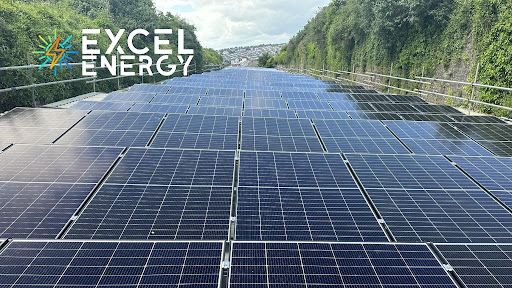
If you run a business in the UK and you haven’t seriously looked at commercial solar panels yet, you’re probably leaving a significant amount of money on the table every single month.
That might sound dramatic, but it’s the reality for thousands of UK businesses right now. Energy bills have climbed to levels that would have seemed unthinkable five years ago, and solar has quietly moved from being a “nice to have” to something that genuinely makes financial sense for a wide range of commercial properties – factories, warehouses, retail units, office buildings, schools, farms, and more.
We’ve been helping businesses across the UK make this switch for years. This guide covers the things that actually matter when you’re thinking about commercial solar – not the glossy sales pitch version, but the real questions business owners ask us every week.
-
What Makes Commercial Solar Different from Domestic?
It’s worth separating these two things in your mind from the start, because commercial solar panel installation is a different beast entirely.
On a home, you’re typically looking at 10-16 panels on a pitched roof, generating enough electricity to cover household demand. On a commercial property, the scale is bigger, the electrical setup is more complex, and – critically – the financial return is usually far more attractive.
Why? Because businesses consume electricity during the day. A factory running machinery from 8am to 6pm, or a warehouse with constant lighting and refrigeration, is using power exactly when the sun is generating it. That means you’re not just cutting your bills – you’re replacing expensive grid electricity with power you’ve generated yourself, at the peak times you need it most.
Domestic solar users often export a lot of what they generate because nobody’s home during the day. Commercial users tend to consume the vast majority of what they produce. That’s a much stronger return.
This is always one of the first questions we’re asked, and the honest answer is: it varies. But here are some realistic ballpark figures to help you plan.
A small commercial installation – say, 30-50kWp on a smaller business unit – might cost anywhere from £25,000 to £50,000. A medium-sized system for a warehouse or manufacturing facility, in the range of 100-250kWp, typically sits between £80,000 and £200,000. Larger rooftop or ground-mounted systems can run into the hundreds of thousands.
Those numbers might feel significant, but they don’t tell the whole story. What matters is the payback period and the long-term savings.
At current energy prices, many commercial solar installations are paying for themselves within 5-8 years. After that, you’re generating free electricity – often for 25 years or more, since quality solar panels have a very long operational lifespan. When you look at the numbers over a 20-year period, the return on investment for commercial solar is often stronger than many traditional business investments.
-
Commercial Solar Panel Installation: What Does the Process Actually Look Like?
One of the things that puts business owners off looking into solar is the worry about disruption. You’re running a business. You can’t have your operations shut down for weeks while a team works on your roof.
The good news is that a professional commercial solar installation is far less disruptive than most people expect.
Here’s a rough outline of how the process typically works:
Site survey and design – A qualified installer will visit your site, assess your roof or land area, review your electricity bills, and design a system tailored to your actual consumption patterns. This stage is about making sure the system will perform as expected for your specific property and business.
Planning and permissions – Most commercial solar installations are covered by permitted development rights, meaning you don’t need full planning permission. There are exceptions – listed buildings, conservation areas, certain roof configurations – but your installer should handle this assessment as part of the process.
Grid connection – For larger systems, you’ll need approval from your local Distribution Network Operator (DNO). This can take several weeks, so it’s worth starting early. Again, an experienced installer will manage this on your behalf.
Installation – The physical installation of commercial solar panels is typically completed within a few days to a couple of weeks, depending on system size. Most businesses find they can continue operating normally throughout.
Commissioning and handover – Once the system is installed, it’s tested, connected, and handed over with full monitoring access so you can see exactly how much you’re generating in real time.
-
Will Commercial Solar Work on My Building?
The most common concern we hear from business owners is whether their specific building is suitable. The short answer is that far more properties are suitable than people assume.
South-facing roofs get the best solar resource, but east and west-facing roofs still produce very respectable amounts of energy – often 80-85% of what a south-facing system would generate. Flat roofs are excellent for commercial solar because panels can be mounted at the optimal tilt angle regardless of roof orientation.
Ground-mounted systems are another option if your roof isn’t suitable or if you have unused land. Car park canopies are increasingly popular too – they provide shade for vehicles while generating electricity.
Shading is the main factor that can genuinely affect performance. Trees, chimneys, and adjacent buildings that shade the panels during peak hours will reduce output. A proper site survey will identify any shading issues and either design around them or advise you honestly if the site isn’t well-suited.
-
Solar Panels for Business: The Numbers That Matter
Every business owner wants to see the numbers. Here are the key figures to understand before you make a decision.
Energy offset – A well-designed commercial solar system should offset between 30% and 70% of your electricity consumption, depending on your usage patterns and system size. The higher your daytime consumption, the higher the offset.
Bill savings – At current commercial electricity rates (typically 25-35p per kWh for businesses), savings can be substantial. A 100kWp system generating 85,000 kWh per year could save a business £21,000-£30,000 annually in electricity costs.
Export payments – Any electricity you generate but don’t use can be exported to the grid. Under the Smart Export Guarantee (SEG), energy suppliers pay you for this exported power – not a fortune, but it adds to your overall return.
Capital allowances – Commercial solar installations qualify for capital allowances, which can reduce your tax bill. Solar assets may qualify under the Annual Investment Allowance (AIA), allowing you to deduct the full cost from your taxable profits in the year of purchase. Speak to your accountant about how this applies to your specific situation.
-
Why the Solar Energy Company You Choose Matters
Not all commercial solar installers are the same. This is an industry where the quality of design, installation, and aftercare varies enormously, and a poorly installed system can underperform for years before anyone realises.
When you’re choosing a solar energy company to work with, look for MCS certification (Microgeneration Certification Scheme) this is the industry standard that ensures both the equipment and the installation meet recognised quality requirements. An MCS-certified installer will also be required to offer you a warranty on the installation workmanship.
Look for a company with genuine commercial experience. Residential solar and commercial solar are different disciplines. You want an installer who regularly works on commercial projects, understands three-phase electrical systems, has experience with larger roof structures, and can manage the grid connection process.
And check for references. A good commercial solar company should be able to point you to businesses they’ve worked with and let you see real-world systems they’ve installed.
At Excel Energy, every installation is designed around your actual consumption data, not generic estimates. We’re MCS-certified, experienced across a wide range of commercial sectors, and we don’t disappear once the panels are on the roof.
-
Is Now a Good Time to Install Commercial Solar?
The honest answer is yes – for most businesses, the case for commercial solar is stronger right now than it has been at almost any point in the past.
Panel costs have fallen significantly over the last decade, while electricity prices have risen sharply. That combination has narrowed payback periods and improved long-term returns considerably.
Waiting rarely makes financial sense. Every month you delay is another month of paying full price for grid electricity that you could have been generating yourself.
If you’re ready to explore what commercial solar could look like for your business, get in touch with the team at Excelenergy.co.uk. We’ll start with a proper conversation about your energy use, your property, and your goals – and we’ll give you an honest assessment of whether solar makes sense for you.
