



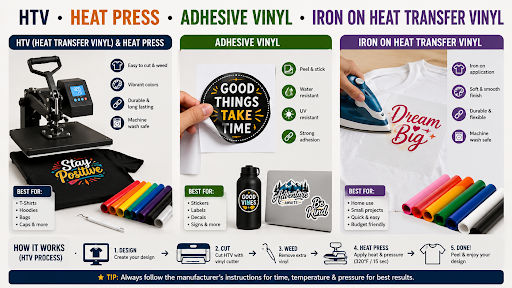
The customization industry has grown rapidly over the past decade, especially in apparel printing and DIY crafting. Among the most popular methods for creating custom designs on clothing and fabric are HTV heat press, adhesive vinyl, and iron on heat transfer vinyl. These materials and techniques are widely used by small businesses, hobby crafters, print shops, and fashion designers because they are affordable, easy to use, and highly versatile.
This guide explains everything you need to know about these three essential materials, how they work, their differences, their applications, and how to use them effectively for long-lasting results.
What is HTV Heat Press
HTV stands for Heat Transfer Vinyl. HTV heat press refers to the process of applying vinyl designs onto fabric using heat and pressure from a heat press machine.
How HTV Heat Press Works
The HTV material has three layers:
- A clear carrier sheet on top
- The colored vinyl layer in the middle
- A heat-activated adhesive layer at the bottom
When heat and pressure are applied using a heat press machine, the adhesive melts and bonds the vinyl permanently to the fabric. After cooling, the carrier sheet is removed, leaving a clean and professional design.
Advantages of HTV Heat Press
- Produces professional and durable results
- Works on cotton, polyester, and blended fabrics
- Ideal for bulk production
- Long-lasting even after multiple washes
- Suitable for detailed and multi-color designs
Common Uses
- Custom T-shirts
- Sports jerseys
- Hoodies and sweatshirts
- Tote bags
- Promotional merchandise
HTV heat press is widely used by businesses because it offers consistency and high-quality output.
What is Adhesive Vinyl
Adhesive vinyl is a pressure-sensitive material that sticks to surfaces without heat. Unlike HTV, it does not require a heat press machine. Instead, it has a sticky backing that allows it to adhere to smooth surfaces like glass, plastic, metal, and wood.
How Adhesive Vinyl Works
Adhesive vinyl is cut into shapes or designs using a cutting machine. After cutting, excess material is removed (a process called weeding), and transfer tape is used to move the design onto the target surface.
Once applied, the vinyl sticks firmly due to its adhesive backing.
Types of Adhesive Vinyl
- Permanent vinyl
- Strong adhesive
- Used for outdoor or long-term applications
- Removable vinyl
- Easy to remove without residue
- Used for temporary decoration
Advantages of Adhesive Vinyl
- No heat required
- Easy to use for beginners
- Works on multiple surfaces
- Affordable and widely available
- Great for home décor and signage
Common Uses
- Wall decals
- Window stickers
- Laptop decoration
- Car decals
- Product labeling
- Business signage
Adhesive vinyl is extremely popular in the crafting world because of its flexibility and ease of application.
What is Iron On Heat Transfer Vinyl
Iron on heat transfer vinyl is another form of HTV that is specifically designed to be applied using a household iron instead of a heat press machine. It is ideal for beginners or small-scale projects.
How Iron-On HTV Works
The process is similar to HTV heat press but uses an iron:
- Design is cut using a vinyl cutter
- Excess vinyl is removed
- Design is placed on fabric
- A household iron applies heat and pressure
- The adhesive bonds the vinyl to the fabric
Advantages of Iron-On HTV
- No expensive equipment required
- Perfect for beginners
- Easy for small DIY projects
- Portable and convenient
- Low investment cost
Limitations
- Less consistent than heat press machines
- May not last as long under heavy washing
- Requires careful temperature control
- Not ideal for bulk production
Common Uses
- DIY T-shirts
- Personalized gifts
- Small craft projects
- School projects
- Home-based creative work
Iron-on vinyl is a great starting point for anyone entering the world of fabric customization.
HTV Heat Press vs Adhesive Vinyl vs Iron-On HTV
Understanding the differences between these materials is important for choosing the right one for your project.
1. Surface Compatibility
- HTV Heat Press: Works only on fabric
- Adhesive Vinyl: Works on hard surfaces like glass, plastic, and wood
- Iron-On HTV: Works on fabric
2. Application Method
- HTV Heat Press: Uses professional heat press machine
- Adhesive Vinyl: Uses transfer tape, no heat required
- Iron-On HTV: Uses household iron
3. Durability
- HTV Heat Press: Very high durability
- Adhesive Vinyl: Depends on surface and environment
- Iron-On HTV: Moderate durability
4. Production Scale
- HTV Heat Press: Best for bulk production
- Adhesive Vinyl: Best for crafting and décor
- Iron-On HTV: Best for small personal projects
5. Cost and Equipment
- HTV Heat Press: Higher initial investment
- Adhesive Vinyl: Low cost, no machine required
- Iron-On HTV: Very low cost entry option
Tools Needed for Working with Vinyl
To get professional results, you need the right tools depending on the method you choose.
For HTV Heat Press
- Heat press machine
- Cutting machine
- Weeding tools
- Heat-resistant tape
- Teflon sheet or parchment paper
For Adhesive Vinyl
- Cutting machine
- Weeding tools
- Transfer tape
- Scraper tool
For Iron-On HTV
- Household iron
- Cutting machine
- Weeding tools
- Parchment paper or protective sheet
Using proper tools ensures clean designs and longer-lasting results.
Step-by-Step Guide to Using HTV Heat Press
- Create or select your design
- Cut the design using a vinyl cutter
- Weed out unwanted vinyl pieces
- Preheat the fabric to remove moisture
- Place the design on the fabric
- Apply heat press with recommended temperature and pressure
- Allow it to cool
- Peel off the carrier sheet carefully
Following these steps ensures a professional finish.
Step-by-Step Guide to Using Adhesive Vinyl
- Create your design
- Cut vinyl using a cutting machine
- Weed excess material
- Apply transfer tape over the design
- Stick the design onto the surface
- Smooth it using a scraper
- Remove transfer tape slowly
This process is simple and does not require heat.
Step-by-Step Guide to Using Iron-On HTV
- Design and cut vinyl
- Weed unwanted areas
- Place design on fabric
- Heat iron to correct temperature
- Apply pressure evenly for 20–30 seconds
- Let it cool slightly
- Peel carrier sheet carefully
This method is perfect for home crafting.
Tips for Best Results
- Always test temperature before pressing
- Use high-quality vinyl for better durability
- Avoid washing garments immediately after application
- Follow manufacturer instructions for heat settings
- Store vinyl in a cool, dry place
- Use clean, smooth surfaces for adhesive vinyl
These small steps can significantly improve the final result.
Common Mistakes to Avoid
- Using incorrect heat temperature
- Skipping preheating fabric
- Not weeding carefully
- Applying uneven pressure
- Using low-quality vinyl
- Washing garments too early
Avoiding these mistakes will help you achieve professional-quality results.
Business Opportunities with Vinyl Crafting
Vinyl crafting is not only a hobby but also a profitable business opportunity. Many small businesses use HTV and adhesive vinyl to create custom products for customers.
Potential Business Ideas
- Custom T-shirt printing
- Personalized gifts shop
- Custom home décor business
- Event merchandise printing
- Online Etsy or Shopify store
With low startup costs and high demand, vinyl crafting can become a successful side business or full-time income source.
Conclusion
HTV heat press, adhesive vinyl, and iron on heat transfer vinyl are powerful tools in the world of customization and crafting. Each material has its own unique purpose and benefits. HTV heat press is best for professional fabric printing, adhesive vinyl is ideal for hard surface decoration, and iron-on HTV is perfect for beginners and small DIY projects.
Understanding the differences and applications of these materials allows you to choose the right method for your project and achieve high-quality, long-lasting results. Whether you are a hobbyist or a business owner, mastering these techniques can open the door to endless creative and financial opportunities.
