



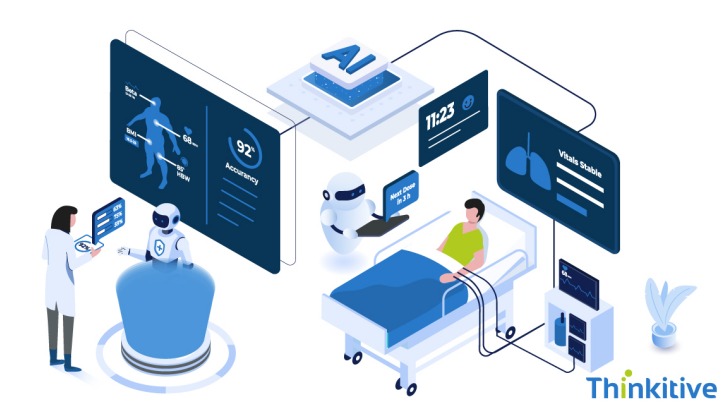
Healthcare has spent years trying to make documentation faster, even though for many clinicians, the EHR remains one of the most time-consuming parts of the workday.
It is a fact that every patient encounter generates a growing volume of information that must be captured, documented, and entered into the record. Ultimately, physicians often find themselves dividing their attention between caring for patients and keeping up with documentation requirements.
AI can capture clinical conversations quietly and turn them into accurate records in real-time, rather than asking physicians to document every detail themselves. This new approach of Ambient AI healthcare documentation is gaining attention across the healthcare industry. This approach has the ability to address a challenge that traditional EHR improvements have struggled to solve.
Furthermore, ambient AI helps healthcare organizations to explore new ways of reducing physician administrative burden by generating voice-to-text medical notes and supporting more natural patient interactions automatically.
Moving forward as adoption continues to grow, custom EHR development is increasingly incorporating ambient clinical intelligence capabilities that reshape how healthcare documentation fits into the care experience. This makes technology less visible and patient care more central.
Let’s explore what ambient clinical intelligence is, how it works within modern EHR environments, the benefits it offers to healthcare organizations, and why many industry leaders view it as the next major step in the evolution of healthcare documentation.
Understanding Ambient Clinical Intelligence in Healthcare
To understand why ambient clinical intelligence is gaining so much attention, first, you should look at how it differs from traditional dictation tools.
With a standard dictation system, clinicians should actively speak their notes and instructions aloud for the software to transcribe. The tools record what is said, but the physician is still responsible for creating and organizing the documentation.
Ambient AI healthcare documentation works totally differently. It listens to the natural conversation between a provider and a patient in the background, while automatically identifying the information that belongs in the medical record. Rather than producing a simple transcript, it helps to create structured clinical documentation on the basis of the context of the discussion.
This is possible only because the technology combines speech recognition with AI. It can also recognize spoken words, understand their meaning, identify important clinical details, and organize that information into the appropriate sections of a patient note.
Ultimately, patients spend less time on documentation and more time interacting with patients. The technology can also generate accurate voice-to-text medical notes to reduce the amount of manual data entry required after each visit.
Ambient clinical intelligence does not replace the EHR, which is another key advantage of it. It has the ability to work alongside existing systems, capture conversations, and generate draft notes that can flow directly into existing workflows. This further allows healthcare organizations to benefit from advanced AI capabilities without disrupting the systems they already use.
Ambient clinical intelligence is emerging as a key solution that streamlines documentation while enhancing the clinical experience, as healthcare professionals continue looking for effective ways of reducing physician administrative burden. This growing shift is laying the foundation for the ambient clinical intelligence EHR frontier, where technology supports clinicians in the background rather than competing for their attention.
How Ambient Voice Technology Transforms EHR Documentation
The real impact of ambient technology becomes clearer during a patient visit. Rather than typing notes, clicking through screens, or documenting details after the appointment, clinicians can focus more on having a natural conversation with the patient.
The ambient system listens to the discussion in the background, while capturing clinically relevant information in real-time with patient consent. The provider focuses on diagnosis and treatment; on the other hand, the technology identifies key details like symptoms, medical history, assessments, and care plans.
This captured information is then converted into structured documentation. For example, voice-to-text medical notes can be automatically organized within the EHR. Instead of creating a simple transcript, the system can generate documentation that can be easily reviewed and incorporated into existing clinical workflows.
This approach can reduce the amount of manual charting required after each visit. Rather than ending the day with unfinished notes, clinicians can review documentation while the encounter is still fresh in their minds. For many providers, this becomes a key step to reduce physician administrative burden and improve provider satisfaction.
Furthermore, ambient technology also helps restore the human side of healthcare. When clinicians spend less time looking at screens, it becomes easy for them to spend more time engaging with patients, maintaining eye contact, and building stronger relationships. This is one of the key reasons why ambient voice technology is transforming electronic health records, which has become a major topic of discussion across the healthcare industry.
Clinical and Operational Benefits of Ambient AI
The most immediate win is reducing physician administrative burden and after-hours charting. Studies of ambient documentation tools back this up: in a 2024–2025 UCLA randomized trial, physicians using an ambient scribe cut their average time per note, and one participating health system reported roughly 30 fewer minutes of documentation per provider each day. The Permanente Medical Group estimated its physicians saved more than 15,000 hours of documentation across 2.5 million patient encounters in a little over a year.
Documentation quality improves, too. Because notes are generated from the actual conversation as it happens, fewer details are forgotten between the visit and the end of the day, producing more comprehensive patient histories. When charting no longer spills into the evening, some practices use the recovered time to see additional patients, increasing throughput and clinic efficiency without adding staff.
For a practice administrator, that recovered time has a direct line to revenue. Even one or two additional visits per provider per day, or simply ending the documentation overtime that drives staff turnover, changes the economics of a clinic without new hires. There are financial and human benefits as well. Accurate, context-rich documentation provides stronger billing support, because notes that capture the full encounter support appropriate coding. And the effect on clinicians is significant: Mass General Brigham reported that ambient documentation reduced burnout prevalence by more than 20 percentage points among participating clinicians, with providers describing lower cognitive load and higher work satisfaction. Lower burnout is not just a wellness metric — it directly affects retention and the cost of replacing clinicians.
Integration, Security, and Implementation Considerations
Because these systems handle protected health information, HIPAA compliance and secure patient data processing are non-negotiable. Buyers should confirm how audio and text are encrypted, where data is stored and processed, whether recordings are retained or discarded, and whether the vendor will sign a Business Associate Agreement. Patient consent practices should also be clearly defined before go-live.
Integration determines whether the tool actually saves time. A note that can’t reach the chart only adds a copy-paste step, so the strongest deployments integrate directly with enterprise EHR systems like Epic, Oracle Health, and Meditech, sending finished notes and orders into the right fields automatically. Organizations should verify integration with their specific EHR version before committing.
Equally important is human-in-the-loop review. AI-generated notes are drafts, not final records — the clinician must review, correct, and sign every note, keeping accountability where it belongs.
Finally, adoption is as much a workflow change as a technology one. The most successful rollouts start with a small pilot group of willing clinicians, measure baseline charting time, and refine note templates by specialty before scaling. They also plan for training, a phased transition, and ongoing feedback loops so the tool fits how each department actually works. Many organizations bring in specialists in ambient voice AI medical scribing to tailor the system to their clinical reality and integrate it cleanly with existing systems.
The Future of the Ambient Clinical Intelligence EHR Frontier
Documentation is only the starting point. The clearest trend is the expansion of passive, AI-driven clinical workflows — the same ambient layer that drafts notes is beginning to surface order suggestions, draft referral letters, and pull forward relevant history for the clinician to review.
Reach is widening too. Multilingual capabilities are helping practices serve diverse patient populations and ease the strain of interpreted visits, while specialty-focused models are learning the vocabulary and note styles of fields from cardiology to behavioral health rather than offering one generic template. Looking further out, the same systems will increasingly support predictive AI and intelligent clinical assistance — flagging gaps in care or potential risks for the clinician to weigh. In short, how ambient voice technology is transforming electronic health records across modern healthcare systems is only beginning, and documentation is the foundation on which the rest will be built.
Conclusion
Ambient clinical intelligence addresses one of the most stubborn problems in modern medicine: the growing gap between time spent caring for patients and time spent feeding the record. By listening, understanding, and drafting in the background, ambient clinical intelligence EHR frontier technologies streamline healthcare workflows and give physicians back hours that used to disappear into charting.
The point worth holding onto is that this technology supports clinicians rather than replacing them. The AI drafts; the human reviews, decides, and cares for the patient. Adopted thoughtfully with strong security, real EHR integration, a customizable EHR, and disciplined oversight, AI-powered documentation is becoming a cornerstone of healthcare’s broader digital transformation, and an early, practical proof that technology can reduce administrative burden while making room for better care.
Frequently Asked Questions
- What is ambient clinical intelligence in healthcare?
Ambient clinical intelligence is AI that passively listens to a clinical visit and turns the conversation into structured documentation on its own. Rather than transcribing word for word, it uses speech recognition, natural language processing, and clinical language models to interpret what was said, separate medically relevant details from small talk, and draft a note in the right format. The clinician simply talks naturally with the patient, then reviews and signs the draft — no typing or dictating required.
- How is ambient AI different from standard medical dictation tools?
Dictation tools are essentially voice typewriters: they transcribe exactly what you say out loud, so you still have to narrate the entire note yourself. Ambient AI works differently. It listens to a normal, unscripted conversation between provider and patient, understands the clinical context, filters out non-clinical dialogue, and decides what belongs in the chart and how to structure it. The result is a finished, organized note generated from the visit itself — not a raw transcript you have to clean up afterward.
- Can ambient voice technology reduce physician burnout?
Yes, and the evidence is growing. Documentation and after-hours charting are well-documented drivers of burnout, so removing that burden directly addresses the root cause. In studies of ambient documentation tools, clinicians have reported lower cognitive load, less time charting at home, and higher work satisfaction — Mass General Brigham, for example, saw burnout prevalence fall by more than 20 percentage points among participating clinicians. Because notes are largely complete by the end of the visit, providers often describe getting their evenings back.
- How do ambient AI systems maintain HIPAA compliance?
Reputable systems are built for HIPAA from the ground up. That includes encrypting audio and text in transit and at rest, processing and storing data in secure environments, and defining clear policies on whether recordings are retained or discarded. The vendor should also sign a Business Associate Agreement and support clear patient consent practices before any recording begins. Compliance details vary by vendor, so organizations should review each one’s security architecture, data-handling, and certifications rather than assuming they are equivalent.
- Can ambient clinical intelligence integrate with Epic or Oracle Health systems?
Many leading solutions are designed to integrate directly with major enterprise EHRs, including Epic, Oracle Health, and Meditech, so finished notes and orders flow into the correct fields automatically instead of being copied and pasted. The depth of integration matters: a tight integration saves real time, while a loose one can add steps. Because capabilities differ by EHR and even by version, organizations should confirm exactly how a tool connects to their specific system before committing.
- How accurate are voice-to-text medical notes generated by AI?
Accuracy is generally high because the note is built from the actual clinical conversation, capturing details in the moment rather than from memory hours later. That said, the output is always a draft, not a final record. The AI can misinterpret ambiguous phrasing, miss context, or occasionally include something that wasn’t intended. That is why clinician review is essential — the provider verifies, corrects, and signs every note, which keeps accuracy and accountability in human hands.
- What are the benefits of reducing physician administrative burden with AI?
The benefits compound across the practice. For clinicians, it means less after-hours charting, lower cognitive load, and reduced burnout. For patients, it means more eye contact and a provider who is present rather than typing. For the organization, more complete and context-rich notes improve documentation quality and billing support, while the time recovered can translate into higher patient throughput or simply the end of costly documentation overtime — improving efficiency and retention without adding staff.
- How is ambient AI changing the future of electronic health records?
Ambient AI is shifting the EHR from a manual data-entry system into an intelligent layer that works in the background. Today that mostly means automatic documentation, but the same technology is starting to surface order suggestions, draft referral letters, and pull forward relevant patient history for review. Over time, expect broader multilingual and specialty-specific support, plus predictive capabilities that flag care gaps or risks. Documentation is simply the entry point for a much larger transformation in how clinicians interact with the record.
