



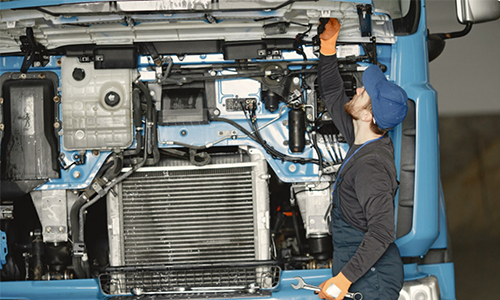
When a long-haul truck goes down for a cooling system failure, the cost isn’t just the part. It’s the missed delivery windows, the rescheduled freight, the driver sitting idle, and the phone calls that follow. For fleet managers and owner-operators running Peterbilt 379 models, a radiator replacement is one of those decisions that looks straightforward until it isn’t. The wrong part, even one that physically fits, can introduce problems that don’t surface until the truck is back on the road under load.
The Peterbilt 379 has one of the longest production runs in Class 8 trucking history, spanning from the mid-1980s through the mid-2000s. That longevity means the platform encountered multiple engine configurations, cab variants, and application types over the years. A single part number rarely covers the full range. Understanding what distinguishes one radiator specification from another before placing an order is what separates a fast return to service from a costly second repair.
Why Replacement Radiators for the 379 Require More Than a Model Match
The Peterbilt 379 platform saw significant variation across its production years, which means a replacement radiator must be matched not just to the truck model, but to the specific engine, mounting configuration, and cooling demand of that unit. Buyers who search by model number alone frequently encounter fitment issues that only become apparent during installation or, worse, after the truck returns to service. For anyone sourcing a 379 peterbilt radiator, the starting point is always the full vehicle specification, not just the cab or year.
Cooling system performance is closely tied to the thermal load the engine produces under operating conditions. A radiator that meets minimum flow requirements at idle may not sustain adequate heat rejection during extended highway grades, high ambient temperatures, or when the truck is pulling near its rated weight. These are real-world scenarios that replacement parts must account for during the selection process.
Production Year and Engine Configuration Work Together
The 379 platform was offered with a range of engine options from multiple manufacturers, including Caterpillar, Cummins, and Detroit Diesel. Each engine family generates a different heat load and connects to the cooling circuit differently. A radiator specified for a mid-range Cummins application will not carry the same core design or flow characteristics as one matched to a high-output Caterpillar C15 under the same cab.
This matters because aftermarket suppliers often catalog radiators by cab model when the actual differentiator is the powertrain. Confirming the engine make, displacement, and horsepower rating before ordering eliminates most fitment and performance mismatches before they happen.
Core Construction and Its Effect on Long-Term Reliability
Radiator cores are built using different material combinations and construction methods, and those differences directly affect how long the part holds up under the thermal cycling and vibration loads common to heavy-duty trucking. The two most common constructions used in replacement 379 Peterbilt radiator applications are copper-brass and aluminum, and each has a distinct performance and maintenance profile.
Copper-Brass Cores in High-Cycle Applications
Copper-brass construction has historically been preferred in applications where the truck experiences repeated heating and cooling cycles over short intervals, such as regional distribution routes with frequent stops and starts. The material tolerates thermal expansion well and can be repaired in the field by most radiator shops, which reduces downtime when minor damage occurs. However, copper-brass units tend to be heavier, and the added weight is a consideration for operators managing payload limits.
Aluminum Cores and Weight Considerations
Aluminum cores are lighter and, in newer designs, offer competitive heat transfer performance. Their limitation in older truck platforms like the 379 is that repair options are more limited when physical damage occurs. An aluminum radiator with a leaking tube typically requires replacement rather than field repair, which changes the total cost calculation for operators running routes far from major service centers.
Row Count and Fin Density Determine Cooling Capacity
Within the same physical footprint, radiators can vary significantly in how much heat they transfer based on the number of tube rows and the density of fins between those rows. A replacement part that matches the mounting points of the original may still underperform if its internal geometry is different. This becomes a real problem in demanding applications where the original equipment was already operating near its thermal capacity.
Operators in warmer climates or those running high-output engines should verify that the replacement unit matches or exceeds the original row and fin configuration. Selecting a unit with fewer rows to reduce cost creates a marginal cooling margin that may not hold up during summer operation or mountain driving.
Tank Material and Connection Compatibility
The side tanks of a radiator, whether plastic or metal, determine how the unit connects to hoses, overflow systems, and transmission cooler lines where applicable. On the 379 platform, older trucks often used all-metal tanks while later production units may have incorporated plastic end tanks to reduce weight and cost. Replacing a metal-tank unit with a plastic-tank unit, or vice versa, can require additional hardware changes that aren’t always included with the replacement part.
Integrated Transmission Cooler Ports
Many 379 Peterbilt radiator configurations include an integrated transmission oil cooler that passes fluid through a section of the radiator tank. If the replacement unit does not match the port location, thread size, or flow path of the original, the transmission cooler circuit cannot be reconnected without modification. This is a frequently overlooked specification that delays installation when it isn’t confirmed in advance.
Mounting Bracket and Frame Compatibility
The Peterbilt 379 uses a specific radiator mounting system tied to the cab and frame design. Variations in the cab model, particularly between standard and extended configurations, affect the mounting depth and bracket placement required. A radiator ordered without confirming mounting compatibility may arrive with the correct core size but incompatible bracket points, requiring custom fabrication to complete the installation.
This is especially relevant for trucks that have undergone prior repairs or modifications. If an earlier repair introduced a non-OEM mounting solution, the truck’s current mounting geometry may not match any standard catalog listing. A physical measurement of the existing bracket locations before ordering is the most reliable way to avoid this problem.
Pressure Rating and Cap Specification
The cooling system in a heavy-duty truck operates under pressure to raise the boiling point of the coolant and improve heat transfer efficiency. According to the SAE International standards that govern heavy vehicle cooling systems, the pressure cap and system rating must be matched to maintain proper coolant behavior across the full operating temperature range. Installing a radiator with a lower pressure rating than the original introduces the risk of coolant loss during high-load operation, even when the system appears functional under normal conditions.
The pressure cap specification should be confirmed independently of the radiator body itself. Some aftermarket replacements ship with a generic cap that may not match the system’s designed pressure rating. Using the original cap, if it’s in good condition, is often the safer approach.
Inlet and Outlet Hose Position
The physical location of the inlet and outlet connections on a replacement radiator must match the routing of the existing hose configuration. On the 379 platform, the position of these connections can vary based on the engine orientation and where the upper and lower hose routes were designed to connect. A radiator with connections on the wrong side or at an incompatible angle cannot be installed without rerouting hoses, which adds time and parts to the job.
This is one of the specifications most often missed when ordering based on a generic model match. Suppliers who stock multiple configurations for the 379 Peterbilt radiator can often distinguish between variants using the original part number or the hose routing description. Providing that information at the time of inquiry saves significant back-and-forth.
Warranty Coverage and Supplier Documentation
A replacement radiator purchased for a working truck is a functional investment, and the warranty offered with it reflects the supplier’s confidence in the part’s quality. Buyers should confirm what the warranty covers, specifically whether it includes both material defects and workmanship, and what the process is for a claim. Vague warranty language that excludes common failure modes is a signal worth paying attention to before the purchase, not after.
Documentation also matters for fleet recordkeeping. A replacement part with traceable specifications, a clear part number, and supporting product data makes future service planning easier and provides a paper trail if warranty service becomes necessary.
Closing Thoughts
Ordering a replacement radiator for a Peterbilt 379 is not a simple catalog lookup. The platform’s long production run, wide engine variety, and configuration differences mean that a correct order requires more information than the model name alone. Each of the eight specification areas covered here reflects a real-world failure point encountered when the matching process is treated as a formality rather than a technical step.
For owner-operators and fleet managers alike, the time invested in confirming core construction, cooling capacity, mounting compatibility, tank configuration, pressure rating, and connection geometry before placing an order is time that pays back during installation. A part that fits correctly the first time keeps the truck on the road and removes the cost and delay of a return or second repair. In heavy-duty trucking, that outcome is rarely accidental.
