



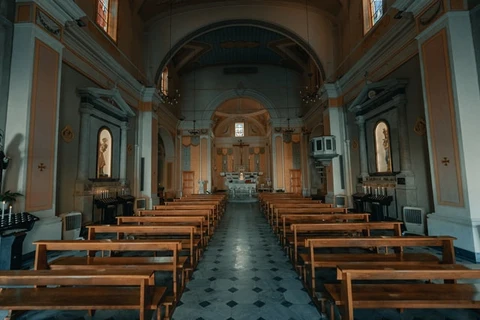
The United Kingdom’s Catholic churches tell a powerful story of survival, renewal and living faith. From neo-Byzantine cathedrals in London to historic shrines in Norfolk and Gothic landmarks in Scotland, these sacred spaces combine architecture, worship, pilgrimage and community life.
The following churches stand out for their religious importance, beauty and contribution to Catholic heritage. They also illustrate why parishes need reliable access to suitable vestments, sacred vessels, devotional art and seasonal liturgical supplies.
- Westminster Cathedral, London
Westminster Cathedral is the mother church of Catholics in England and Wales and the seat of the Archbishop of Westminster. Construction began in 1895, and the cathedral was completed in 1903. Its distinctive Byzantine-inspired architecture, striped brick exterior, marble interior and developing collection of mosaics set it apart from London’s better-known Gothic churches.
The cathedral remains a working place of worship with daily Masses, Confession, sacred music and livestreamed liturgies. Its treasury also demonstrates the continuing importance of beautiful vestments and church vessels in the celebration of Mass.
- Brompton Oratory, London
Officially dedicated to the Immaculate Heart of Mary, Brompton Oratory is one of London’s most impressive Catholic churches. Built between 1880 and 1884, it serves a community of priests belonging to the Congregation of the Oratory of St Philip Neri. It is also described by the parish as the second-largest Catholic church in London.
Its grand neo-Baroque interior, side chapels and traditional liturgical character make it a major destination for visitors interested in Catholic art, music and worship. The Oratory’s association with St Philip Neri and the English Oratorian tradition also gives it special historical importance.
- St Chad’s Cathedral, Birmingham
St Chad’s Cathedral was built between 1839 and 1841 and was the first Catholic cathedral erected in England after the Reformation. Designed by Gothic Revival architect Augustus Welby Pugin, it became a cathedral when the Catholic hierarchy of England and Wales was restored in 1850. It was later designated a minor basilica.
The cathedral is home to relics of St Chad and continues to serve as the mother church of the Archdiocese of Birmingham. Its combination of sacred history, pilgrimage and active diocesan worship makes it one of Britain’s most significant Catholic buildings.
- Arundel Cathedral, West Sussex
Arundel Cathedral rises above the historic town of Arundel and the surrounding West Sussex countryside. Commissioned by the 15th Duke of Norfolk and designed by Joseph Hansom, construction began in 1869. The French Gothic-style church opened in 1873 and became the cathedral of the Diocese of Arundel and Brighton in 1965.
The cathedral is dedicated to Our Lady and St Philip Howard, whose remains were enshrined there in 1971. It is also known for its annual Corpus Christi Carpet of Flowers, followed by Mass and a procession of the Blessed Sacrament.
- Catholic National Shrine of Our Lady, Walsingham
The Catholic National Shrine and Basilica of Our Lady at Walsingham is one of Britain’s leading Marian pilgrimage destinations. Its programme includes Mass, Rosary, Eucharistic adoration, Confession and Benediction, creating opportunities for both organised pilgrimages and personal retreats.
The restored shrine attracts approximately 150,000 pilgrims during its pilgrimage season. Its national importance makes Walsingham an especially meaningful destination for Marian devotion, prayer intentions and Catholic group travel.
- St Mary’s Catholic Cathedral, Edinburgh
St Mary’s Cathedral is the seat of the Archdiocese of St Andrews and Edinburgh and the home of the National Shrine of St Andrew. Located in the centre of Edinburgh, it has served the Catholic community for more than 200 years.
Its central location, historical importance and role in archdiocesan celebrations make it a major spiritual landmark in Scotland’s capital. Visitors can combine a cathedral visit with Edinburgh’s historic streets, cultural attractions and other Catholic heritage sites.
- St Andrew’s Metropolitan Cathedral, Glasgow
St Andrew’s Cathedral stands on the north bank of the River Clyde. Its foundation stone was laid in 1814, and Mass was first celebrated in the completed church in 1816. It later became the cathedral of the restored Archdiocese of Glasgow and eventually a metropolitan cathedral.
Today, it remains open for daily worship and welcomes workers, students, residents and visitors for Mass, Confession and prayer. Its interior includes stained glass, devotional art, a Carrara marble baptismal font and a painting of Scottish martyr St John Ogilvie.
- Cathedral Church of St Mary and St Boniface, Plymouth
Plymouth Cathedral serves as the central church of a diocese covering Cornwall, Devon and Dorset. Its historic building dates from the 1850s and hosts major liturgical ceremonies as well as civic events.
The cathedral represents the vital role regional churches play beyond major metropolitan centres. It is a place where public worship, Baptisms, weddings, funerals and diocesan celebrations connect Catholics across South West England.
Why UK Parishes Should Consider Holyart
Whether a parish worships in a historic cathedral or a small neighbourhood church, it requires items that are dignified, practical and appropriate for the liturgical year.
Holyart’s UK catalogue brings many church-supply categories together in one place, including:
- Chalices, ciboria, patens and monstrances
- Chasubles, stoles, albs, copes and dalmatics
- Altar linens, cloths and lectern covers
- Candlesticks, sanctuary lamps and processional crosses
- Thuribles, incense and blessing accessories
- Statues, icons, crucifixes and Stations of the Cross
- Baptism, First Communion and Confirmation gifts
- Advent, Christmas, Lent and Easter decorations
Holyart lists hundreds of vestments and altar textiles, including pieces made in Italy and Poland and products available in the principal liturgical colours. Its range includes altar linens, chasubles, priest and deacon stoles, lectern covers and processional canopies.
An extensive online selection allows clergy, sacristans and parish administrators to compare dimensions, materials, styles and prices before ordering. This can make it easier to coordinate purchases for ordinary worship, patronal feasts, sacramental programmes and major celebrations.
The finest Catholic churches in the UK demonstrate that sacred beauty supports the Church’s mission. Carefully selected vestments, vessels and devotional images do more than decorate a building. They help create a prayerful setting in which communities can celebrate the sacraments, welcome visitors and pass the faith to future generations.
