



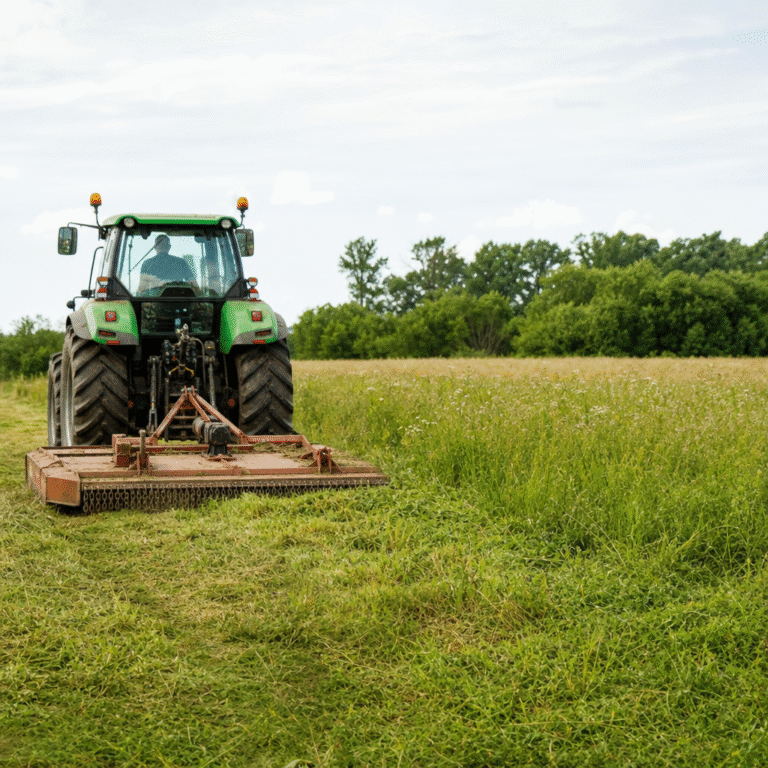
Across rural America, landowners are rethinking what their acreage can do for them. Whether managing overgrown pastures, maintaining fence lines, or preparing fields for lease or cultivation, the right equipment makes all the difference. Among the most versatile tools in any land management arsenal is the bush hog — a rotary cutter that handles thick brush, tall grass, and woody vegetation with efficiency that hand tools simply cannot match. As land values rise and new income opportunities emerge, investing in reliable cutting equipment has become less of an option and more of a strategic necessity.
The Growing Demand for Land Maintenance Equipment
The agricultural equipment market has seen a notable shift in recent years. More landowners — from hobby farmers to large-scale operators — are recognizing that well-maintained land commands higher lease rates, attracts better tenants, and qualifies for more government conservation programs. This has driven demand for practical, durable machinery that can handle the rigors of regular field maintenance without breaking the bank.
Bush hogs, in particular, have surged in popularity because of their adaptability. They can be attached to a wide range of tractors and are effective across diverse terrain types, from flat pastures to sloped hillsides with dense undergrowth. For landowners who need to maintain large acreage regularly, owning a bush hog outright — rather than renting one seasonally — often proves to be the more economical long-term choice.
Why Used Equipment Makes Financial Sense
New agricultural equipment carries a premium price tag that many landowners, especially those just beginning to monetize their property, find difficult to justify. Used equipment, on the other hand, offers a practical middle ground — proven performance at a fraction of the cost. A well-maintained used bush hog can deliver years of reliable service, and the savings can be redirected toward other land improvements or operational costs.
For landowners exploring used bush hogs for sale, the market offers a wide variety of models suited to different tractor sizes and land conditions. Whether you need a light-duty cutter for a small hobby farm or a heavy-duty commercial-grade rotary mower for managing hundreds of acres, sourcing quality used equipment from a reputable dealer ensures you get the right tool without overspending.
Land Management as a Revenue Strategy
Maintaining clean, accessible land is no longer just about aesthetics or compliance — it is increasingly tied to direct income generation. Landowners who keep their fields clear and well-managed are better positioned to lease to farmers, hunters, or recreational users. Hunting leases, in particular, have become a significant income source in many states, with well-maintained habitat commanding premium rates per acre.
Beyond leasing, many landowners are exploring how their property can participate in broader sustainability initiatives. Renewable energy projects are creating new income opportunities for landowners, from solar installations to wind turbine leases, and maintaining clear, accessible land is often a prerequisite for qualifying for these programs. A bush hog plays a direct role in that preparation — clearing vegetation, maintaining access roads, and keeping land in the kind of condition that attracts serious developers and investors.
Conservation Programs and Equipment Investment
Federal and state conservation programs also reward landowners who actively manage their property. Programs administered through agencies like the USDA often require participants to demonstrate regular land maintenance as a condition of enrollment. Keeping fields mowed, brush controlled, and waterways clear are common requirements that a bush hog handles efficiently.
California, for example, has been particularly active in supporting agricultural landowners through targeted programs. According to a recent announcement, the California Department of Food and Agriculture has outlined new initiatives supporting sustainable land and farm management practices, reinforcing the value of proactive land stewardship. Landowners who invest in the right equipment are better positioned to meet program requirements and capture available funding.
Choosing the Right Bush Hog for Your Operation
Not all bush hogs are created equal, and selecting the right model depends on several factors: the size of your tractor, the density of vegetation you typically encounter, the terrain of your land, and how frequently you plan to use the equipment. Understanding these variables before purchasing ensures you get a machine that performs reliably under your specific conditions.
Matching Equipment to Tractor Horsepower
One of the most common mistakes landowners make when purchasing a bush hog is mismatching it to their tractor’s horsepower. A cutter that is too large for the tractor will strain the engine and drivetrain, leading to premature wear and potential mechanical failure. Conversely, an undersized cutter may not handle heavy brush effectively, requiring multiple passes and wasting time and fuel.
As a general guideline, light-duty bush hogs designed for cutters up to five feet wide typically pair well with tractors in the 20 to 40 horsepower range. Mid-range models between five and seven feet wide are suited for tractors producing 40 to 70 horsepower. Heavy-duty commercial cutters, which can span eight feet or more, require tractors with 70 horsepower or greater. Reviewing the manufacturer’s specifications and consulting with an equipment dealer before purchasing is always advisable.
Inspecting Used Equipment Before Purchase
When buying used agricultural equipment, a thorough inspection is essential. Key areas to evaluate on a used bush hog include the condition of the blades and blade carriers, the integrity of the gearbox, the state of the driveline and slip clutch, and the overall structural condition of the deck. Rust, cracks, or significant denting on the deck can indicate past abuse or neglect. A gearbox that leaks or shows signs of overheating is a red flag that should not be overlooked.
Purchasing from a reputable dealer who inspects and services equipment before resale significantly reduces the risk of buying a machine with hidden problems. Dealers who specialize in agricultural equipment often provide service records and can answer detailed questions about a unit’s history and condition.
HR Agri Power: A Trusted Source for Used Bush Hogs
For landowners seeking quality used rotary cutters, HR Agri Power has established itself as a dependable resource in the agricultural equipment market. With an extensive inventory spanning multiple brands, models, and size classes, the platform makes it straightforward to find equipment that matches your tractor’s specifications and your land’s demands. Their inventory is regularly updated, and each listing provides the detail buyers need to make informed decisions without having to visit multiple dealerships.
Whether you are a first-time buyer or an experienced operator looking to expand your equipment fleet, HR Agri Power’s used bush hog inventory offers a practical starting point for comparing options and identifying the best value for your budget and operational needs.
Conclusion: Equipment as a Long-Term Land Investment
Owning the right land maintenance equipment is not simply a matter of convenience — it is a foundational element of a productive land management strategy. A reliable bush hog enables landowners to maintain their property consistently, meet conservation program requirements, prepare land for lease or development, and ultimately increase the income potential of their acreage. As new revenue opportunities continue to emerge for rural landowners, the value of being equipped and ready to act cannot be overstated. Investing in quality used equipment today positions you to take full advantage of what your land has to offer tomorrow.
