



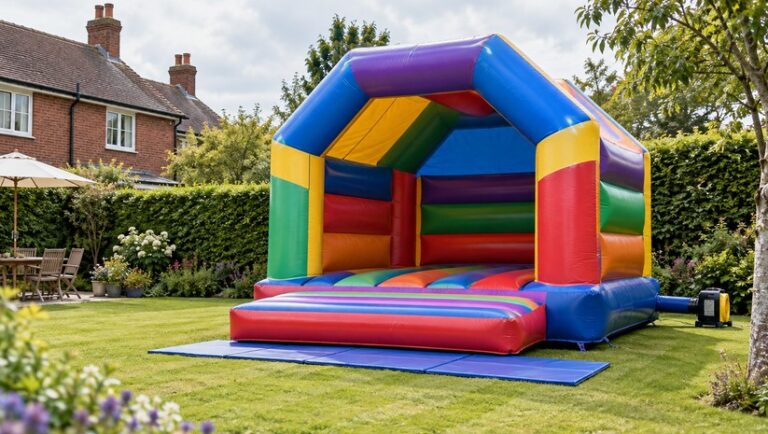
Bouncy castles are a well-known component of a children’s party, school fetes, weddings, community events and corporate family days all over the UK. Entrepreneurs who are interested in the events industry can find this continual demand attractive for a business idea to hire bouncy castles.
Although the business looks fairly simple, it’s the successful operators who do more than just put an inflatable onsite and pick it up at the end of the day. Their job is to pick out the right equipment, judge whether or not the venues make sense for any given gathering, keep tabs on weather, and keep safety logs and provide a consistent service during the process of booking.
In the climates of people contemplating the profession, the f is for fear.
Research the Local Market
Begin by examining the types of events held in the area you plan to serve. Demand can vary considerably between large cities, suburban neighbourhoods and rural communities.
Potential customers may include:
- Families organising birthday parties
- Schools and nurseries
- Wedding venues
- Hotels and pubs
- Sports clubs
- Community organisations
- Corporate event planners
- Local councils and charities
Review established hire companies in the area and compare their equipment, prices, delivery zones and booking policies. The aim is not simply to offer the same products at a lower price. It is more useful to identify gaps in the local market.
For example, an area with many modern housing developments may have strong demand for compact castles suitable for smaller gardens. Towns with several wedding venues may offer opportunities for white or neutral-coloured inflatables, while operators serving schools and community groups may benefit from larger castles, slides and obstacle courses.
This initial research can help determine which products are most likely to generate regular bookings.
Choose Equipment for the Customers You Expect to Serve
New businesses are often tempted to purchase the largest or most colourful attraction available. In practice, a versatile inflatable that fits a wide range of venues may produce a better return.
When comparing products, consider:
- Inflated dimensions
- Required operating space
- Packed dimensions and weight
- Recommended user groups
- Blower requirements
- Indoor and outdoor suitability
- Setup and dismantling time
- Cleaning requirements
- Availability of replacement parts
- Manufacturer documentation
- Inspection and maintenance needs
Operators researching bouncy castles for sale should compare more than themes and purchase prices. Construction, packed weight, anchoring arrangements, documentation and after-sales support can all affect how easily the equipment can be operated throughout its service life.
A castle may look impressive in photographs but still be unsuitable for the business if it cannot fit through residential access points, requires more staff than expected or is too heavy for the available vehicle and handling equipment.
Many new operators are better served by beginning with one or two adaptable models. Actual enquiries and booking records can then guide future purchases.
Understand the Safety Responsibilities
Safety is central to operating an inflatable hire business. Equipment should be installed, operated and supervised according to the manufacturer’s instructions and relevant UK guidance.
Before purchasing an inflatable, request its operating manual, dimensions, anchoring information, blower specifications and available inspection or conformity documents. It is also important to establish whether the product falls within the scope of BS EN 14960, the recognised standard commonly applied to inflatable play equipment in the UK.
Commercial inflatables require appropriate inspection by a competent person. PIPA and ADIPS are established inspection schemes used within the industry, although operators should confirm which inspection arrangements apply to each product.
Inspection is not limited to an annual test. Equipment should also be checked before every hire. The inflatable, seams, anchor points, ropes, blower, electrical connections and surrounding area should all be examined before participants are allowed to enter.
Records of inspections, maintenance and repairs should be kept in an organised form. These documents may be requested by insurers, venues or event organisers.
Assess Each Venue Before Accepting a Booking
The listed size of a bouncy castle is not the same as the total space required to operate it. Additional room is needed for anchoring, the blower, safety mats, electrical cables and clear access around the equipment.
Before confirming a booking, ask the customer to provide accurate measurements and photographs of the installation area. The operator should also establish:
- Whether the surface is grass, concrete, tarmac or an indoor floor
- Whether the ground is level
- Whether access gates are wide enough
- Where the electricity supply is located
- Whether trees, fences or overhead cables are nearby
- Whether underground services could affect anchoring
- Whether suitable vehicle access is available
Grass sites generally allow approved ground stakes to be used. Hard surfaces require properly planned alternative anchoring or ballast. The exact arrangement should follow the manufacturer’s operating instructions, and every required anchor point must be used.
Identifying unsuitable sites in advance saves time on the day of the event and reduces the risk of disputes with customers.
Prepare for the British Weather
Weather can have a direct effect on bookings, particularly during the outdoor events season. A clear weather policy is therefore essential.
Wind speed should be measured at the venue with an anemometer rather than estimated from a general forecast or mobile application. According to guidance from the Health and Safety Executive, inflatables should not be operated in winds exceeding 24 mph or 38 km/h. If the manufacturer specifies a lower limit, that lower figure must be followed.
Conditions should be monitored throughout the hire because wind speeds can change quickly. Operators must be prepared to stop use and deflate the equipment if conditions become unsafe.
Customers should understand this policy before making a booking. Cancellation, postponement and refund terms should be explained clearly so that safety decisions do not come as an unexpected surprise on the day.
Arrange Appropriate Insurance
Public liability insurance is an important consideration for an inflatable hire business. Schools, councils, wedding venues and other event organisers may require evidence of suitable cover before allowing equipment onto their premises.
The insurer should be given an accurate description of the business, including the type of equipment used, whether it is supervised by staff and whether customers are permitted to operate it themselves.
If the business employs staff, employers’ liability insurance will normally be required. Vehicle, equipment and storage cover may also be appropriate.
Operators should read the policy conditions carefully. Insurers may expect current inspection records, documented risk assessments, staff training and compliance with the manufacturer’s instructions. Insurance should support good operating procedures rather than replace them.
Plan Transport, Handling and Storage
Inflatables are bulky and can be extremely heavy when rolled. Before buying equipment, confirm that it can be transported, unloaded and positioned safely by the available team.
The delivery vehicle must have room for more than the inflatable itself. A typical booking may also require:
- Blowers
- Ground sheets
- Safety mats
- Stakes or approved ballast
- Electrical cables
- An anemometer
- Cleaning materials
- Handling equipment
- Repair supplies
Trolleys and ramps can make loading easier and reduce the risk of injury or product damage. Larger attractions may require additional staff even if the setup process appears simple.
Storage should be secure, dry and large enough for equipment to be organised properly. Inflatables must be cleaned and completely dried before long-term packing. Moisture trapped inside folded material can contribute to staining, odours and deterioration.
Create Clear Booking and Hire Procedures
Professional procedures help protect the business and give customers confidence. A written hire agreement should explain:
- Delivery and collection times
- Payment and deposit terms
- Cancellation arrangements
- Weather-related policies
- Supervision responsibilities
- User restrictions
- Rules concerning shoes, food, drinks and face paint
- Procedures for reporting damage
- Emergency contact details
Instructions should also be explained directly to the responsible person at the venue. Simply handing over a document may not be enough to ensure that the operating rules are understood.
Customers should know how many participants may use the inflatable, which age or height groups it is designed for and when use must stop. If the equipment will be supervised by the customer, the designated person must understand their responsibilities before the operator leaves the site.
Calculate Prices Using the Complete Cost of Each Hire
Competitor prices can provide a useful reference, but they should not determine the entire pricing strategy. A hire fee must cover more than the original cost of the castle.
Operating expenses may include:
- Insurance
- Inspections
- Maintenance and repairs
- Fuel and vehicle costs
- Staff time
- Cleaning and drying
- Storage
- Advertising
- Payment-processing fees
- Replacement accessories
- Weather-related cancellations
Delivery distance and setup difficulty should also be considered. A booking that requires two employees and several hours of travel may be less profitable than a lower-priced hire close to the company’s base.
Competing only on price can make it difficult to maintain equipment and service standards. Reliable communication, clean products, punctual delivery and professional setup can be more valuable to customers than the cheapest available quote.
Build a Strong Local Reputation
Most customers want reassurance that the company will arrive on time with clean, safe and suitable equipment. A professional website should therefore provide clear photographs, dimensions, operating requirements, service areas and booking information.
Useful local marketing channels include:
- Google Business Profile
- Community social media groups
- School and nursery contacts
- Local event venues
- Wedding and party planners
- Customer referral programmes
- Local business directories
- Branded vehicles and equipment
Reviews can be especially valuable because many customers are booking an inflatable for the first time. Comments about communication, cleanliness and reliability help reduce uncertainty for future customers.
Product descriptions should remain accurate. Avoid suggesting that a castle is suitable for every garden or event. Clear measurements and access requirements may reduce the number of unsuitable enquiries, but they also prevent problems on delivery day.
Expand in Response to Real Demand
Once the business has completed a reasonable number of bookings, its enquiry records will begin to show which products customers request most often.
Expansion opportunities may include:
- Compact indoor castles
- Bouncy castles with slides
- Neutral designs for weddings
- Toddler play equipment
- Inflatable slides
- Obstacle courses
- Interactive games
- Seasonal water attractions
When comparing additional equipment, operators may include established suppliers such as East Inflatables UK in their research. Product specifications, documentation, packed weight, warranty terms and after-sales support should be confirmed before an order is placed.
Purchases should be based on realistic demand rather than appearance alone. Each new attraction must suit the company’s vehicles, storage space, staffing capacity and typical customer venues.
In some cases, purchasing another unit of a consistently popular design may be more profitable than adding a highly specialised product that receives only occasional enquiries.
Final Thoughts
Starting a bouncy castle hire business in the UK requires more than choosing an attractive inflatable. Long-term success depends on selecting suitable equipment, understanding safety responsibilities and building reliable systems for venue assessment, weather monitoring, transport, cleaning and customer service.
A new operator does not need a large inventory immediately. Beginning with versatile equipment and learning from genuine customer demand can provide a more manageable route into the market.
By combining well-chosen products with professional procedures and dependable service, a bouncy castle hire business can build a strong local reputation and develop steadily over time.
