



The Demands of Medical Electronics and Industrial Robotics
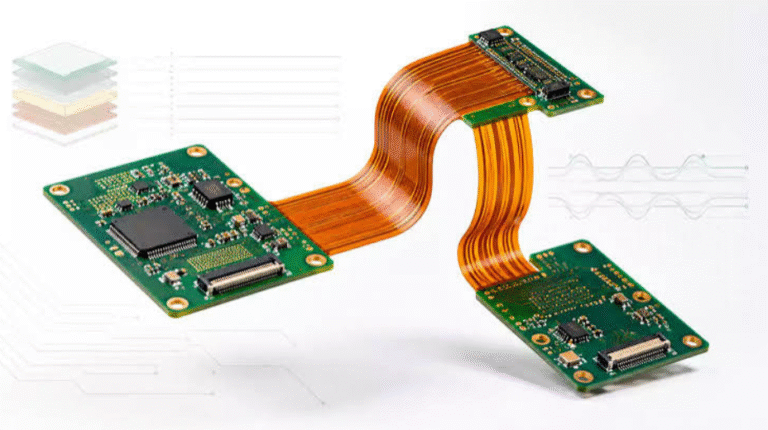
In the development of advanced medical electronics, sophisticated robotics, and compact industrial equipment, physical space is often the most restricted design constraint. Traditional wiring harnesses and bulky electromechanical connectors take up valuable volume and introduce points of mechanical failure. Rigid-flex circuits solve this by combining rigid mounting areas for dense component placement with flexible dynamic sections that can fold into tight, irregular enclosures. Because these high-reliability applications cannot tolerate unexpected downtime, engineering teams require highly accurate physical prototypes. Partnering with a specialized Fast Turn PCB provider ensures that these complex boards are fabricated with absolute precision, allowing development teams to validate both electrical performance and physical fit without enduring weeks of manufacturing delays.
Why Mechanical and Electrical Design Must Converge
Unlike standard rigid boards, rigid-flex design fundamentally requires the convergence of electrical and mechanical engineering. A board that functions perfectly on an electrical schematic can still fail catastrophically if the mechanical bending stresses are not properly calculated. The flexible sections must navigate around motors, sensors, and structural housings without compromising the delicate copper traces within.
If the electrical and mechanical teams do not review the design together, the resulting board may experience trace fracturing, layer delamination, or severe impedance mismatches when folded into its final 3D enclosure. A highly capable manufacturing partner understands this intersection, offering comprehensive engineering support to ensure that the 3D mechanical realities of the enclosure perfectly align with the electrical routing requirements.
Strict Manufacturing Requirements for Structural Reliability
Manufacturing a board that seamlessly transitions from a rigid FR-4 structure to a dynamic polyimide flex layer is exceptionally complex. The areas where the flexible substrate enters the rigid board—known as the transition zones—are highly vulnerable to mechanical stress and material separation. To prevent failure, the manufacturing facility must meticulously manage rigid/flex stack-up alignment, ensuring that the disparate materials bond correctly during lamination without excessive adhesive flow.
Furthermore, drilling and plating through these mixed materials presents a significant challenge. The differing thermal expansion rates of acrylic adhesives, polyimide, and fiberglass require highly specialized desmear and plating cycles to ensure reliable via structures. When evaluating a partner for rigid flex PCB fabrication, engineering teams must verify that the facility has strict controls over material compatibility, transition-zone strain relief, and advanced drilling techniques. A single plating void in a critical medical diagnostic tool or an industrial robotic arm can lead to total system failure.
Controlling Impedance Across Mixed Substrates
In addition to structural integrity, advanced industrial and medical devices often transmit high-speed digital data or sensitive analog signals. Maintaining controlled impedance across a rigid-flex board requires deep material expertise. The dielectric constant of the rigid FR-4 section is vastly different from the polyimide and coverlay used in the flexible section.
When a high-speed signal crosses the transition zone, the change in surrounding materials can cause impedance shifts, leading to signal reflection and data corruption. An expert manufacturer will optimize the stack-up and trace geometries specifically for each material section, ensuring that transmission lines maintain strict impedance tolerances whether they are buried inside the rigid core or exposed on the flexible tail.
Technical Capabilities for Advanced Rigid-Flex Builds
Because the margin for error in robotics and medical electronics is effectively zero, buyers must rely on manufacturers with verified technical capabilities. To confidently support these complex engineering builds, an advanced fabrication facility must possess the following proof points:
- Rigid-flex capability up to 20 layers to accommodate highly dense industrial control systems and complex sensor routing.
- Flexible PCB capability up to 10 layers for dynamic, high-density interconnections within tight mechanical enclosures.
- Controlled impedance support across all mixed-material substrates to guarantee high-speed signal integrity.
- Free DFM and stack-up optimization to identify mechanical vulnerabilities, transition-area risks, and material conflicts before fabrication begins.
- Strict quality systems, supporting IPC Class 3 and ISO13485 manufacturing standards where relevant, ensuring the highest level of reliability for life-critical medical devices and heavy industrial robotics.
Conclusion
Selecting a manufacturing partner for rigid-flex projects goes far beyond comparing basic lead times. The unique intersection of mechanical folding, mixed-material lamination, and high-speed electrical routing requires a manufacturer with specialized expertise. By focusing on critical factors like transition-area integrity, precise drilling and plating across diverse substrates, and strict impedance control, engineering teams can avoid catastrophic field failures. Partnering with a manufacturer that provides robust DFM support and proven rigid-flex capabilities ensures that the most complex medical and industrial designs are brought to life accurately, reliably, and on schedule.
