



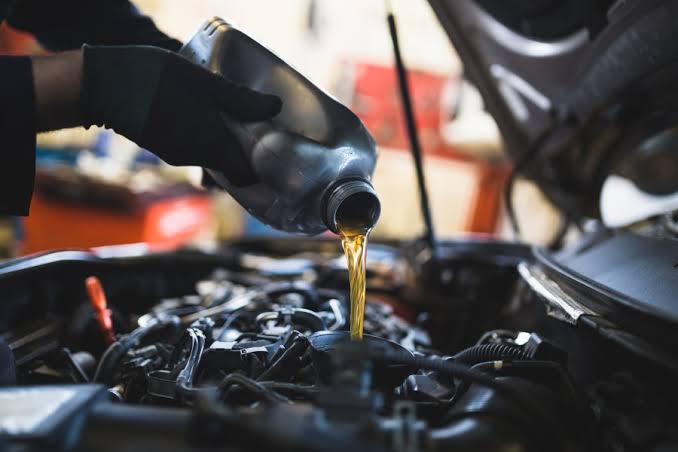
The planning that goes into a serious expedition or overland trip covers a lot of ground. Route research, kit selection, recovery equipment, navigation tools, food and water, communication devices — experienced adventurers work through the checklist methodically, leaving as little as possible to chance. Yet one area that consistently receives less attention than it deserves is the lubricant in the engine bay. For vehicles that will be pushed hard across demanding terrain, in temperature extremes, potentially far from the nearest garage, the choice of motor oil is not a minor detail. It is a fundamental component of expedition readiness.
What Your Engine Faces Off-Road
Road driving is demanding on an engine in the obvious ways — sustained motorway cruising, stop-start urban traffic, cold starts in winter. Off-road driving compounds these demands in ways that most drivers don’t fully appreciate until something goes wrong.
Low-speed, high-torque operation — crawling up a steep rocky incline in low range — generates sustained high loads on bearings and moving components without the cooling effect of high-speed airflow over the engine. Extended idling while you navigate a technical section, or while you’re winching another vehicle, keeps the engine running without moving air across the radiator. Steep angles — climbing or descending a significant gradient — cause oil to slosh away from the sump pickup, potentially starving the pump briefly at exactly the moment the engine is under maximum stress. Water crossings expose the engine bay to moisture that can find its way into the oil if seals or the breather system are not in perfect condition.
Add to this the possibility of high ambient temperatures during summer expeditions, low ambient temperatures during winter or high-altitude trips, and the extended periods between oil changes that remote travel may impose — and the picture becomes clear. Off-road use asks significantly more of engine oil than road driving does. The lubricant that is adequate for the daily commute may not be adequate for the demands of a serious overland journey.
Why Base Oil Quality Is the Starting Point
Motor oil is a formulated product — a blend of base oil and a performance additive package. The additives do important work: they neutralise acids, keep contaminants in suspension, modify viscosity across temperature ranges, and protect metal surfaces under high loads. But they work within the constraints set by the base oil. A high-quality additive package cannot compensate for a base oil that lacks the thermal stability or viscosity retention to maintain film strength under sustained high-temperature, high-load operation.
Group 3 base oil — produced through an intensive hydrocracking process that transforms conventional mineral oil into a highly refined, high-viscosity-index base stock — represents the foundation of most modern “fully synthetic” and “semi-synthetic” motor oils sold at retail. Unlike Group I and II mineral base oils, which contain a heterogeneous mixture of molecular structures with varying thermal stability, Group III base oils achieve a level of molecular uniformity that translates directly into improved oxidative resistance, lower volatility, and more consistent viscosity behavior across the temperature range an engine actually experiences.
For off-road and expedition use, three Group III properties are particularly relevant.
Viscosity Index is a measure of how consistently an oil maintains its viscosity as temperature changes. A high viscosity index means the oil remains appropriately fluid at low temperatures — protecting the engine during cold starts in the mountains at -10°C — while maintaining sufficient viscosity at high temperatures to preserve the film between bearing surfaces when the engine is working hard under sustained load. Group III base oils achieve viscosity indices typically above 120, compared to roughly 95 to 100 for Group II oils. That difference matters when your engine is running hot on a steep ascent far from any assistance.
Oxidative stability determines how long the oil resists chemical breakdown at elevated temperatures. Oxidation is the primary mechanism by which oil ages in service — it produces acidic compounds, increases viscosity, and generates varnish deposits that can restrict oil flow through small passages. Group III base oils, with their higher saturation levels and lower aromatic content compared to lower-group alternatives, resist oxidation significantly better. For expeditions where oil change intervals may be extended beyond the manufacturer’s recommendation due to remoteness, this resistance provides a meaningful safety margin.
Volatility — specifically, how much of the oil evaporates at high temperatures — affects both oil consumption and the concentration of the remaining base oil and additive package as the oil ages. High-volatility base oils can lose a measurable fraction of their volume through evaporation over an extended service interval, effectively concentrating the remaining oil and changing its properties. Group III base oils, with their more uniform molecular weight distribution and lower fraction of light volatile components, show significantly lower volatility than Group I or II alternatives.
Practical Implications for Expedition Preparation
For vehicle preparation before a serious overland trip, the lubricant choices made in the workshop have consequences on the trail. A fresh oil and filter change immediately before departure — using a quality Group III-based synthetic oil appropriate for the vehicle’s specification — gives you the maximum service life and the best protection through the trip.
If the trip is long enough that an oil change may be required en route, the choice of oil becomes even more important. Carrying a litre or two of the same oil for top-up is standard practice. Knowing that the oil you are running has the thermal stability and oxidative resistance to go beyond its nominal service interval if circumstances demand it is a genuine reassurance on a remote expedition.
The relationship between oil quality and engine longevity only becomes visible over time and miles. A single trip may not reveal the difference between a good oil and a marginal one. A decade of demanding use, however, shows up in engine condition clearly. The vehicles that are still running reliably at high mileage after years of off-road use are rarely the ones where the lubricant specification was treated as a secondary consideration.
Take care of the engine that gets you there. It will take care of you.
