



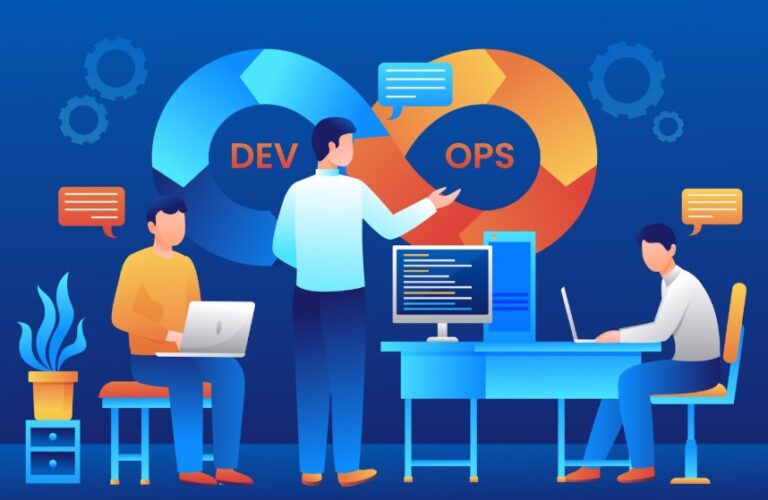
For engineering and IT leadership at mid-to-large US companies, the decision to bring in an external DevOps partner is rarely made casually. It follows months of internal friction — deployment bottlenecks, inconsistent release cycles, cloud cost overruns, or the slow realization that the team’s current tooling and practices cannot support the pace the business now requires. By the time a formal search begins, the stakes are already defined. A wrong choice means months of misaligned work, disrupted pipelines, and organizational fatigue. A right choice creates the foundation for sustainable delivery at scale.
What makes this decision harder in 2025 is that the market for DevOps consulting has expanded significantly. More vendors, more service packages, more claims about automation and cloud-native expertise. But the volume of options does not make selection easier — it makes the framework for evaluation more important. This article outlines a structured approach to vetting and selecting a DevOps consulting partner, written specifically for technical decision-makers who need substance, not a checklist.
Understanding What You Are Actually Buying
When organizations engage a partner for devops consulting and managed cloud services, they are not purchasing a set of tools or a collection of automated scripts. They are entering an operational relationship that will directly affect how software gets built, tested, deployed, and maintained. The distinction matters because it changes how you evaluate candidates. A firm that excels at configuring CI/CD pipelines may have limited experience managing production cloud environments under real load. A managed services provider may keep systems running but lack the depth to redesign delivery workflows. Knowing where those capabilities overlap — and where they diverge — is the first filter.
The phrase “devops consulting and managed cloud services” describes a combined engagement model where the partner advises on engineering practices while also taking operational responsibility for cloud infrastructure. Not all vendors offer both at the same level of maturity, and the distinction between advisory-heavy and operations-heavy engagements will shape everything from contract structure to team dynamics.
The Difference Between Advisory and Operational Depth
Advisory depth means the partner can assess your current delivery process, identify gaps in tooling or team behavior, and recommend changes based on experience across comparable organizations. Operational depth means they can own the execution — standing up environments, managing incidents, handling scaling events, and maintaining platform health over time.
Many firms present themselves as offering both, but their actual experience skews in one direction. During early conversations, ask for concrete examples of where they have managed both responsibilities simultaneously. Vague answers that lean on certifications or platform partnerships without referencing actual delivery outcomes should be treated as a signal to probe further.
Evaluating Fit Before Evaluating Capability
Technical capability is necessary but not sufficient. A partner that has delivered excellent results for a fintech company may be poorly suited for a healthcare software team operating under different compliance requirements, release rhythms, and internal governance structures. Fit — organizational, operational, and cultural — determines whether the capability gets applied effectively.
Fit evaluation is often treated as secondary, something to assess after the technical credentials check out. In practice, it should run in parallel from the start. This means examining how the partner communicates during the sales process, how they respond to edge-case questions, and whether their proposal reflects an understanding of your specific environment or reads as a generic template with your company name inserted.
Organizational Compatibility and Working Models
One practical indicator of fit is how the partner structures their engagement model. Some firms work through embedded teams that operate alongside your engineers day-to-day. Others maintain a managed services model where work happens largely off-site, with structured handoffs and reporting cadences. Neither model is universally better, but each creates different demands on your internal team and different risks if communication breaks down.
Ask directly: who will be the primary point of contact during incidents? What is the escalation path when something breaks at an unexpected time? How does the team handle situations where the recommended approach conflicts with your internal preferences? How the partner answers these questions tells you more about working reality than their case studies do.
Team Continuity and Knowledge Retention
A persistent challenge in managed services engagements is knowledge transfer. If the people who built your pipeline configuration or established your monitoring setup rotate off the account, that institutional knowledge often leaves with them. This creates dependency risk that compounds over time.
Evaluate what the partner does structurally to prevent this. Do they document as they go, or treat documentation as a project-end deliverable? Is there a defined knowledge transfer process built into the contract? Are there provisions for what happens if a key team member transitions off the account? These are operational questions, not legal ones, and they reveal how seriously the partner has thought about the long-term health of the engagement.
Assessing Technical Scope and Cloud Platform Alignment
Cloud platform alignment is one area where mismatches create real friction early in an engagement. The major public cloud providers — AWS, Google Cloud, and Microsoft Azure — differ meaningfully in their networking models, identity frameworks, and managed service ecosystems. A partner with deep AWS experience may bring assumptions into an Azure environment that slow progress and require rework. This is not a hypothetical concern; it happens regularly when organizations select partners based on general DevOps credentials without assessing platform-specific depth.
The same applies to tooling. If your team has invested in a specific CI/CD platform, container orchestration approach, or observability stack, the partner should either have demonstrated experience in that environment or a clear and honest plan for building it. Overconfidence about adapting quickly to unfamiliar tooling is a common source of early engagement problems.
Security and Compliance Integration
For US-based organizations operating in regulated industries or handling sensitive data, security and compliance cannot be treated as a separate workstream that runs alongside the DevOps engagement. They need to be integrated into the architecture decisions, deployment processes, and access management frameworks from the beginning.
As outlined in NIST’s Cybersecurity Framework, mature security posture requires continuous processes rather than periodic assessments. A DevOps consulting partner that treats security hardening as a phase rather than an ongoing practice will produce environments that drift out of compliance over time. Look for partners who can describe, specifically, how security is embedded into their pipeline design and change management processes — not just referenced as a capability they provide.
Structuring the Evaluation Process
A structured evaluation process reduces the risk of choosing based on presentation quality rather than actual capability. It also protects you from vendor relationships that look good at the proposal stage but deteriorate once the engagement begins.
Define your evaluation criteria before you begin speaking with vendors. This prevents the selection process from drifting toward whoever presents most confidently. Criteria should reflect your actual operational priorities — deployment frequency, incident response time, cloud cost management, compliance posture, or whatever combination of concerns drove the initial decision to seek outside support.
Reference Checks and Engagement History
Reference checks are underused in DevOps partner selection. When they happen at all, they tend to be brief and focused on broad satisfaction rather than specific operational outcomes. A more useful approach is to ask references about specific failure scenarios: a major incident, a missed deadline, a situation where the partner’s recommendation turned out to be wrong. How the partner responded in those moments is more predictive of long-term performance than how the engagement ran when everything was working.
If a vendor cannot provide references who will speak openly about difficult moments in the engagement, that itself is worth noting.
Contract Structure and Exit Provisions
The structure of the engagement contract reflects how the partner thinks about accountability. Long lock-in periods with limited exit provisions suggest the partner values revenue continuity over performance accountability. Reasonable contracts include milestone-based reviews, clear definitions of what constitutes satisfactory delivery, and provisions for transitioning responsibilities if the engagement needs to end.
Pay particular attention to how intellectual property is handled. Configuration files, custom scripts, pipeline definitions, and architecture documentation created during the engagement should be clearly owned by your organization. This is not universally the default, and resolving it after the fact is far more difficult than addressing it before the contract is signed.
When In-House Capability Should Lead
Devops consulting and managed cloud services are not always the right answer. For some organizations, the primary gap is not expertise — it is process discipline and organizational alignment. Bringing in an external partner to solve an internal alignment problem will produce temporary improvements that erode once the engagement ends.
Before committing to an external engagement, assess honestly whether the friction in your delivery process stems from tooling gaps and infrastructure complexity, or from how teams communicate, prioritize, and make decisions. Devops consulting and managed cloud services work best when the internal team has enough maturity to collaborate with an external partner, adopt changes sustainably, and eventually own what gets built.
Closing Thoughts
Selecting a DevOps consulting partner in 2025 requires the same rigor you would apply to any significant operational decision. The market has matured enough that credentials and certifications are table stakes — they tell you a vendor meets a baseline, not that they are the right partner for your specific environment, team, and goals.
The framework that works is straightforward: clarify what you actually need, evaluate fit alongside capability, ask operational questions rather than strategic ones, and structure the contract to protect your organization’s interests over the long term. Devops consulting and managed cloud services, when selected carefully and engaged with genuine operational intent, can meaningfully improve how your engineering organization delivers software. But that outcome depends far more on the selection process than on any single vendor’s service catalogue.
Take the time to build a clear picture of your current state before beginning conversations with vendors. The clearer you are about your constraints, your priorities, and your non-negotiables, the easier it becomes to distinguish between partners who genuinely understand your situation and those who are skilled at appearing to.
