



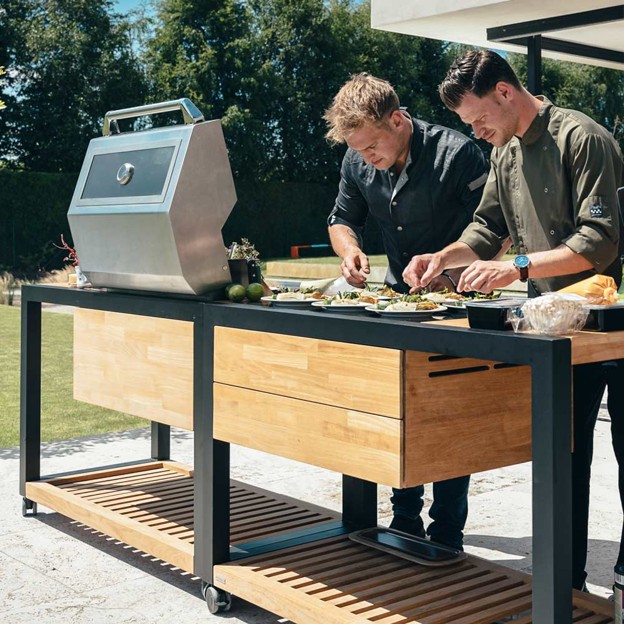
Outdoor cooking has moved beyond a grill at the corner of the backyard. It is a purposeful space that consists of cooking, hosting, and relaxation coming together. A good setup enhances the way your food is prepared and how people gather around it.
This guide explains how to build a practical outdoor cooking area, functional in real-world situations. It is about layout, materials, usability, and comfort so that the space feels natural to use. Every element of the setup should support how you cook, move, and engage without adding unnecessary complications.
Planning a Functional Outdoor Setup
Setups always begin with clear planning. The goal is to create a space that is accessible, and nothing feels forced. An Outdoor Cooking Station perfectly connects cooking, preparation, and serving in one smooth flow.
Focus on these essentials:
- Keep the grill and prepare the area
- Set the serving space close to reduce movement
- Leave enough open space to move comfortably without obstruction
- Avoid placing key elements too far apart
- Plan storage early instead of adding it later
- Think about how more than one person will use the space
When the layout is simple, the space works better without effort.
Choosing the Right Materials for Long-Term Use
Opt for Durable Materials
Outdoor environments can damage weak materials quickly. Heat, moisture, and dust are constant factors, so durability matters.
Countertops
Stone and concrete surfaces handle heat or weather well. They require simple cleaning, and they do not wear out quickly.
Cooking Equipment
The second would be stainless steel, but it is a little more reliable. It’s rust-resistant and maintains performance over the year.
Cabinets and Storage
Cabinet systems protect tools and supplies in weather-resistant cases. Keeps out dust and moisture in closed storage
Flooring
Non-slip floors improve safety when the area gets wet. This is why you should choose the surfaces that don’t crack or feel slippery. Strong materials reduce maintenance and keep the surface usable for years.
Layout Decisions That Improve Efficiency
Layout directly affects how easy the space is to use. A poor layout leads to unnecessary movement and slows down cooking.
Central Cooking Area
Place the grill at the center. It should be the main focus, with enough space around it for safe use.
Prep Zone Placement
Always have the prep place near your grill. This eliminates back-and-forth movement while cooking
Storage Access
Storage should be within arm’s reach. Frequently used items should not require walking across the space.
Open Movement Paths
Leave clear walking paths. Refrain from using storage or furniture that obstructs movement. With a clean layout, you can spend more time cooking instead of adjusting to the space.
Storage and Organisation That Actually Works
Clutter makes it hard to deal with for outdoor spaces. Smart storage keeps everything organised and easy to manage and nothing gets lost.
- Use closed cabinets to protect tools from weather
- Install hooks for quick access to utensils
- Add drawers for smaller items like thermometers and gloves
- Keep waste bins covered and away
Each thing has a designated spot. This allows the area to be functional and minimises cleanup time.
Lighting and Comfort Considerations
Lighting is not managed in most cases, but it has a bad impact on usability and safety.
- Install task lighting near the grill so you can see clearly
- For a better atmosphere around seating, use soft lighting
- Pick fixtures that are weatherproof to handle outdoor conditions
Comfort also matters for a large number of guests. Include some seats near the cooking area for guests to stay engaged without disturbance.
Adjusting the Space to the Environment
Each outdoor setup should match the local environment. The performance of the space is impacted by weather conditions, temperature, and seasonal use.
Outdoor living is a way of life in places like Whistler. Although the weather outside promotes year-long utilisation, the change of seasons calls for reliable equipment and thoughtful design.
Solutions like Whistler BBQ are what many homeowners tend to prefer. They are designed for stable performance, even at lower temperatures or under more unpredictable conditions.
Keeping Maintenance Simple
The outdoor cooking area must require minimal maintenance. The reason for this is that the space will not be used as often when it becomes more difficult to clean.
- Choose surfaces that are easier to clean
- Avoid tight corners because the dirt can get stuck
- Always store tools appropriately after using them
- Use covers to protect equipment when not in use
An effortless way to keep the space ready is through its simple maintenance.
Conclusion
Good outdoor kitchen design is all about how well it functions. It is a practical space that accommodates cooking and hosting with its smart layout, durable surfaces, and practical storage.
When each item is purposefully placed, the space feels naturally usable. You could concentrate on the feel instead of managing the atmosphere. With time, this is what elevates a simple setup into a space people enjoy using regularly.
