



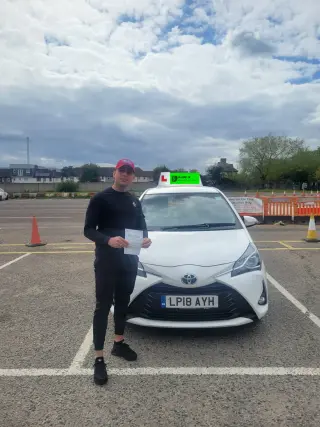
Nobody really talks about the gap between passing your driving test and actually feeling like a driver. It’s a strange, quiet kind of anticlimax — you’ve got the licence, but the first time you’re alone on a busy road, the nerves show up anyway. A lot of newly qualified drivers end up avoiding driving altogether because of this, not because they lack the skill, but because nobody prepared them for the psychological side of it. Here’s what actually builds that confidence — and it has surprisingly little to do with how well you drive.
Confidence Isn’t the Absence of Nerves — It’s Trusting Your Own Judgment
The most common misconception is that confident drivers simply don’t feel anxious. The difference is that they’ve learned to let that caution sit in the background instead of letting it take over. A small amount of nervous energy is useful; it keeps you alert. The goal isn’t to eliminate it entirely, it’s to stop it from dictating your decisions on the road. This holds true no matter where you’re learning from someone taking manual driving lessons Farnborough has the exact same experience as anyone else: confidence is less about fearlessness and more about trusting that you know what you’re doing, even while a part of you still feels unsure.
Start Small and Let the Wins Stack Up
Confidence doesn’t arrive all at once — it’s built the same way any skill is, through small, manageable wins that compound over time. Practising first in low-risk environments, like an empty car park or a quiet residential street, gives you room to get comfortable with the basics before adding complexity. Once that feels automatic, moving to busier roads, then dual carriageways, then more demanding conditions, keeps each step just challenging enough without being overwhelming. Rushing this order tends to backfire — it’s the gradual stacking of small successes that actually sticks.
Mistakes Are Data, Not Verdicts
One stalled start or one missed turn doesn’t mean you’re a bad driver — but it’s easy to treat it that way in the moment, and that reaction is often what erodes confidence faster than the mistake itself. Every driver, however experienced, makes small errors regularly. The difference is in how it’s processed: as useful feedback to adjust from, rather than proof that you shouldn’t be driving. Catastrophising a minor slip is what turns a one-off mistake into a lasting fear.
Routine Builds a Kind of Confidence Skill Alone Can’t
There’s a reason the same commute feels effortless after a few weeks when it felt overwhelming on day one — familiarity genuinely lowers the mental load of driving. Once a route stops requiring conscious navigation, there’s more attention left over for the actual driving decisions that matter. This is part of why repeating routes early on, rather than constantly driving somewhere new, tends to build confidence faster than variety does at the start.
The Right Instructor Shapes Whether Confidence Sticks After You Pass
This is where a lot of newly qualified drivers get let down without realising it. An instructor focused purely on getting a learner to a test-ready standard, as fast as possible, often produces someone who can pass but hasn’t actually built the habits that carry confidence past test day. Instructors who pace lessons to the learner’s actual comfort level — not just the syllabus — tend to produce drivers who stay confident well after passing, not just ones who scraped through. It’s part of the approach behind driving lessons with Glidex, where pacing to the learner rather than rushing toward the test date is treated as the difference between a licence and genuine road confidence.
Frequently Asked Questions
Is it normal to feel anxious after passing your driving test? Yes, and it’s very common. Passing the test proves you can meet the required standard, but confidence in real-world driving conditions usually develops afterward, through actual practice.
How long does it take to feel confident driving alone? It varies significantly by person, but most new drivers notice a real shift after a few weeks of regular, low-pressure driving — repetition tends to matter more than time alone.
What’s the best way to get over driving anxiety? Gradual exposure works best: starting in low-risk environments and slowly increasing complexity, combined with treating mistakes as normal rather than alarming.
Does practicing the same route help build confidence? Yes. Familiar routes reduce the mental effort needed for navigation, freeing up attention for the actual driving — which is part of why routine builds confidence faster than constant variety early on.
