



Introduction
The electrical manufacturing industry has undergone a remarkable transformation over the past two decades. Where once skilled workers relied on manual tools and time-consuming processes to cut, punch, and bend copper or aluminum busbars, today’s facilities operate with computer-controlled precision that dramatically reduces production time and human error. At the center of this shift is a class of automated fabrication equipment that has redefined what is possible on the production floor. This article explores the technology, applications, and advantages of modern busbar fabrication systems, and explains why manufacturers across the globe are adopting them at an accelerating rate.
What Is a CNC Busbar Machine and How Does It Work?
A busbar is a metallic strip or bar, typically made from copper or aluminum, that conducts electricity within switchboards, distribution boards, substations, and other electrical assemblies. Fabricating these components to precise specifications is essential, as even minor dimensional errors can compromise the safety and efficiency of an entire electrical system.
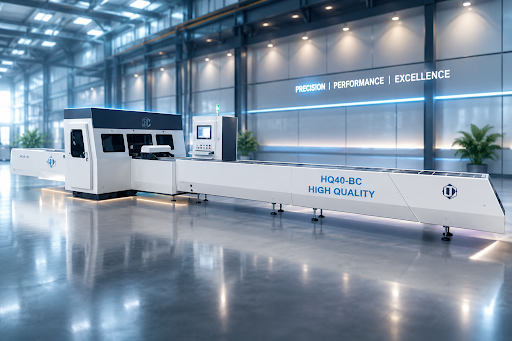
A CNC Busbar Machine is a computer-numerically-controlled piece of equipment designed to perform multiple fabrication operations on busbars with exceptional accuracy and speed. Unlike conventional machines that require manual setup and separate tools for each operation, a CNC busbar machine integrates punching, shearing, and bending functions into a single automated unit. The operator inputs the required dimensions and configurations through a digital control panel or software interface, and the machine executes each operation with consistent precision across an entire production run. This level of automation reduces reliance on operator skill for dimensional accuracy, minimizes material waste, and ensures that every component produced meets the same exacting standards.
Key Components and Features of Modern Busbar Fabrication Systems
Understanding the internal architecture of a busbar fabrication machine helps clarify why these systems deliver such reliable performance. Most modern units are built around three core functional stations, each dedicated to a specific type of operation.
The punching station uses hydraulically driven dies to create holes of various shapes and sizes in the busbar. These holes are necessary for bolted connections in electrical panels and switchgear assemblies. High-end machines allow operators to select from a library of punch and die configurations, enabling quick changeovers between different hole patterns without lengthy manual adjustments.
The shearing station cuts busbars to precise lengths using a straight or angular blade driven by hydraulic force. Accurate shearing is critical because uneven cuts can create installation difficulties and affect the quality of electrical connections. CNC control ensures that each cut is made at exactly the right position, regardless of how many pieces are being produced in a batch.
The bending station applies controlled force to create angular bends in the busbar at specified locations and angles. Flat bends, edge bends, and embossing operations can all be performed depending on the machine model and tooling configuration. Consistent bending is particularly important in switchgear manufacturing, where busbars must fit precisely into pre-designed panel layouts.
Industries and Applications That Rely on Busbar Fabrication Technology
The demand for precisely fabricated busbars spans a wide range of industries, each with its own specific requirements for conductor geometry, material grade, and surface finish.
Power generation and distribution facilities represent one of the largest user segments. Substations, transformer yards, and generating stations all require large quantities of custom busbars to carry high currents safely between equipment. In these settings, dimensional consistency is not merely a quality concern but a safety imperative.
The switchgear and panel building industry is another major market. Manufacturers of low voltage and medium voltage switchboards need to produce busbars in high volumes with tight tolerances, making automated CNC fabrication an obvious operational choice. The ability to program different busbar configurations and switch between them quickly is particularly valuable in custom panel manufacturing, where each order may have unique specifications.
Data centers are an increasingly significant application area as global demand for computing infrastructure continues to grow. Busbar trunking systems within data centers carry power from distribution boards to server racks, and the precision of each fabricated component directly affects the reliability of the entire facility.
Renewable energy installations, including solar farms and wind energy substations, also depend heavily on custom busbar assemblies. As these projects are often built in remote locations with tight construction schedules, receiving pre-fabricated, dimensionally accurate components is essential for keeping installation timelines on track.
Advantages of CNC Automation Over Manual Fabrication Methods
The case for investing in CNC busbar fabrication equipment becomes clear when comparing it directly to traditional manual methods on several key performance dimensions.
Precision is the most frequently cited advantage. Manual punching and bending operations are subject to human variability, which accumulates across a production run and can result in parts that fall outside acceptable tolerances. CNC automation eliminates this variability by executing every operation according to a fixed digital program, meaning the first part produced is dimensionally identical to the thousandth.
Speed is equally significant. A skilled operator working with manual tools might complete a single complex busbar in several minutes, accounting for setup, measurement, and each individual operation. A CNC machine performs the same sequence of operations in a fraction of the time, dramatically increasing throughput without adding labor costs.
Material efficiency improves as well. Because CNC machines cut and punch with consistent accuracy, the amount of material lost to errors or rework is substantially reduced. Over a high-volume production run, these savings in raw material costs can be considerable, particularly given the relatively high price of copper.
Operator safety is another important benefit. Manual busbar fabrication exposes workers to physical risks associated with heavy tooling and hydraulic equipment. CNC automation reduces the need for operators to interact directly with cutting and punching mechanisms during production, creating a safer working environment overall.
Selecting the Right Machine for Your Production Needs
Choosing the appropriate busbar fabrication system requires careful consideration of several factors, including the maximum busbar width and thickness the machine can handle, the available punching force, the range of bending angles supported, and the flexibility of the control software.
Manufacturers should assess their typical order mix and production volumes before making a purchasing decision. A facility that handles a high variety of custom orders will benefit from a machine with extensive programming flexibility and quick tooling changeover capabilities. A facility focused on high-volume production of standardized busbars may prioritize cycle speed and throughput capacity above all else.
After-sales support, availability of spare tooling, and software update policies are also worth evaluating. A machine that cannot be serviced promptly when a component fails can bring production to a standstill, so the reliability of the supplier relationship matters as much as the technical specifications of the equipment itself. Prospective buyers are encouraged to review detailed technical documentation and supplier credentials, and to learn more about specific machine models and their capabilities before committing to a purchase.
Conclusion
CNC busbar fabrication technology represents one of the most impactful advances in electrical manufacturing of the past generation. By combining punching, shearing, and bending operations into a single automated system controlled by precise digital programming, these machines have enabled manufacturers to achieve levels of quality, speed, and consistency that manual methods simply cannot match. As demand for electrical infrastructure continues to grow across power generation, data centers, renewable energy, and industrial automation, the role of precision busbar fabrication will only become more critical. For manufacturers looking to remain competitive and meet the increasingly exacting standards of their customers, investing in capable and reliable CNC fabrication equipment is not simply an operational upgrade but a strategic necessity.
