



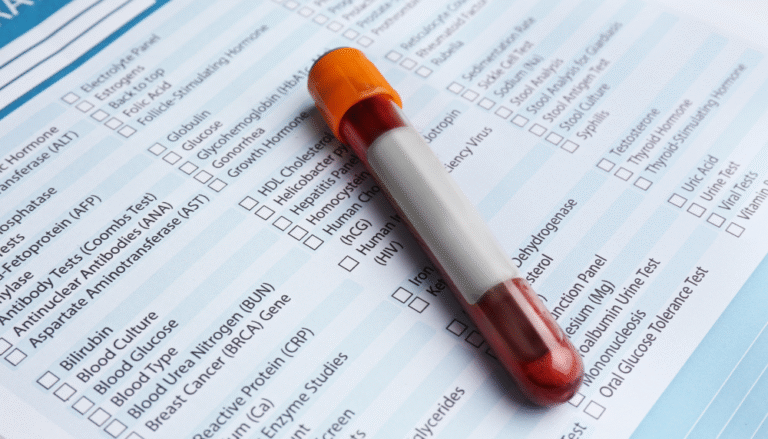
For many patients, a blood test is not just a technical procedure. It often responds to a concern, a persistent symptom, a need for monitoring, or the desire to take stock of one’s health. Unusual fatigue, suspected deficiency, hormone check-up, cholesterol monitoring, thyroid follow-up, pre-treatment assessment, liver or kidney screening: behind every request, there is a very specific need.
This is why a modern blood analysis laboratory in London should no longer simply take a sample and send back a result. It should offer a complete, smooth, and human medical pathway.
Fast Access, Ideally on the Same Day
When a patient is looking for a blood test in London, speed matters. Not necessarily out of impatience, but because waiting often creates anxiety. When a symptom is worrying, when a doctor has requested a check-up, or when a patient needs to provide results quickly, being able to get an appointment on the same day or within a short timeframe becomes a real comfort.
A modern blood analysis laboratory should therefore offer flexible organisation, with easy-to-book appointments, clear reception, and efficient care. Patients should not have to spend days trying to understand how the service works, sending several emails, or wondering whether they need to see a doctor first.
Ideally, they should be able to arrive with a specific request, a prescription, or simply a medical question, and then be guided towards the right type of test. This ability to simplify the patient pathway is particularly important in London, where many patients juggle busy schedules, frequent travel, and sometimes an incomplete understanding of the UK healthcare system.
Clear Blood Test Panels Adapted to Real Patient Needs
A good laboratory does not simply offer a long list of tests. It helps patients choose the right ones.
This is where blood test panels make real sense. A patient who wants a “full health check” does not always know what that means medically. Should they check their full blood count? Iron levels? Vitamin D? Thyroid function? Liver function? Kidney function? Hormones? Cholesterol? Blood sugar?
Well-designed panels make it possible to respond to concrete situations:
- general health check-up;
- persistent fatigue;
- female hormone monitoring;
- thyroid screening;
- nutritional assessment;
- cardiovascular check-up;
- post-treatment monitoring;
- prevention and proactive medicine.
But these panels must remain medical, not simply commercial. The role of a serious blood analysis laboratory is to avoid unnecessary tests, contextualise results, and remind patients that a blood test should always be interpreted alongside the patient’s history, symptoms, age, treatments, and medical background.
A result “within the normal range” does not always mean that everything is fine. Conversely, a result slightly outside the reference range is not necessarily worrying. This is precisely why medical support is essential.
A Blood Analysis Laboratory That Offers the Possibility to Consult a GP Before or After the Test
This is one of the key criteria that distinguishes a simple blood collection point from a modern blood analysis laboratory.
In some cases, patients know exactly which tests they need, especially when they have a prescription. In other situations, they need guidance. Fatigue lasting several weeks, digestive problems, hair loss, irregular periods, palpitations, or low energy can have very different causes.
Consulting a GP before the blood test makes it possible to ask the right questions and request the most relevant tests. It helps avoid multiplying tests without medical logic or, on the contrary, missing an important marker.
A consultation after receiving the results is just as important. Many patients receive their blood test results by email or through an online portal, then find themselves alone with values, abbreviations, and reference ranges that can be difficult to interpret. Haemoglobin, ferritin, TSH, CRP, HbA1c, ALT, creatinine, LDL: these data can be useful, but they need to be explained.
A modern blood analysis laboratory should therefore allow patients, when necessary, to speak with a GP to understand their results, decide on follow-up, adjust care, or be referred to a specialist.
A Blood Analysis Laboratory Connected to Several Medical Specialties
Blood tests are often only a starting point. They may reveal a deficiency, hormonal imbalance, inflammation, metabolic disorder, or marker requiring a specialist opinion. This is why the most reassuring model for patients is that of a multidisciplinary blood analysis laboratory. When a result requires further investigation, it is much easier to be referred to the right practitioner within the same medical environment.
A patient may need a gastroenterologist for digestive symptoms associated with abnormal blood results. A female patient may need a gynaecological opinion after a hormone check-up. Someone being followed for chronic fatigue, anxiety, or sleep disorders may benefit from an approach combining general medicine, psychology, or psychiatry. A dermatological concern, a vascular issue, or a preventive medicine request may also require quick referral to the right specialist.
This continuity prevents patients from having to start from scratch, search for a specialist on their own, explain their medical history several times, or lose time between appointments. It also creates a sense of coherence: each stage of the pathway becomes part of comprehensive care.
Support Adapted to International and French-Speaking Patients
In London, the language dimension matters a great deal. Explaining a symptom, discussing a medical history, asking a personal question, or understanding a blood test result is not always easy in a language that is not one’s own.
For the French and French-speaking community, being able to consult a French or French-speaking doctor in London is a real relief. It is not only a matter of comfort. It is also a matter of precision, nuance, and trust.
In a medical context, every word matters. Patients must be able to explain what they feel without oversimplifying. They must also understand the doctor’s explanations, the possible options, the limits of a result, and the next steps.
A blood analysis laboratory in London should therefore be able to welcome an international patient base while offering support from French-speaking doctors when needed. This is particularly useful for expatriates, French families living in London, students, mobile professionals, or visiting patients who want to find familiar medical reference points.
A Reassuring, Discreet, and Comfortable Setting
Medical quality remains the priority, of course. But the patient experience does not stop at the technical act. When someone comes for a blood test, they may be stressed, in a hurry, worried, or simply uncomfortable with needles. Reception, punctuality, clarity of information, and the atmosphere of the place all play an important role.
A blood testing laboratory located in a central and pleasant area of London, with an elegant setting, an attentive team, and smooth organisation, brings a sense of calm. Patients feel considered, not as a number, but as a person with a request, a story, and sometimes a concern.
This level of attention is what many patients now expect from a private blood analysis laboratory: a serious medical service, but also a more human, clearer, and more comfortable experience.
