



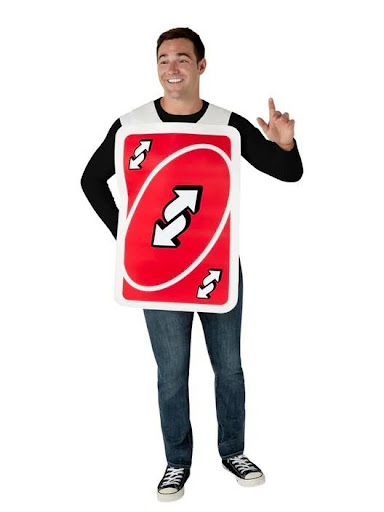
Every great group costume has one. The character who anchors the whole theme, sets the visual tone, and makes the rest of the group instantly recognisable the moment you walk into a room together.
Getting that choice right makes everything else easier. Getting it wrong means half the group explains their costumes all night while the other half gets it immediately.
Why the Main Character Actually Matters
A group costume works like a visual shorthand. People should be able to look at your group and connect the dots within a few seconds. The main character is the one doing most of that work.
Think of Mia Wallace in Pulp Fiction, Wednesday Addams in The Addams Family, or Eleven in Stranger Things. These characters carry so much cultural recognition on their own that the rest of the group can build around them without needing to be as immediately obvious.
Research from Psychology Today on shared activities and group belonging shows that coordinating around a common theme strengthens social bonds and makes group experiences more memorable. A well-chosen main character does exactly that for a costume group.
The Recognition Test
The first question to ask when deciding on a main character is simple: would most people at the event know who this is without being told?
Niche fandoms can make for incredible costumes, but if the character requires a five-minute explanation, they are probably not the right anchor for a group. The main character should do the explaining for the group, not the other way around.
Matching the Character to the Group Size
Not every main character works at every group size. Some are built for large ensembles and fall flat with only three people. Others are most powerful as a pair or trio.
The following pairings tend to work particularly well depending on group size:
- Two people: A character and their nemesis, a character and their sidekick, or a couples costumes pairing like Shrek and Fiona or Gomez and Morticia
- Three to four people: A central character surrounded by a squad, like the core group from The Office or Scooby-Doo and the Mystery Gang
- Five or more: Ensemble casts with a clear lead, such as the Spice Girls, the Avengers, or the cast of Mean Girls
The Costume Complexity Factor
The main character usually carries the most visually distinctive costume. That comes with a practical consideration: whoever takes the main character role should be comfortable with a more involved look.
If the main character requires specific makeup, a prop, or a more elaborate outfit, assign that role to the person in the group who is most enthusiastic about committing to it. The supporting roles are usually simpler to pull together, which balances the workload across the group.
Letting the Group Dynamics Decide
Sometimes the right main character is the one that fits the most people’s comfort levels, not necessarily the most iconic option from a franchise.
A group that includes people of different ages, body types, or comfort levels with costumes benefits from a main character whose supporting cast has flexible options. The best group costume is the one where everyone is genuinely happy with their role, not just tolerating it for the sake of the concept.
Starting with the main character and building outward from there keeps the whole planning process grounded in something concrete, and gives every person in the group a clear role to work toward.
