



Cost Control Is Now a Cloud Priority
Cloud adoption across Malaysia has accelerated. Organizations move faster, scale easy, and launch platforms with less upfront investment. At the same time, cloud spending often grows quietly in the background. Costs increase month after month without clear visibility or control.
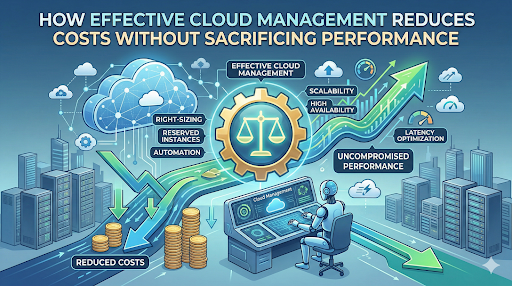
This is where an effective cloud management service becomes essential. When cloud environments are managed properly, costs can be reduced without sacrificing speed, reliability, or user experience. Performance and efficiency improve together when infrastructure decisions are guided by real usage data and clear governance.
Zchwantech approaches cloud management as an ongoing discipline rather than a one-time setup. Zchwantech services focus on helping organizations optimize resources, maintain performance, and keep cloud spending aligned with business outcomes over the long term.
Understanding What a Cloud Management Service Really Covers
A cloud management service goes far beyond setting up virtual machines or storage. It focuses on the continuous oversight of cloud environments to ensure they remain efficient, secure, and cost-effective as usage grows.
Beyond Hosting and Infrastructure Setup
Effective cloud management covers daily monitoring, optimization, and governance. Resources are reviewed regularly to ensure they match actual demand. Performance is tracked to prevent slowdowns. Availability is maintained without unnecessary overprovisioning.
This ongoing management allows organizations to focus on core operations while the cloud environment stays stable and efficient in the background.
Why Cloud Costs Often Spiral Without Visibility
Cloud costs increase quickly when usage is not monitored closely. Idle resources continue running. Temporary workloads are never shut down. Storage grows without lifecycle controls.
Without visibility, spending becomes reactive rather than planned. A cloud management service introduces clear insight into where costs come from and how they can be controlled without affecting performance.
How Cloud Management Service Reduces Operational Costs
Cost reduction in the cloud does not come from cutting performance. It comes from using resources more intelligently. A cloud management service focuses on eliminating waste while keeping systems responsive and reliable.
Right-Sizing Resources Based on Actual Usage
Many cloud environments are overprovisioned. Compute power, storage, and bandwidth are allocated based on estimates rather than real demand. Over time, this leads to unnecessary spending.
Cloud management reviews usage patterns continuously. Resources are adjusted to match real workloads. Underused instances are scaled down. Oversized storage is optimized. Performance remains stable because changes are guided by data, not guesswork.
This approach removes excess cost without creating performance risk.
Automating Resource Scaling and Shutdown Policies
Manual control does not scale well in cloud environments. Teams forget to shut down non-critical workloads. Test environments run longer than needed. Costs accumulate silently.
Automation solves this problem. Cloud management applies auto scaling rules during peak demand and reduces resources during low-usage periods. Scheduled shutdown policies ensure temporary environments do not run indefinitely.
Automation keeps systems available when needed and cost-efficient when demand drops. This balance is key to long-term cloud savings.
Cost Optimization Without Performance Trade-Offs
Reducing cloud costs should never come at the expense of system reliability or user experience. Effective cloud management treats performance and cost as connected metrics rather than opposing goals.
Performance Monitoring as a Cost Control Tool
Performance data reveals where money is being wasted. High latency, uneven load distribution, and underutilized resources often signal inefficiencies that drive up cost.
A cloud management service continuously monitors response times, throughput, and resource utilization. Bottlenecks are identified early. Inefficient services are tuned or resized. Performance improves while unnecessary spending is removed.
This creates a feedback loop where better performance leads to better cost control.
Balancing Availability and Spending
Not every workload requires maximum availability at all times. Overengineering infrastructure for noncritical systems leads to unnecessary cost.
Cloud management aligns availability targets with business importance. Mission-critical systems receive the resources they need. Supporting systems are configured more efficiently. This ensures performance remains strong where it matters most while overall cloud spend stays under control.
Cloud Governance and Cost Transparency
Strong cloud governance turns cost management from a guessing exercise into a controlled process. Transparency creates accountability and prevents spending from drifting over time.
Budget Controls and Spend Visibility
Cloud environments generate costs continuously. Without clear visibility, teams only notice problems when invoices spike. A cloud management service introduces real-time tracking across all resources.
Spending dashboards show where costs originate. Alerts flag unusual usage early. Budget thresholds prevent runaway expenses before they become difficult to correct. This level of visibility allows organizations to plan cloud spend with confidence rather than reacting after the fact.
Clear insight makes cost control proactive instead of reactive.
Clear Ownership Across Teams
Unclear ownership often leads to cloud sprawl. Resources are created without accountability. Services remain active because no one is responsible for shutting them down.
Cloud governance assigns ownership clearly. Teams understand which resources they manage and why they exist. Usage aligns with business objectives. Waste is reduced naturally when accountability is visible across the organization.
Supporting Big Data Analytics with Optimized Cloud Environments
Big data analytics places heavy demands on cloud infrastructure. Processing power, storage capacity, and network performance must scale without driving costs out of control. Effective cloud management makes this balance achievable.
Managing High Data Volumes Without Excess Spend
Analytics workloads often grow faster than expected. Data retention increases. Processing jobs expand. Without optimization, costs rise quickly.
A cloud management service applies scalable storage strategies and tiered data management. Frequently accessed data stays on high-performance resources. Older or less critical data moves to cost-efficient storage automatically. This approach controls spending while keeping analytics workloads responsive.
Infrastructure grows in line with real analytics demand rather than worst case assumptions.
Performance-Focused Analytics Workloads
Analytics performance matters. Slow data processing delays insights and affects decision-making. Overprovisioning infrastructure to avoid delays creates unnecessary cost.
Cloud management monitors analytics workloads closely. Resources are allocated dynamically during peak processing periods and scaled back when demand drops. Performance remains consistent while costs stay aligned with actual usage.
This allows analytics teams to work efficiently without placing constant strain on cloud budgets.
Cloud Management Service and Software Quality Assurance
Software quality assurance relies on stable and repeatable environments. Without proper cloud control, testing infrastructure becomes expensive and difficult to manage.
Stable Testing Environments Without Permanent Costs
QA environments often run continuously even when they are not in use. This leads to unnecessary spending and resource waste. A cloud management service solves this by creating on-demand testing environments that scale only when needed.
Test systems are spun up for active testing cycles and shut down automatically afterward. Performance remains consistent during testing while costs stay limited to actual usage. QA teams gain flexibility without carrying permanent infrastructure overhead.
Performance Testing in Cloud Managed Systems
Performance testing reveals how applications behave under real load. Without proper cloud management, test results can be inconsistent due to unstable resources.
Cloud management ensures testing environments mirror production conditions accurately. Resources are allocated precisely for load testing scenarios. Bottlenecks are identified early. Cost performance imbalances are corrected before systems go live.
This improves application quality while keeping testing costs predictable.
Cloud Optimization for Custom Development and Modern Platforms
Modern platforms evolve continuously. Custom development, frequent releases, and changing workloads place constant pressure on cloud environments. Without optimization, infrastructure costs grow faster than the platform itself.
Supporting Agile and Continuous Delivery
Agile development relies on flexible infrastructure. Environments must scale quickly during development and testing cycles, then scale down once work is complete. A cloud management service aligns cloud usage with development velocity.
Development and staging environments are provisioned dynamically. Resources expand during active release periods and reduce automatically during idle phases. This supports faster releases without locking teams into permanent infrastructure costs.
Cloud optimization ensures development speed stays high while spending remains controlled.
Long-Term Platform Stability Through Cloud Optimization
Unoptimized cloud environments accumulate technical debt over time. Legacy configurations remain active. Inefficient resource allocation becomes the norm.
Cloud management reviews infrastructure continuously. Outdated resources are retired. Architecture is refined as platforms mature. Performance improves while unnecessary cost is removed gradually.
This prevents infrastructure from becoming a hidden constraint on future platform growth.
Security and Compliance Without Cost Overload
Security and compliance are often seen as cost drivers in cloud environments. When handled correctly, they reduce risk without inflating infrastructure spend. Effective cloud management embeds protection into daily operations instead of adding layers of unused resources. Periodic cloud penetration testing reinforces this by identifying real-world weaknesses without adding permanent overhead.
Built-In Security Controls Within Cloud Management
Security works best when it is automated and monitored continuously. Access management, logging, and threat detection are applied consistently across cloud resources.
A cloud management service enforces least-privilege access, monitors unusual activity, and applies security policies at scale. This reduces the risk of costly incidents while avoiding duplicated or idle security tools. Protection stays strong without unnecessary infrastructure expansion
Compliance Readiness Without Excess Infrastructure
Compliance requirements often lead teams to overbuild systems. Extra environments are created and left running. Data is duplicated more than necessary.
Cloud management aligns compliance needs with efficient architecture. Controls are applied where required. Documentation and audit readiness are maintained through monitoring and reporting rather than excess infrastructure. Compliance is achieved with precision rather than overprovisioning.
Why Malaysian Organizations Rely on Professional Cloud Management Service
Cloud environments in Malaysia operate under unique conditions. Cost sensitivity, regional compliance expectations, and rapid digital adoption all influence how cloud strategies must be managed. Professional cloud management provides structure and clarity in this landscape.
Local and Regional Operational Understanding
Malaysian organizations often balance growth with tight operational budgets. Cloud strategies must support scalability without unpredictable cost spikes. A professional cloud management service aligns infrastructure decisions with real business constraints and regional operating realities.
This includes understanding usage patterns, peak demand periods, and regulatory expectations common in Malaysia and the wider ASEAN region. Cloud environments are optimized with context, not generic templates.
Practical Experience Across Industries
Effective cloud management is built on experience. Organizations benefit from proven practices across enterprise and government-grade environments. Lessons learned from real deployments inform better decisions and faster optimization.
Zchwantech applies practical cloud management expertise to help organizations reduce waste, maintain performance, and avoid common cost traps. Optimization is based on real workloads and operational behavior, not theoretical savings models.
Lower Cloud Costs Start with Smarter Management
Cloud costs rarely spiral because the cloud is expensive by nature. They grow because environments are left unmanaged after initial setup. Resources remain oversized. Temporary workloads stay active. Performance issues are solved by adding capacity instead of fixing inefficiencies.
An effective cloud management service changes this pattern. It introduces continuous visibility, disciplined optimization, and governance that aligns infrastructure usage with real business demand. Costs are reduced by removing waste, not by cutting performance. Systems remain fast, stable, and scalable because every decision is guided by data and operational priorities.
For Malaysian organizations running analytics workloads, modern platforms, QA environments, or security-sensitive systems, cloud management becomes a long-term control layer rather than a one-off technical task. When managed properly, the cloud supports growth without creating unpredictable spending.
Organizations reviewing cloud performance and monthly spend can start that optimization journey by engaging directly with a professional cloud management partner at sales@zchwantech.com.
