



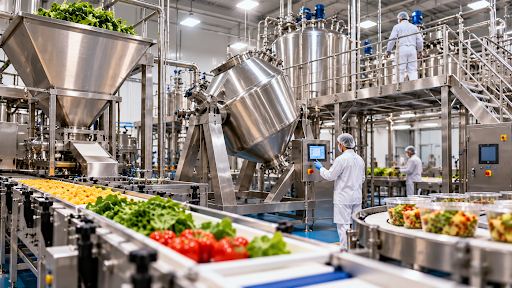
A machine may look like a great fit on paper and still cause problems once it is on the production floor. When choosing food processing equipment, look beyond the price and product catalogue.
You want equipment that actually fits the process, available space, cleaning routine, production volume, and safety requirements. This is where custom metal fabrication Toronto services can help when standard equipment does not quite work with the existing layout.
A good supplier should understand hygienic design, durable materials, simple maintenance, and the small details that matter during everyday production.
What should you look for in an equipment supplier?
A supplier needs to understand what equipment goes through in a working food facility. There is regular cleaning, moisture, product residue, temperature changes, and plenty of daily wear. The equipment has to handle all of that without making the operator’s job harder.
It helps to find a supplier who can talk about:
- Hygienic design and washdown requirements
- Suitable stainless steel and food-grade materials
- Equipment dimensions and available floor space
- Engineering and design support
- Welding, fabrication, finishing, and assembly
- Inspection and quality checks
- Replacement parts and future modifications
Custom food processing equipment can make sense when a Canadian facility has an unusual layout, limited space, or a specialised workflow. Suppliers in this field often pay close attention to cleanability, maintenance, food safety, and long-term reliability instead of treating every project as a straightforward catalogue order.
What types of equipment might a processing facility need?
Every facility has its own production needs. Rather than picking machines separately, it is worth looking at how ingredients, products, people, and materials move through the entire operation.
Mixing and blending
Mixing equipment may include V-blenders, double cone blenders, and IBC bin blenders. The choice depends on the material, batch size, loading method, unloading method, and cleaning routine. Uniform mixing matters when every batch needs to come out the same. A machine that looks suitable by capacity may still be unsuitable if its design does not work well with the material being handled.
Storage and material handling
Storage and transfer equipment can include stainless steel tanks, intermediate bulk containers, hoppers, chutes, receiving stations, and discharge stations. Good planning can make material movement easier and cut down on unnecessary handling.
Conveying and product movement
Conveyors move products and items from one stage to another. With a properly planned layout, they can reduce manual handling and make the overall production flow easier to manage.
Access and workplace equipment
The processing area may also need lifts, platforms, carts, cabinets, catwalks, and walkovers. These items support the people who work around the machinery. When they are planned properly, routine cleaning, inspection, maintenance, and operation can become much easier.
Custom fabricators can provide several of these items, from blenders, tanks, conveyors, chutes, and hoppers to platforms and access structures. Food-processing suppliers in Canada may also provide process tanks, sanitary conveyors, work platforms, and ingredient-handling systems.
When does custom fabrication make more sense than off-the-shelf equipment?
Off-the-shelf equipment is often perfectly suitable when its size, capacity, and specifications line up with the job. The situation changes when the building, production line, or existing machinery creates limitations. An unusual ceiling height, narrow space, fixed connection point, or awkward corner can make an otherwise suitable machine difficult to use.
A project may begin with measurements, drawings, process details, or even a basic concept. Two-dimensional and three-dimensional modelling can then help spot space or layout issues before fabrication starts.
There is also a practical advantage to having design and fabrication coordinated. The buyer does not have to repeat the same requirements to several contractors or keep track of different project plans.
For specialised layouts, metal fabrication Toronto can form part of a larger service that covers engineering, fabrication, assembly, and quality checks. What matters most is using the right material and fabrication approach for the job.
Why do stainless steel walkways and access systems matter?
Workers need access to equipment for more than just operation. Cleaning, inspection, maintenance, adjustments, and routine checks can all require someone to reach areas that are not easily accessible from the floor.
Stainless steel walkways
Stainless steel walkways are often useful where equipment needs to handle moisture, frequent cleaning, corrosion exposure, and regular use. Stainless steel is common in food-related environments because properly designed smooth surfaces are easier to keep clean and maintain.
The material is only one part of the equation, though. The walkway also needs to fit around machinery, access points, worker routes, and cleaning practices. Platforms, catwalks, and walkovers can be made to suit a particular space when a standard structure is not practical.
Hygienic design guidance also places emphasis on being able to inspect, clean, and maintain equipment properly. Designs should avoid unnecessary spots where water, product residue, or debris can collect.
Custom stainless solutions may also cover access platforms, transfer conveyors, and process tanks used in food-related operations.
Manufacturer vs. distributor: what is the difference for buyers?
The two terms are sometimes used interchangeably, but they can mean different things when you are actually buying equipment.
Manufacturer
A manufacturer may design and build equipment around specific dimensions or operating requirements. This can be useful for specialised applications, especially when changes or modifications are likely to be needed. Working directly with an engineering or fabrication team may also simplify those discussions.
Distributor
A distributor usually supplies established equipment lines from one or several manufacturers. This route can be convenient when you need a standard machine, component, or replacement part without requiring a custom design.
Food processing machinery suppliers in Canada may cover everything from sanitary components and pumps to conveyors, tanks, process systems, and specialised machinery. Canadian industry suppliers also describe services ranging from equipment distribution and sanitary welding to custom design, installation, repairs, and process support.
What should you ask before requesting a quote?
Before getting in touch with a supplier, it is worth putting the basic project information together. A supplier can give you a more useful response when they know what the equipment actually needs to do.
Some useful questions include:
- Which material grade will work with the product and cleaning chemicals?
- Will the equipment be exposed to frequent washdowns?
- Are product-contact surfaces designed for hygienic use?
- Can the dimensions be changed to suit the existing layout?
- Can the equipment connect with machinery already in place?
- What engineering drawings or documentation are included?
- How are welding, finishing, and quality checks handled?
- Are replacement parts available later?
- Who will handle assembly or installation?
- Which standards or certifications apply to the application?
Material selection deserves a closer look. The equipment needs to suit the product, cleaning chemicals, working conditions, and sanitation process. It should also be possible to clean and inspect it properly without leaving awkward areas where water or residue can collect.
When the requirements are clearly defined, comparing quotes becomes much easier. You can look at engineering, materials, workmanship, service, and long-term value instead of comparing the final price alone.
What should a good supplier consultation include?
A useful consultation should begin with the actual production issue. The supplier should want to know how the current process works, where the equipment causes problems, how much space is available, expected production volume, cleaning routines, material movement, safety requirements, and whether the facility may expand later.
Those details give the engineering team something practical to work with. They also help prevent a situation where equipment looks right in a drawing but does not work well once it reaches the floor.
Choose equipment around your process, not just the product
There is no standard setup that suits every food processing operation. Your product, workflow, floor space, cleaning routine, workload, maintenance requirements, and future plans all have a part in the decision.
Whether you are buying standard machinery or planning a custom solution, look at materials, engineering support, fabrication quality, documentation, and after-sales service as well as price. If specialised access structures, equipment, or metal fabrication Toronto services are involved, the supplier should understand how the different parts of the project will work together.
