



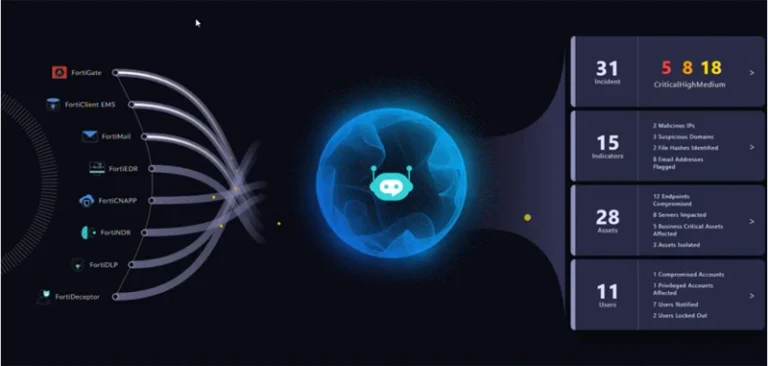
Every alert that lands in a SOC queue makes the same implicit demand: someone has to look at it and decide whether it matters. Multiply that by thousands of alerts a day, most of them ultimately harmless, and triage stops being a quick judgment call and becomes the defining bottleneck of the entire security operation. A security operations solution for alert triage exists specifically to compress that bottleneck, applying structure and automation to a process that too many organizations still handle largely by hand.
That compression usually occurs in several distinct stages, each addressing a different aspect of what makes triage slow in the first place.
Correlation reduces the raw number first
And before we can even get into any real triage, that giant pile of alerts needs to go the hell down to something a team can at least start working through. One suspicious event will often cause multiple distinct alerts in different tools that describe the same underlying activity, but from a slightly different perspective. Correlation logic groups related alerts into a single incident, instead of displaying each alert separately as needing individual follow-up. Accordingly, we immediately reduce the effective workload without sacrificing any underlying signal; the analyst only has to investigate one consolidated case rather than three or four pieces of the same story.
Automated Severity Scoring Directs Attention Where It Counts
All alerts are not created equal, and while some alerts deserve immediate attention, manually sorting through the high-priority ones from the routine can only be done by resource-constrained teams in a timely manner. Automated severity scoring uses consistent metrics, asset criticality ratings, known threat indicators, and behavioral context to essentially rank incoming alerts before a human sees them, unleashing the few that really deserve immediate staffing rather than having analysts slog through a flat unsorted queue and hoping important cases do not get pushed down into oblivion.
The scale of the underlying problem this solves has been documented consistently across the industry. Research on SOC alert overload survey findings found that a large share of SOC teams investigate more than ten alerts daily with each investigation taking over ten minutes, while roughly half report a false-positive rate of fifty percent or higher, a combination that leaves analysts believing their primary job has shifted from investigating genuine threats to simply managing the sheer volume of alerts flowing through the queue.
Automated Enrichment takes the legwork away from you.
An alert typically doesn’t provide the context to know that an IP address has been bad for a long time, the affected account had unusual activity before getting locked out, that the targeted asset contained sensitive information and deciding if an alert should be escalated or not. Manually curating that context, alert by alert, is a non-trivial portion of an analyst’s shift spent on drudge work rather than real analysis. Automated enrichment attaches that context as soon an alert fires, so when a triage begins, the groundwork is already prepared instead of having to be rebuilt from scratch for each individual analysis.
Escalation Paths: Clear escalation paths prevent potential downstream bottlenecks.
A streamlined front-end triage doesn’t really help if alerts still get stuck after they get confirmed to be real, waiting for a decision on who should handle them next. Escalation criteria that spell out what exactly moves from initial triage to deeper investigation and further, who owns the escalated action step, keeps cases in motion instead of languishing while an analyst tries to work out what the right next move is ad-hoc. This structure becomes important in high-volume periods, when uncertainty of ownership can cause a confirmed threat to remain unaddressed simply because no one was sure who should act on it next. Defined escalation paths also lighten the cognitive load on tier-one analysts, who can concentrate on making a fast and firm handoff determination—not second-guessing if a case actually merits pulling in a more senior counterpart.
Structured Prioritization Frameworks Offer a Model Worth Borrowing
Alert triage isn’t the only area of security operations that has struggled with volume outpacing available attention, and other parts of the field have developed structured approaches worth drawing from. A structured vulnerability prioritization framework developed jointly by federal researchers and a university research center moves vulnerability management away from a single generic severity score toward a decision model that weighs exploitation status, technical impact, and how critical the affected system actually is to a given organization. The same underlying logic, that context and organizational relevance matter more than a single flat score, applies just as directly to how alerts get prioritized once they land in a SOC queue.
Frequently Asked Questions
Are skilled analysts still needed amid streamlined alert triage?
It does not. Automation and correlation reduce the volume and repetitive groundwork that analysts must handle, but validating real threats, determining responses, and investigating borderline cases will always require human expertise.
What is the typical amount of time required to perform proper tuning for a new environment for automated severity scoring?
It depends, but the very vast majority of organizations will need weeks of actual alert data before any scoring really starts to reflect their specific environment. Well, I always joke that a configuration which works near-perfectly in terms of asset criticality and risk tolerance for one organization may need a nontrivial adjustment at another.
Does over-auto triaging miss real threats?
It can, especially in cases when correlation logic is overly aggressive and combining the data for two very different incidents or severity scoring continually downgrades a type of alert that turns out to be important (this is why continuous review of the automation decisions is still necessary.
