



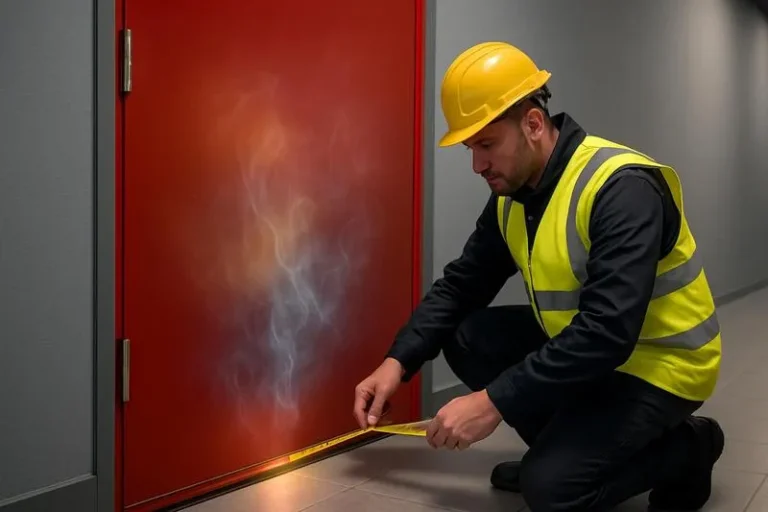
Anyone who owns a shared property in London will know that fire safety compliance has become one of the most demanding parts of running an HMO. Councils across the capital have tightened their inspection standards in recent years, and one area receiving particular attention is fire doors, the barriers designed to hold back flames and smoke long enough for tenants to escape safely in an emergency.
Getting this right isn’t as simple as buying a solid-looking door and screwing it into place. Fire doors are engineered systems, and the way they’re installed matters just as much as the door itself. That’s why so many landlords across the capital are now turning to specialist Fire Doors Fitters London rather than relying on general builders, particularly when a licence renewal or council inspection is on the horizon and there’s little room for error.
Why a Fire Door Is More Than Just a Door
A certified fire door is a complete assembly, made up of the door leaf, intumescent seals that expand when exposed to heat, fire-rated hinges, compliant hardware, and a matching frame. Every component has to work together to achieve the door’s fire rating, typically 30 or 60 minutes of resistance. Swap out a single element for a non-rated alternative, and the entire system’s performance can be compromised, even if the door itself still looks the part.
This is why fire doors bought off the shelf and fitted without proper training so often fail inspection. A door might carry the right certification on paper, but if it’s hung with the wrong gap tolerances around the frame, missing a compliant self-closing device, or fitted with incorrect hinges, it won’t perform as intended in a real fire. Councils are increasingly aware of this, and inspectors now look closely at installation quality, not just the presence of a door.
What a Professional Fitter Actually Checks
Experienced fire door fitters approach the job methodically. They assess whether the existing frame is suitable or needs replacing, measure gaps around the door edges against strict tolerances, and confirm that hinges, seals, and closers all carry matching fire ratings. They’ll also check that vision panels, letterboxes, or any other cut-outs in the door haven’t compromised its fire resistance, something that’s easy to miss without specialist knowledge.
For landlords managing older converted properties, which make up a large share of London’s HMO stock, this assessment often reveals that door frames themselves need attention, not just the doors. A fire-rated door hung in an unsuitable or damaged frame won’t achieve its intended rating, regardless of how well the door itself is specified.
Where Older Properties Cause the Most Problems
London’s HMO sector is dominated by converted period properties, many of which were never built with fire compartmentation in mind. Internal doorways in Victorian and Edwardian conversions are often irregular in size, which can make fitting a standard fire door assembly more complicated than in a modern build. Skilled fitters know how to work around these constraints without cutting corners on compliance, something that’s considerably harder to get right without direct experience of London’s older housing stock.
This is one of the clearest reasons landlords benefit from hiring fitters who specialise specifically in HMO and shared housing work, rather than general tradespeople. The nuances of period properties, combined with the specific licensing requirements different London boroughs apply, make local experience genuinely valuable rather than a nice-to-have.
Certification and Paperwork Matter as Much as the Installation
Beyond the physical work, documentation has become a critical part of fire door compliance. Councils increasingly expect landlords to produce installation certificates confirming the work was carried out by a competent professional, along with ongoing maintenance records showing that doors, seals, and closers have been checked regularly since installation.
A reputable fitter will provide this paperwork as standard, giving landlords a clear compliance trail that can be produced quickly if a council inspection or licence renewal comes up. Without it, landlords are left trying to prove compliance retroactively, which is a far more stressful position to be in when a deadline is looming.
Getting It Right the First Time
For landlords weighing up cost against compliance, it’s worth remembering that a failed inspection or a rejected licence application tends to cost considerably more in the long run than paying for proper installation from the outset. Between potential fines, delayed licensing, and the disruption of having tenants move out during remedial work, cutting corners on fire door installation rarely saves money once the full picture is considered.
Investing in a qualified fitter with genuine experience in London’s HMO market isn’t just about ticking a compliance box. It’s about ensuring that if the worst happens, the property’s fire safety systems actually do what they’re designed to do.
