



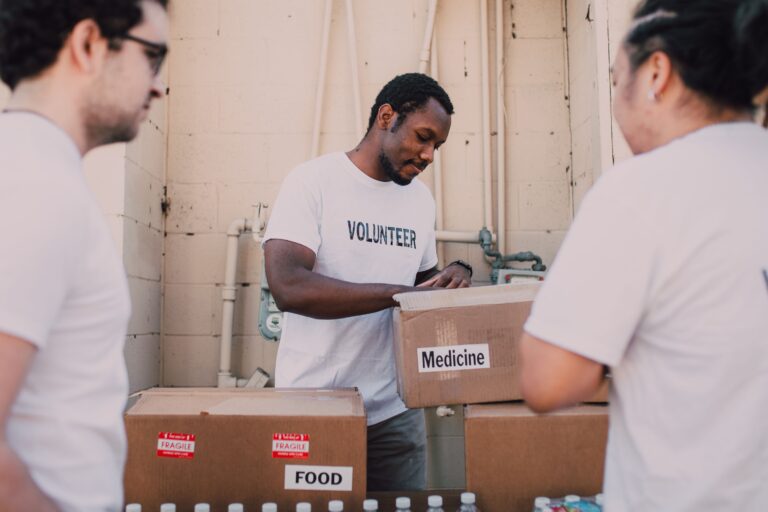
Ordering custom t-shirts for a nonprofit fundraiser sounds straightforward until the boxes arrive and something is wrong. The color is off. The sizing runs small. The print placement is inconsistent across the batch. These are not rare complaints — they happen regularly when organizations skip the verification steps that experienced buyers treat as standard practice.
Nonprofit fundraisers operate under real constraints. Budgets are fixed, timelines are tight, and the shirts themselves often serve a public-facing purpose: worn at events, sold as merchandise, or distributed to donors and volunteers. A production error at this stage does not just create inconvenience — it can delay an event, reduce revenue, or damage the credibility of the campaign.
This checklist is designed for the people coordinating these orders: operations staff, volunteer coordinators, development managers, and board members who have been handed the task of getting shirts made correctly, on time, and within budget. It covers the ten most commonly overlooked confirmation points before a bulk order goes into production.
Understanding What You Are Actually Ordering Before Anything Is Confirmed
The gap between what a buyer expects and what a printer produces is almost always a communication gap, not a production failure. Many organizations come to the ordering process with a general concept — a logo, a color, a message — without translating that concept into the specific production details a printer needs to work from. The result is a finished product that does not match what was imagined.
When organizations look for cheap custom t-shirts for nonprofit fundraiser use, the purchasing decision often prioritizes price and quantity above specification clarity. That is understandable given tight budgets, but it creates downstream risk. Vendors who specialize in cheap custom t-shirts for nonprofit fundraiser orders understand that affordability and accuracy are not mutually exclusive — but only when the order details are locked in before production begins.
Before submitting any order, confirm that you have a written summary of exactly what you ordered: garment style, print method, color codes, placement coordinates, and size breakdown. If any of those elements are still described in general terms, the order is not ready to be placed.
The Difference Between a Quote and a Confirmed Order
A quote is an estimate based on assumptions. A confirmed order is a document that reflects verified decisions. Many buyers treat these as the same thing and proceed to payment without realizing that critical details — like ink color, print size, or garment brand — were never formally agreed upon. Once production begins, changes are expensive or impossible. Treat the confirmation document as the contract it actually is, and review it line by line before approving anything.
Artwork Readiness and File Format Compliance
Artwork that looks sharp on a screen can print poorly if it is not prepared in the correct file format. Most screen printers and direct-to-garment vendors require vector files or high-resolution rasterized files at specific color settings. Sending a low-resolution image pulled from a website or a PDF not built for print production will result in a blurry or pixelated output — and that error will appear on every single shirt in the batch.
Color Separation and Pantone Matching
Digital color and printed color are different systems. What appears on your monitor as a specific shade of blue will not automatically translate to that shade in print. For nonprofit campaigns where brand consistency matters — particularly if the shirts carry organizational logos or sponsor marks — color accuracy needs to be specified using a standardized reference system, such as the Pantone Matching System, rather than described subjectively. Ask your vendor explicitly how they handle color matching and what their tolerance for variation is before approving production.
Size Distribution Across the Order
Bulk t-shirt orders for fundraisers are rarely uniform in size. A community event might need a wide range — from youth sizes to extended adult sizes — in proportions that reflect the actual audience. Ordering without a thoughtful size breakdown leads to a common problem: leftover shirts in sizes nobody needed and shortfalls in sizes that sold out within the first hour.
How to Build a Realistic Size Curve
If you have run prior events, use historical data from previous shirt orders or item sales. If this is a first-time event, consult comparable organizations or use general population sizing distributions as a starting reference. Build in a buffer for the sizes most likely to sell quickly — typically medium through extra-large for adult audiences. Confirm the size breakdown in writing with your vendor, because some printers treat size adjustments after approval as a new order with additional setup costs.
Minimum Order Quantities and Tier Pricing
Most bulk apparel vendors operate on tiered pricing, where the per-unit cost decreases as quantity increases. For nonprofits trying to keep costs low, this can create a tension: ordering more than needed to hit a lower price point might not actually save money once unsold inventory is factored in. Confirm the exact quantity thresholds for each price tier and calculate the true cost per unit at each level before committing to a quantity.
When Splitting an Order Costs More
Some organizations split their order across multiple shirt styles or colors to offer more variety. While this appeals to buyers and donors, it can significantly increase per-unit cost because each style or color combination may require its own setup, minimum quantity, and production run. Confirm how your vendor prices mixed orders before assuming that variety is affordable within your budget.
Production Turnaround and Buffer Time
Every vendor quotes a standard production timeline, and almost every buyer takes that timeline at face value. What experienced coordinators understand is that production timelines begin after artwork approval — not after payment. If artwork revisions are needed, or if there is a delay in sign-off from your organization’s leadership, the timeline shifts accordingly, and vendors are not obligated to absorb that time.
Shipping, Receiving, and Internal Distribution Time
Even when production finishes on time, shirts still need to be shipped, received, inspected, and distributed internally. For large orders, this process can take several days, particularly if shirts are going to multiple sites or require sorting before distribution. Build at least a week of buffer between your confirmed ship date and the date the shirts actually need to be in hand. If your event does not accommodate that buffer, revisit your order timeline before the deposit is paid.
Garment Quality and Source Material
Not all blank t-shirts are the same. Within the category of cheap custom t-shirts for nonprofit fundraiser use, there is a meaningful range in fabric weight, construction quality, and washability. A shirt that holds up well through multiple washes reflects better on the organization than one that fades or distorts after the first cycle, particularly for shirts sold to donors or worn repeatedly by volunteers.
Confirming the Specific Garment Brand and Style Number
Request the exact brand and style number of the blank garment your vendor plans to use. Order samples if the quantity justifies it, or at minimum request garment specifications in writing. Some vendors substitute garment brands when their preferred stock is unavailable, and that substitution may change fit, weight, or print surface properties. If garment consistency matters to your order, confirm that substitution is not permitted without prior approval.
Print Method Compatibility With Garment and Design
The method used to apply your design to the shirt affects durability, color accuracy, and cost. Screen printing, direct-to-garment, heat transfer, and embroidery each have different strengths and limitations, and not all methods work equally well on all garment types or design styles. A design with many colors may be cost-prohibitive to screen print but straightforward to produce through direct-to-garment. Confirm that the print method your vendor intends to use is appropriate for both your design and your garment choice.
Proof Review and Approval Process
A pre-production proof is the final checkpoint before shirts enter production. It shows how your design will appear on the garment, including placement, scale, and color rendering. Reviewing and approving a proof is not a formality — it is the last opportunity to catch errors before they are multiplied across the entire order. Confirm whether your vendor provides a digital proof, a physical sample, or both, and who in your organization has authority to provide final approval.
Payment Terms, Cancellation Policy, and Error Resolution
Before placing any bulk order, read the vendor’s terms regarding payment schedules, cancellation windows, and how production errors are handled. Some vendors require full payment upfront. Others require a deposit with the balance due before shipping. If a production error occurs — wrong color, misprinted text, incorrect sizing — knowing the vendor’s policy in advance tells you what recourse you have. Organizations sourcing cheap custom t-shirts for nonprofit fundraiser campaigns often do not have room in their budget to absorb a reprinting cost caused by a vendor error, so confirm the error resolution process explicitly before you commit.
Internal Approval and Stakeholder Sign-Off
Bulk t-shirt orders for nonprofit fundraisers often involve input from multiple people: program staff, communications teams, board members, and sometimes external sponsors or partner organizations. Each stakeholder may have opinions about design, messaging, or color that surface after an order is already in motion. Establish internally who has final authority to approve the order, and confirm that sign-off before submitting anything to the vendor. Changes requested after production begins create delays and cost overruns that could have been avoided with a single internal alignment meeting beforehand.
Closing: Why the Checklist Matters More Than the Price
For nonprofit organizations, a fundraiser t-shirt order is not just a purchasing transaction. It is a public representation of the campaign, a revenue source, and often a tangible thank-you to donors and supporters. The decisions made before placing the order determine whether the shirts serve those purposes or become an operational problem to manage.
The ten areas covered in this checklist are not complicated, but they are consistently skipped when organizations are moving quickly or operating under budget pressure. Cheap custom t-shirts for nonprofit fundraiser orders can deliver genuine value — in quality, consistency, and cost — when the confirmation steps are completed before production begins, not after.
Take the time to work through this checklist with whoever is coordinating the order. Confirm each point in writing. Ask the vendor directly about anything that is unclear. The effort invested at this stage is significantly less than the effort required to manage a production error, a missed deadline, or a shirt that does not represent your organization the way it should.
