



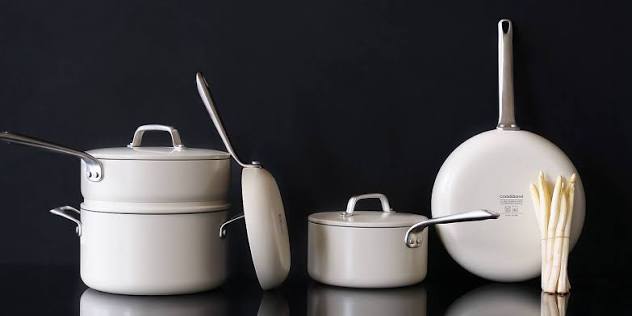
Commissioning cookware through a third-party manufacturer is not a straightforward procurement decision. Whether you are a restaurant group standardizing kitchen equipment across multiple locations, a food brand developing a retail product line, or a specialty retailer building a private-label catalog, the relationship you form with a manufacturer will directly shape the consistency, durability, and commercial viability of what ends up in your kitchen or on your shelf.
The challenge is that most sourcing conversations start in the wrong place. Buyers focus first on price, then on delivery timelines, and rarely dig into the operational fundamentals that determine whether a manufacturer can actually sustain the requirements of a long-term production relationship. A low unit cost means very little if the third batch arrives with inconsistent coating thickness, or if your manufacturer cannot scale output when your order volume doubles.
The questions in this guide are not designed to help you vet a vendor in the traditional sense. They are designed to expose what a manufacturer is actually capable of — and where the gaps in their process, quality systems, or communication structures might eventually become your problem.
Understanding What “Custom” Actually Means to a Given Manufacturer
When a manufacturer says they offer custom cookware, that phrase can mean very different things depending on their infrastructure, tooling capabilities, and production model. For some, customization is limited to cosmetic changes — engraving a logo, adjusting a handle color, or relabeling a standard SKU. For others, it means engineering a product from scratch, including material selection, wall construction, heat distribution profiling, and coating application. The difference between these two interpretations has significant implications for what you can realistically expect from the partnership.
Working with experienced custom cookware manufacturers who have documented their production scope makes it far easier to align your product vision with what is actually achievable within a given factory’s infrastructure. Before any other conversation takes place, you need to understand exactly where their customization capability begins and ends.
Ask: What aspects of design can be modified, and which are fixed?
Some manufacturers build around proprietary molds or base materials that cannot be altered without significant retooling costs. If your product requires specific handle geometry, a particular base diameter, or a non-standard coating system, you need to know upfront whether those requirements are achievable or whether you will be asked to compromise. Manufacturers who cannot clearly answer this question — or who answer it vaguely — typically lack the internal engineering documentation to support true custom development work.
Quality Control Processes and How They Are Applied in Practice
Quality control in cookware manufacturing is not simply a final inspection before shipment. It is a structured process that should run through every stage of production — from raw material intake to coating application to packaging. The quality of the finished product reflects the quality of the system, not just the skill of the individual workers involved. When quality control depends on informal judgment calls rather than documented criteria, you introduce variation that compounds across large production runs.
Ask: Where in the production process do quality checks occur, and what are the rejection criteria?
A manufacturer who can describe specific checkpoints — and who can explain what conditions trigger a rejection at each stage — is operating with genuine quality infrastructure. A manufacturer who describes quality control as a general visual inspection at the end of the line is telling you that defects are caught late, if at all. For cookware, late-stage defect detection means that structural or coating issues may only become apparent after the product is already in use, creating returns, safety concerns, and brand exposure for you.
Ask: Can you share documentation of your quality management system?
Many buyers skip this request because it feels overly formal for early-stage conversations. It should not be skipped. A manufacturer who holds certification under an internationally recognized quality management framework — such as those outlined by the International Organization for Standardization — has made a documented, audited commitment to process consistency. Certification alone does not guarantee product quality, but its absence in a high-volume manufacturing context often signals gaps that will affect you eventually.
Material Sourcing and Supply Chain Transparency
The materials that go into cookware — the alloys used in the base, the bonding layers, the coating compounds — vary considerably in quality and traceability. A manufacturer who sources materials from verified, traceable suppliers is in a fundamentally different position than one who purchases opportunistically based on price availability. For buyers who need to meet food safety standards, retail compliance requirements, or simply maintain consistent performance across product batches, material traceability is not optional.
Ask: Where do your raw materials come from, and how do you verify their composition?
This question matters because material substitution is a well-documented risk in manufacturing relationships, particularly when commodity prices fluctuate. Without a documented material sourcing policy, a manufacturer may shift to a different alloy grade or coating supplier between your first and second production run without informing you. The result is a product that looks identical but performs differently — or worse, one that no longer meets the compliance standards your market requires.
Ask: How would a disruption in your material supply affect our production schedule?
Supply chain fragility is a real operational risk that few buyers raise in early sourcing conversations. A manufacturer who has thought through their supply dependencies can give you a considered answer. One who has not will give you a reassuring generalization. The practical implication for you is the same either way: if their supply chain breaks down, your production breaks down. Understanding how they manage that risk — through buffer stock, alternative suppliers, or other contingency measures — tells you how much operational stability you can realistically depend on.
Minimum Order Quantities and Scaling Flexibility
Custom cookware production typically involves tooling costs, setup time, and production minimums that are structured to protect the manufacturer’s economics. Understanding where those minimums sit, and how they shift as order volumes change, is essential before you commit to a commercial relationship. A manufacturer whose minimum order quantities do not align with your demand cycle will create ongoing pressure on your inventory, cash flow, and storage logistics.
Ask: What are the minimums for initial production runs versus repeat orders?
Initial runs often carry higher minimums because of the tooling and setup costs involved. Repeat orders, where tooling already exists, may be more flexible. Knowing the difference helps you plan the commercial structure of the product launch without overcommitting to inventory you cannot move quickly. It also tells you whether the manufacturer is set up to support a growing business or whether they are optimized for large, stable volume buyers only.
Communication Structures and Point of Contact During Production
The quality of communication during an active production run often determines how quickly problems are identified and resolved. Manufacturers who route all buyer communication through a single sales contact — with no direct access to production or quality personnel — create an information bottleneck that slows response times and increases the risk that problems are filtered or minimized before they reach you.
Ask: Who will be our primary contact during production, and how are issues escalated?
A clear, documented escalation path is a sign that the manufacturer has handled production problems before and has systems in place to manage them. You want to know who makes the call if a defect is identified mid-run, how quickly that call reaches you, and what authority your point of contact has to make decisions without internal delays. The absence of a clear answer to this question is a meaningful signal about how the relationship will function under pressure.
Lead Times, Sampling Processes, and Contract Terms
Lead times in custom cookware manufacturing depend on tooling complexity, material availability, coating processes, and production queue position. A manufacturer who quotes a lead time without referencing any of these variables is either oversimplifying or is not accounting for the full production sequence. Realistic lead time discussions should include pre-production sampling, revision cycles, and the time required for final approval before a full run begins.
Ask: What does the sampling and approval process look like, and how does it affect the overall timeline?
The sampling phase is where product specifications are validated before full production begins. Skipping or compressing this phase to hit a delivery target is one of the most common causes of production failures in custom manufacturing relationships. A manufacturer who builds adequate sampling and revision time into the quoted timeline is protecting both parties. One who glosses over this phase is creating a downstream risk that will eventually surface — typically at the least convenient moment.
Ask: What are the contract terms around production delays, defective units, and remediation?
Contract terms in manufacturing relationships often favor the manufacturer by default. Understanding what remedies exist if a production run delivers below specification — whether that means replacement, rework, partial refund, or credit — tells you how risk is distributed in the relationship. Clear, fair terms around defect rates, delivery timelines, and remediation processes are a sign of a manufacturer who operates with professional standards and expects to be held to them.
Conclusion: The Value of Asking the Right Questions Early
Entering a manufacturing contract without thoroughly examining a manufacturer’s capabilities, systems, and terms is not simply a procurement risk — it is an operational risk that can affect product quality, customer satisfaction, and business continuity. The ten questions covered in this guide are not designed to create friction in the sourcing process. They are designed to surface the information that will determine whether a manufacturing relationship is viable before you have committed financially and operationally to it.
Manufacturers who respond to these questions with transparency, documentation, and specificity are demonstrating that they have built the internal infrastructure to support a serious production relationship. Those who respond with generalities or resistance are showing you, clearly and early, how they will handle difficulty once a contract is signed.
The sourcing conversation is the most important conversation you will have in the entire custom cookware development process. It is worth taking the time to have it properly. Buyers who invest in thorough pre-contract evaluation consistently experience fewer production surprises, fewer costly revisions, and more durable partnerships than those who move quickly on price and availability alone. The questions are easy to ask. The information they surface is difficult to recover once it is missing.
