



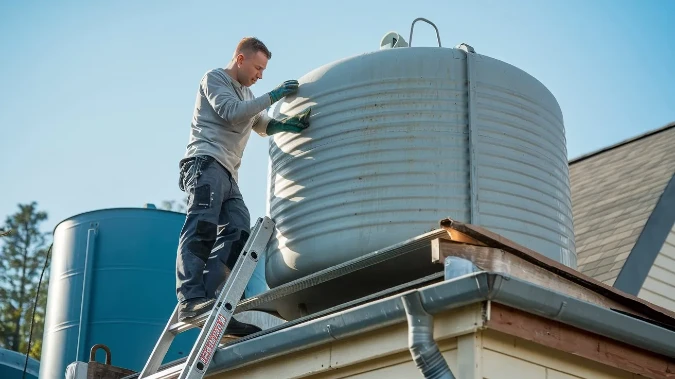
Cheap Today, Costly Tomorrow
On many construction sites across the UAE, using an old or reused water tank may seem like a cost-saving decision. But in reality, it can create serious operational, safety, and financial risks. With harsh weather conditions, heavy usage, and strict project timelines, relying on an aging tank is often a weak point that can lead to bigger problems.
Structural Failure Under Pressure
Old Tanks Are Already Weakened
Water tanks used on construction sites face constant filling, emptying, and movement. Over time, this causes material fatigue. In the UAE’s extreme heat, plastic tanks degrade faster due to continuous UV exposure. This weakens the structure and increases the chances of sudden cracking, bulging under pressure, or even collapse when the tank is full. A tank failure on-site does not just stop work, it can also damage nearby equipment and create serious safety hazards.
Water Leakage Means Project Delays
Small Cracks, Big Problems
Even minor leaks from old tanks can disrupt daily operations. Construction sites depend heavily on water for curing concrete, cleaning, and general usage. When a tank starts leaking, it leads to water shortages at critical stages of work. This results in delays, additional refilling costs, and unnecessary downtime. In fast-moving projects, even small interruptions can affect deadlines and budgets.
Health and Hygiene Risks
Contaminated Water Is a Serious Concern
Old water tanks often come with an unknown history. They may have previously been used for storing chemicals, fuel, or contaminated water. This creates serious health risks for workers on-site. Contaminated water can lead to poor hygiene conditions and potential health issues. In regulated environments, this may also result in compliance problems and penalties. GRP tank another option for water tank.
Increased Maintenance and Repair Costs
Frequent Problems Drain Your Budget
Old tanks require constant monitoring and repairs. Over time, issues like cracks, leakage, and weak fittings become more frequent. Instead of saving money, site managers often end up spending more on temporary fixes, emergency replacements, and water loss. A new tank, in comparison, provides stable performance and requires minimal maintenance, making it more cost-effective over time.
Safety Hazards for Workers
Unstable Tanks Can Cause Accidents
Construction sites are already high-risk environments, and an unreliable water tank only adds to the danger. An old or damaged tank can become unstable, increasing the risk of tipping over or bursting under pressure. Leaks can also create slippery surfaces, which may lead to accidents or injuries. These situations not only harm workers but also increase liability for the project.
Poor Performance in UAE Climate
Heat Accelerates Damage
The UAE climate is extremely demanding, especially for plastic materials. Old tanks that have already been exposed to years of sunlight are far more likely to fail. Continuous heat causes the material to become brittle, fade, and weaken, which accelerates crack formation. This makes old tanks unreliable for outdoor construction use where durability is critical.
Operational Inefficiency
Unreliable Supply Affects Workflow
Construction activities require a consistent and reliable water supply. Old tanks often fail to deliver this due to reduced capacity, leaks, or structural weakness. This leads to interruptions in workflow, reduced productivity, and inefficient site operations. A reliable water storage system is essential to keep construction running smoothly.
When Is an Old Tank Acceptable?
Very Limited Situations
Using an old tank may only be acceptable in rare cases where it is in excellent condition, has been properly inspected and cleaned, and is used for non-critical tasks. Even in such situations, it should only be considered a temporary solution rather than a long-term option.
Why New Water Tanks Are a Better Choice
Reliability, Safety, and Peace of Mind
A new water tank is designed to handle the demanding conditions of construction sites. It provides strong structural integrity, resistance to UV exposure, safe water storage, and consistent performance. This ensures smooth operations and reduces the risk of unexpected failures.
Don’t Compromise on Site Infrastructure
Using an old water tank on a construction site may seem like a small cost-saving decision, but it can lead to serious consequences. From safety hazards to project delays and increased expenses, the risks often outweigh the initial savings. In construction, reliability is everything, and investing in a new, high-quality water tank is a smarter and more secure choice for long-term success.
