



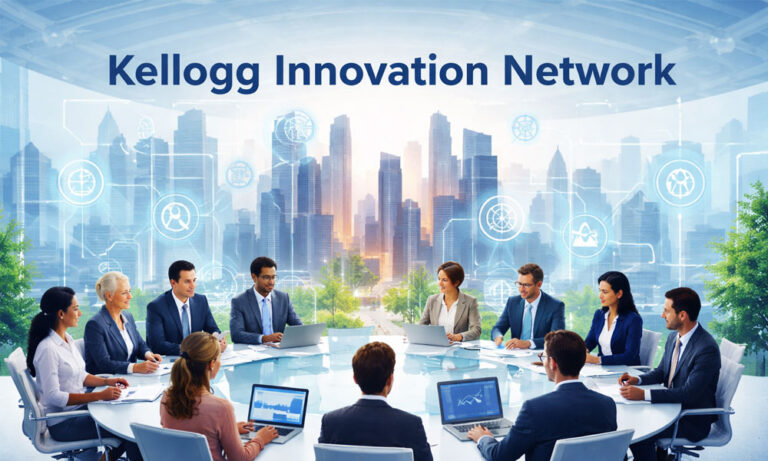
The world today moves fast. New technology appears every year. Old business rules change overnight. Problems that once felt simple now feel huge and complex. Many leaders feel pressure to make the right choices, even when things are not clear.
This is why the Kellogg Innovation Network is so important. It gives leaders a safe place to think, talk, and explore new ideas. It helps them understand big changes and make smart decisions. Most of all, it gives them a team—a global team—where every person brings a different point of view.
In today’s article, we will explore what the Kellogg Innovation Network is, how it started, why it is so unique, and how it grew into one of the world’s most trusted groups for innovation and leadership. You will see how this network helps people solve big problems in simple, human ways.
What Is the Kellogg Innovation Network?
The Kellogg Innovation Network, often called KIN, is a global place where leaders come together to think about the future. It was created by the Kellogg School of Management at Northwestern University. The idea was simple: bring smart and caring people together so they can solve hard problems through new ideas.
KIN is not a normal business group. It is not about fast deals or quick wins. It is about slow thinking, deep talks, and long-term change. Leaders from business, government, science, and social groups all meet here. They share ideas, learn from each other, and help shape a better future.
At its heart, the Kellogg Innovation Network is about teamwork across many fields. A business leader may sit next to a scientist. A government minister may talk with an artist. These different worlds come together to find new answers, and that is what makes the network so special.
The Big Idea Behind the Kellogg Innovation Network
The main purpose of the Kellogg Innovation Network is simple: help people create better solutions by working together. It believes the world’s biggest problems cannot be solved by one group alone. Business cannot do it alone. Governments cannot do it alone. Schools cannot do it alone. But when all these groups talk and share ideas, real change becomes possible.
Another big idea behind KIN is the focus on long-term good. Many companies think about this month or this quarter. But the Kellogg Innovation Network asks leaders to think about five, ten, or even twenty years into the future. It wants innovation that helps people, helps the planet, and helps whole communities—not just a company’s profit.
KIN also uses a human approach to innovation. It does not just look at technology or money. It looks at people. It asks: Who will be helped? Who may be harmed? How can we make life better for everyone? This human view is what makes the Kellogg Innovation Network strong and trusted.
You may also read: What Is Solo ET? The Easy Guide Anyone Can Understand
How the Kellogg Innovation Network Started
The Kellogg Innovation Network began in 2003. It was born inside the Kellogg School of Management, one of the world’s top business schools. Professor Robert C. Wolcott played a major role in creating it. He wanted a place where leaders could talk openly about new ideas without fear or pressure.
In the early days, the meetings were small. A few leaders would sit around a table. They would speak with honesty, share problems, and explore solutions together. There were no big stages or fancy presentations. Just honest conversations between people who cared.
These early meetings created something rare: trust. Leaders felt safe. They felt heard. They felt inspired. Soon, more people wanted to be part of this special group. And slowly, the Kellogg Innovation Network began to grow.
How the Network Grew Into a Global Innovation Team
As the world changed, the Kellogg Innovation Network changed too. Technology advanced. New industries rose. Global problems became more complex. Because of this, more leaders turned to KIN for guidance and fresh ideas.
The network grew from small campus meetings to large global gatherings. Leaders from many countries wanted to join. New partners from business, science, art, and public service came in. Every new voice added something new and powerful.
One of the biggest steps in the network’s journey was its connection to The World Innovation Network, known as TWIN. This allowed the mission to grow even more. Now, the ideas born at Kellogg could spread across borders and help solve problems in many parts of the world. The Kellogg Innovation Network became not just a group—but a global ecosystem for innovation.
What Makes the Kellogg Innovation Network So Unique?
Many groups talk about innovation. Many groups bring leaders together. But the Kellogg Innovation Network is different. It is deeper, slower, and more real.
First, the Kellogg Innovation Network does not focus on fast networking. It does not push people to exchange business cards or make quick deals. Instead, it gives them time to think. Time to talk. Time to listen. Leaders often say they walk away with new ideas they could never have found alone.
Second, KIN brings very different types of people together. A scientist may sit next to a CEO. A tech founder may talk with a government leader. A nonprofit director may work with an engineer. This mix of minds creates powerful ideas, because everyone sees the world differently.
Third, the Kellogg Innovation Network values action over talk. Many conferences end when people leave the room. But KIN creates real projects, real partnerships, and real changes. It turns ideas into solutions that make a difference in the world.
The KIN Global Summit: Where Big Ideas Come to Life
One of the most exciting parts of the Kellogg Innovation Network is the KIN Global Summit. This is the main gathering where leaders from around the world come together. It is invite-only, which helps keep the group focused, safe, and open.
The summit is not like a normal event. There are no long speeches where people sit and listen for hours. Instead, people join small discussions. They ask questions. They challenge ideas. They explore new ways to solve big problems. This creates energy and excitement in every room.
Some of the topics discussed at the KIN Global Summit include the future of work, climate change, economic transformation, AI, global well-being, and ethical leadership. Leaders talk about what is happening today and what may happen tomorrow. They leave with new insights, new partners, and new hope.
The summit has helped create projects that reach far beyond the meeting room. It has shaped leadership thinking. It has supported new business models. It has even helped communities in different countries grow in better, fairer ways.
Innovation Intelligence: How KIN Understands Change
Innovation intelligence is one of the most interesting ideas inside the Kellogg Innovation Network. It is a simple idea, but very powerful. Innovation intelligence means understanding how new ideas appear, how they grow, and how they spread through the world.
The network uses tools like AI, data analysis, and systems thinking to study innovation patterns. This helps leaders see changes before they happen. It helps them prepare for new risks. It also helps them find new chances to grow.
For example, a leader may use innovation intelligence to see where a new industry is forming. Or they may use it to understand why a shift in customer behavior is coming. These insights give leaders a strong advantage in a world that moves fast.
KIN works with groups like the Northwestern Innovation Institute to build this intelligence. Together, they use research, data, and real-world stories to help leaders make smarter decisions.
You may also read: Homeware Zone: The Simple Guide to a Beautiful and Easy Home
The Key Programs and Projects Inside the Network
The Kellogg Innovation Network is not just about talking. It is also about doing. Many programs and projects take place inside the network. One of the most powerful examples is the Industry Catalyst Project.
These projects bring leaders from one industry together. They explore big problems and design new ideas to solve them. One strong example comes from the mining industry. Leaders came together to think about how mining could be safer, greener, and fairer for communities. They created models that balanced profit with care for people and the planet.
The network also offers executive workshops. These workshops help leaders learn useful tools, improve their skills, and understand new trends. They often mix academic research with real-world lessons, so leaders get the best of both worlds.
KIN also works closely with universities and research groups. This keeps the ideas fresh, smart, and useful. Leaders stay connected to new discoveries in business, technology, and human behavior.
Who Can Join the Kellogg Innovation Network?
The Kellogg Innovation Network is a special place. Not everyone can join. Most of the time, leaders join through invitation. This helps the network stay focused, trusted, and safe for deep conversations.
People who join usually include senior business executives, government leaders, scholars, scientists, nonprofit directors, and cultural creators. These people bring strong ideas and strong experience. Their mix makes the network rich and diverse.
Young leaders and students can also join through programs linked to Kellogg and partner groups. These opportunities help new voices grow and become part of future innovation.
Why the Kellogg Innovation Network Is Important in Our World Today
We live in a world of fast change. New technologies disrupt old systems. Global tensions rise. Climate challenges grow. Leaders need clear thinking more than ever. They need places where they can understand what is coming and how to respond.
The Kellogg Innovation Network gives leaders these tools. It helps them think about the future. It helps them see risks and chances early. It helps them build strong, flexible plans.
The network also teaches leaders to act with care and responsibility. Instead of chasing quick wins, they learn to focus on long-term value. They learn how to help their companies grow while also helping society and the planet.
Real Stories: How KIN Ideas Turn Into Real Change
The Kellogg Innovation Network is not just about talking. It is about real change that happens after people go home. One strong example comes from the mining sector. Mining is a tough industry. It deals with land, people, and big money. Many people think mining and care for the planet cannot work together. But inside the network, leaders sat down and asked new questions. They explored how mining could be safer, kinder, and more fair. This led to new models that balanced profit with care for local communities and nature.
Another example comes from cross-border work. Leaders from different countries often struggle to agree. But when they meet inside the Kellogg Innovation Network, the room feels safe. They listen to each other. They share ideas with honesty. As a result, new plans and partnerships grow. Some help improve education. Others help build better technology. Many help create strong connections between nations.
These stories show something simple but powerful. When smart and caring people talk with open hearts, good things happen. New solutions rise. New hope rises. And the world becomes a little better each time.
Technology and Innovation at the Center of KIN
Technology plays a big role in the Kellogg Innovation Network. Every year, new tools appear. AI becomes smarter. Data becomes bigger. Machines become faster. Leaders need a space to understand all of this, and KIN gives them that space.
At meetings and summits, leaders explore how AI can change work, how smart devices shape health, and how cloud systems make companies stronger. They ask simple but deep questions. How will robots change jobs? How can technology support fairness? How can we use tools without harming people?
The Kellogg Innovation Network helps leaders use technology wisely. It reminds them that tools are only good when used with care. It teaches them that innovation must help people first, not harm them. This human view of technology makes the network trusted by leaders around the world.
The Big Challenges the Network Still Faces
Even the Kellogg Innovation Network has challenges. One challenge is inclusivity. The network brings powerful leaders together, but it also wants more voices from different backgrounds. It wants young people, small business owners, and local community leaders to be part of big conversations. Making this balance is not easy.
Another challenge is global cooperation. People come from many cultures. They think in different ways. They use different words. Sometimes this makes teamwork hard. But KIN works gently to help people understand each other. It creates small groups, simple rules, and open space for honest talk.
A third challenge is measuring impact. Innovation often takes time. Results do not appear in one day. Some ideas may take years to grow. The network continues to find better ways to measure progress while still giving leaders the freedom to think and explore.
How the Kellogg Innovation Network Stands Apart From Other Groups
There are many business groups in the world. Many talk about innovation. Many host conferences. But the Kellogg Innovation Network stands apart for a few simple reasons.
First, it cares more about depth than size. It does not invite thousands of people. It invites the right people. People who want to learn. People who want to help. People who want to create good change. This makes each meeting personal and meaningful.
Second, it blends many worlds. While other groups focus only on business or only on research, the Kellogg Innovation Network mixes everything—business, science, government, arts, and nonprofits. This mix gives the network a strong edge. It creates ideas that no single field could create alone.
Third, it focuses on long-term value. It does not chase trends or hype. It looks at the future with calm, clear eyes. It guides leaders to take steps that help both their companies and the world.
You may also read: Uncuymaza: The Ancient Idea That Still Shapes Our Lives Today
How KIN Shapes Innovation Thinking Around the World
The Kellogg Innovation Network has shaped how leaders think about innovation. Many leaders say they return home with new tools, better ideas, and stronger courage. They learn to look at problems from many angles. They learn to test ideas in small ways before big steps. They learn to build teams that welcome new voices.
KIN also creates papers, frameworks, and models that are used in many industries. These tools help companies think about risk, opportunity, technology, and society. Even leaders who have never attended a summit may use KIN ideas through books, research, or training programs.
Another way the network shapes thinking is by inspiring other groups to copy its style. Many new innovation labs and leadership circles were born after watching how the Kellogg Innovation Network works. This ripple effect shows the network’s deep and lasting impact.
The Future of the Kellogg Innovation Network
The world continues to change fast. Because of this, the Kellogg Innovation Network will also continue to grow. Many leaders believe the next big steps for KIN will focus on AI ethics, climate solutions, and fair economic growth. These issues touch every country and every person.
KIN may also build more global hubs. These hubs will help people in different regions meet more often. For example, leaders in Asia may join hands with leaders in Europe or Africa through new programs. This will help ideas spread faster and reach more people.
Even with all this change, one thing will stay the same: the heart of the Kellogg Innovation Network. Its mission will still be collaboration, trust, and long-term thinking. It will still bring people together to solve big problems with simple, human leadership.
Conclusion
The Kellogg Innovation Network is more than a group. It is a global team. It brings leaders together to think, learn, and act with care. It asks simple but powerful questions: How can we create a better future? How can we use innovation to help people? How can we make choices that last?
In a world full of noise, fear, and fast change, the Kellogg Innovation Network gives leaders a quiet and trusted space. A space where they can breathe, think, and imagine new paths. A space where they can find partners who want the same thing—a future that is fair, safe, and full of hope.
This is why the Kellogg Innovation Network matters. This is why it continues to grow. And this is why leaders from around the world choose to return year after year. Together, they build answers that help the world move forward.
(FAQs)
What is the Kellogg Innovation Network in simple words?
The Kellogg Innovation Network is a global group where leaders from business, government, science, and social groups come together to solve big problems. They share ideas, learn from each other, and work on new solutions that help both companies and society.
Who started the Kellogg Innovation Network?
The network was started in 2003 at the Kellogg School of Management at Northwestern University. Professor Robert C. Wolcott helped shape its early vision. He wanted a safe space where leaders could talk openly, explore new ideas, and plan for the future.
Why is the Kellogg Innovation Network different from normal business networks?
It is different because it focuses on deep talks, long-term thinking, and real solutions. Most networks focus on deals or fast results. KIN focuses on trust, teamwork, and ideas that help people, communities, and the world—not just profits.
Who can join the Kellogg Innovation Network?
Most members join through invitation. The network usually includes senior executives, government leaders, academics, nonprofit directors, and cultural creators. Young innovators and students may join through special programs linked to Kellogg and partner groups.
What happens at the KIN Global Summit?
The KIN Global Summit is a special gathering where leaders talk about the future and work on new ideas. It is not a typical conference. Instead of long speeches, people sit in small groups, ask questions, and explore new solutions for complex problems like climate change, AI, and global growth.
What are Industry Catalyst Projects inside the network?
Industry Catalyst Projects are teamwork projects focused on one industry. Leaders come together to redesign the future of that field. A good example is the mining project, where leaders created new models that balance profit with community care and environmental safety.
What does “innovation intelligence” mean in the Kellogg Innovation Network?
Innovation intelligence means understanding how new ideas appear, grow, and spread. The network uses tools like AI, data, and systems thinking to study change. This helps leaders make smart choices, see new chances early, and prepare for future challenges.
How does the Kellogg Innovation Network help solve global problems?
The network brings different types of leaders into the same room. They look at problems from many sides. They share stories, test ideas, and build solutions together. This mix of minds helps create smarter answers for issues like poverty, climate change, health systems, and digital disruption.
What challenges does the Kellogg Innovation Network still face?
Some challenges include making the network more inclusive, helping people from different cultures work smoothly together, and measuring the true impact of long-term innovation. The network continues to improve these areas as it grows.
Why is the Kellogg Innovation Network important in today’s fast-changing world?
Today, leaders face rapid change, AI growth, global tensions, and new risks. The Kellogg Innovation Network gives them a safe and trusted place to think, learn, and prepare for the future. It helps them build strong ideas, responsible plans, and solutions that help people and the planet.
You may also read: And Diligence: The Simple Habit That Builds Trust and Success
