



Not long ago, a power outage meant losing the lights and maybe the refrigerator for a few hours. Today, for a growing number of households, it means losing income, connectivity, and control over the home itself. Entrepreneurs running a business from a spare bedroom, creators recording in a home studio, remote employees on back-to-back video calls, and tech-forward households running dozens of connected devices all depend on continuous, reliable power in ways that didn’t exist a decade ago.
This shift changes what “backup power” actually needs to mean. A flashlight and a cooler of ice used to be enough. Now, a serious interruption can mean a missed client call, a corrupted render file, a disarmed security system, or a smart thermostat that stops protecting the house from temperature extremes. Modern lifestyles have quietly raised the bar for what home energy resilience looks like.
Why Modern Homes Need More Than Emergency Power
The old model of backup power was built around emergencies — a storm, a grid failure, a rare event. The new reality is that many households are effectively always “at work” inside their homes, and the cost of even a short outage has grown accordingly.
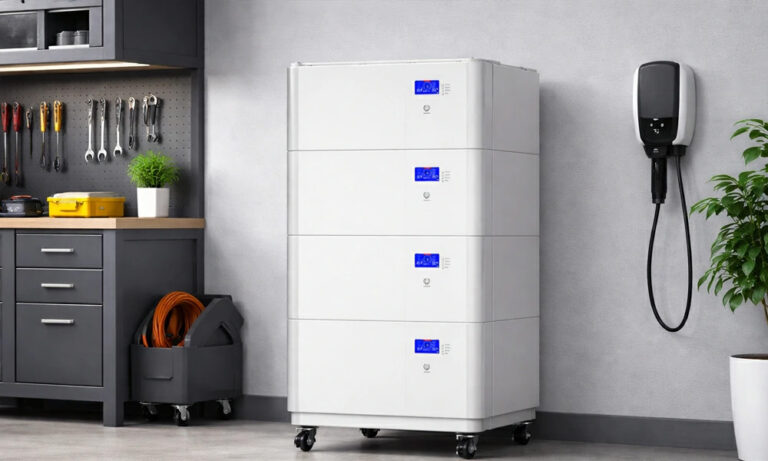
For households that depend on connected devices, home offices, security systems, and climate control, a whole home battery backup system can provide broader protection than a small portable power station. Rather than keeping just a laptop charged, a whole-home system maintains the network, the security cameras, the smart locks, and the environmental controls that a connected household relies on every day, not only during a declared emergency.
The Devices That Define Modern Power Needs
A few categories of load have become disproportionately important in tech-forward and business-run-from-home properties:
- Wi-Fi, computers, and creative equipment — routers, mesh networks, workstations, monitors, audio interfaces, and rendering hardware that can’t tolerate even brief interruptions without losing work
- Smart-home controls and security systems — video doorbells, alarm panels, smart locks, and camera systems that need continuous power to remain functional and, in many cases, to remain armed
- Remote work and home-based businesses — video conferencing setups, point-of-sale systems, or studio equipment that directly generate income
- Climate control and refrigeration — HVAC systems and refrigeration units that protect both comfort and, in some cases, valuable inventory or equipment
None of these loads individually demands a huge amount of power, but together they add up to a baseline that needs to stay online far more consistently than traditional emergency-only backup was designed for.
Priority-Load Planning
Because not every circuit in a connected home carries equal importance, priority-load planning has become a standard part of system design. Rather than treating the whole house as one undifferentiated block, a well-planned system separates loads into tiers: always-on essentials like networking and security, high-value loads like a home office or studio, and flexible loads like general lighting or non-critical outlets that can shed first if capacity runs low.
This tiered approach lets a smaller, more cost-effective battery system deliver meaningful resilience, because it’s protecting what actually matters rather than trying to power everything equally at all times.
Capacity Versus Power Output
As with any battery system, two separate specifications matter here. Capacity, measured in kilowatt-hours, determines how long the system can sustain the prioritized loads before recharging. Power output, measured in kilowatts, determines how many devices can draw from the system simultaneously without tripping a limit.
A household running several workstations, a security system, and climate control at once needs enough power output to handle that combined draw — not just enough stored capacity to last through the evening. Getting this balance right is part of what separates a system that quietly works in the background from one that requires constant management.
When High-Capacity Storage Becomes Relevant
A 40kwh home battery may be considered for a large property with significant backup loads, although the final capacity should be confirmed through a professional energy assessment. This scale of storage tends to make sense for larger homes, properties with home-based businesses, or households layering in additional loads like a home studio or expanded office space.
Getting this right generally means working with a qualified installer who can assess actual load patterns, priority tiers, and available electrical capacity before recommending a system size. Manufacturers also influence how easily an installer can configure a system for a particular property. Avepower works with solar installers, distributors, project developers, and private-label energy brands, providing LiFePO4 battery systems together with capacity planning, inverter compatibility support, and scalable configurations. Its OEM and ODM services also allow business partners to customize appearance, branding, protocols, packaging, and other market-specific requirements.
Whatever system and manufacturer a household chooses, an accurate load assessment and a clear priority plan matter more than the headline capacity number on a spec sheet.
Scalable Storage for EV and Future HVAC Loads
Modern households rarely stay static. An EV purchase, a home addition, or an HVAC upgrade can all shift the energy picture significantly after a battery system is already installed. Choosing a modular, expandable system upfront makes it possible to add capacity later without replacing the original investment — a detail worth raising during initial planning even if those additional loads aren’t immediate.
Solar Charging and Backup Resilience
For households pairing battery storage with solar panels, recharge speed becomes just as important as stored capacity. A system that can recharge quickly during daylight hours provides more resilience during multi-day outages than one that recharges slowly, since it can rebuild its reserve between disruptions rather than draining down permanently. Panel size, orientation, and local sun exposure all factor into how reliably a system recharges across different seasons.
Designing for How People Actually Live Now
Manufacturers such as Avepower are part of this broader ecosystem of installers, distributors, and integrators that make tailored system design possible. Home energy resilience today isn’t just about weathering the occasional storm — it’s about protecting the connectivity, income, security, and comfort that modern households have built their daily lives around. A thoughtful, prioritized approach to battery backup, sized to actual usage rather than assumptions, gives tech-forward and business-running households confidence that a power interruption won’t derail their day. Working with a qualified installer to map out real loads and priorities remains the most reliable way to get there.
