



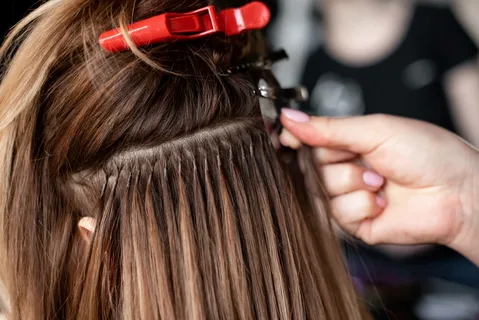
Hair extensions have moved a long way from the chunky clip-ins of the early 2000s. Today, professional-grade extensions installed by an experienced stylist are genuinely difficult to detect and can last the better part of a year with proper care. The market, however, has also grown considerably more complex. Products range from inexpensive synthetic blends to precision-manufactured human hair from specific geographic regions, and the marketing language across the category has become largely indistinguishable.
If you are considering hair extensions for the first time, or if you have had a disappointing experience with a previous set, this guide will walk you through the decisions that actually matter – from choosing the right raw material to selecting the application method that fits your lifestyle.
Starting with Raw Material
The single most important factor in a hair extension’s performance is the quality of the hair itself. Everything else – application method, maintenance, stylist expertise – builds on this foundation. No amount of skill in installation will make low-quality raw material behave like natural hair over the long term.
The characteristics that make hair extensions blend seamlessly with natural European hair are most reliably found in hair from Eastern European and South Russian donor populations. This hair tends to be naturally fine to medium in diameter, structurally consistent from root to tip, and naturally low in porosity. These properties translate directly to performance: the hair accepts color predictably, responds well to heat styling, and behaves like natural hair because it is structurally similar to the hair of most UK clients.
When evaluating any extension supplier, ask specifically about hair origin and cuticle treatment. Genuine Remy hair – meaning hair with the cuticle preserved and all strands oriented in the same direction from root to tip – will behave consistently and resist tangling throughout the lifespan of the set. Hair that has been acid-washed to strip the cuticle (a common processing shortcut) looks and feels excellent initially but deteriorates noticeably within a few months of regular washing and styling.
Application Methods: Matching the Method to Your Life
The right application method depends on your natural hair type, your lifestyle, and how long you want the extensions to last. Here is an honest overview of the main options available from professional stylists.
Genius Weft
Genius Weft hair extensions represent one of the more significant technical developments in the professional extensions market over the past few years. The genius weft is constructed to be considerably thinner than a traditional machine or hand-tied weft, sitting flat against the scalp without creating a visible or tactile ridge. For clients with fine or medium-density natural hair who want volume and length without detection, this method offers a result that holds up to close scrutiny – including the kind of scrutiny that comes in strong daylight or photography.
The installation involves attaching rows of weft along sections of natural hair using a beaded or sewn method, depending on the stylist’s approach. Maintenance appointments are required as the natural hair grows, typically every six to eight weeks. Because the weft lies so flat, the method is particularly comfortable for clients who wear their hair up frequently.
Keratin Bond
Keratin bond hair extensions – also called fusion or hot fusion extensions – remain the method of choice for clients who want the most natural possible result and are willing to invest the installation time required to achieve it. Each extension strand is attached to a small section of natural hair using a keratin tip bonded with a heat tool. Because the attachments are distributed individually throughout the hair rather than in rows, the finished look is completely customizable and behaves exactly like natural hair in every respect.
A full head of keratin bonds takes several hours to install and represents a significant investment in both time and cost. The return on that investment, when done well with quality raw material, is a result that lasts eight to twelve months with proper maintenance and is indistinguishable from natural hair in every lighting condition and styling scenario. This method is also the most resistant to lifestyle demands – it holds up well to swimming, vigorous exercise, and the kind of daily washing that most UK clients require.
Bulk Hair for Specialist Applications
For clients with specific styling needs – including braiding, loc extensions, or custom fusion work – Bulk Hair extensions provide the most flexible option. Loose hair supplied in bulk format without a weft or strand configuration can be applied in any method, in any quantity, and blended precisely to match the client’s natural shade and texture. This format is also commonly used by colorists doing complex dimensional work where precise strand-by-strand placement matters.
Questions to Ask Your Stylist
Before committing to any extension service, the following questions will help you assess whether the salon and product are likely to deliver what you are looking for.
Where does the hair come from? A reputable stylist working with quality suppliers should be able to tell you the general geographic origin of the raw material. If the answer is vague or evasive, treat that as a signal.
How long should this set last? Realistic expectations vary by method and lifestyle. Keratin bonds from quality hair typically last eight to twelve months. Tape-in and weft methods require maintenance every six to eight weeks but can be maintained indefinitely. Any answer that sounds significantly more optimistic than these ranges deserves a follow-up question.
What maintenance does this method require? Every extension method requires some adaptation to your routine. Sulfate-free shampoo, careful brushing technique, and thorough drying before sleep are standard across all methods. If a stylist implies that a set requires no particular maintenance, that is not accurate.
Making the Decision
The hair extensions market in the UK has matured considerably. Products that perform to professional standards exist and are accessible. The challenge for consumers is identifying them in a category where marketing claims are largely unreliable as a guide to quality.
The most reliable approach is to focus on the two things that cannot be faked over time: the origin and processing of the raw material, and the technical skill of the stylist applying them. Research both thoroughly before committing, ask direct questions and expect direct answers, and treat the investment as a twelve-month decision rather than a one-time purchase.
When both factors are right, professional hair extensions deliver results that justify the investment many times over – in confidence, in versatility, and in the kind of consistent, natural finish that holds up not just for the appointment, but for the months of real life that follow it.
