



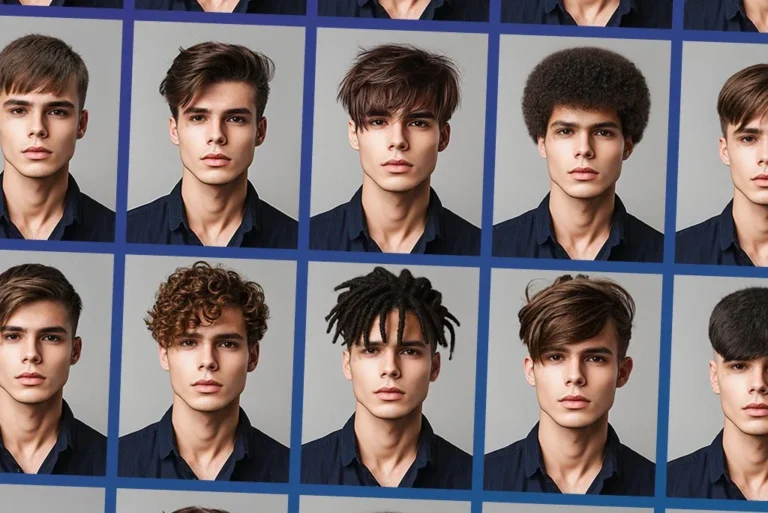
For decades, choosing a new hairstyle has been one of the most anxiety-inducing decisions in personal grooming. You sit in the salon chair, flip through a magazine, point to a photo of a celebrity, and hope for the best. Sometimes it works. Often, it doesn’t. The cut that looks stunning on a model with an oval face and fine hair can look completely different on someone with a round face and thick, curly locks. The problem was never the hairstyle — it was the guesswork.
That guesswork is now being replaced by technology. Artificial intelligence has entered the beauty space in a meaningful way, and platforms like Righthair.ai are leading the charge — helping people make confident, informed decisions before a single strand of hair is cut.
The Problem With Traditional Hairstyle Selection
Walk into any salon today and you’ll likely see the same scene: clients scrolling through Pinterest boards or Instagram feeds, looking for inspiration. While social media has expanded our awareness of different cuts, colors, and styles, it has done little to solve the core challenge — figuring out what will actually work for your face, your hair texture, and your lifestyle.
The traditional consultation process relies heavily on the stylist’s expertise and the client’s ability to communicate what they want. Both of these are imperfect. Clients often don’t have the vocabulary to describe what they’re looking for, and stylists, no matter how skilled, are working with a subjective interpretation of an idea.
This is where technology steps in to bridge the gap.
Virtual Try-On: See It Before You Commit
One of the most exciting innovations in the beauty tech space is the ability to preview hairstyles before committing to them. With AI hairstyle try-on technology, users can upload a photo and see themselves with a different cut, length, or color in seconds.
This isn’t the clunky digital overlay technology of years past, where fake-looking wigs were crudely placed on top of a photo. Modern AI hairstyle try-on tools use sophisticated machine learning models trained on thousands of images to realistically simulate how a style would look on your specific face shape, skin tone, and natural hair flow. The results are nuanced and believable — good enough to actually base a decision on.
For users, this changes everything. Instead of making a leap of faith in the salon, they can experiment freely at home, trying dozens of styles in minutes. They can share results with friends, get feedback, and walk into the salon with genuine confidence rather than crossed fingers.
For stylists, the benefits are equally significant. When a client arrives with a realistic preview of what they want, the consultation becomes a collaboration rather than a guessing game. It shortens the gap between expectation and reality.
The Science Behind Facial Analysis for Hair
Not every hairstyle works for every face. This has been understood by stylists for generations, but it was always communicated through vague rules of thumb — “round faces should avoid volume on the sides” or “square faces look great with soft layers.” These guidelines are useful, but applying them in practice requires a trained eye.
AI changes this by making the process precise and objective. Through AI facial analysis, platforms can measure the proportions of your face — the width of your forehead, the angle of your jawline, the distance between your cheekbones and chin — and classify your face shape with mathematical accuracy.
From there, the AI can match your unique facial geometry against a database of styles and recommend cuts that have been proven to complement faces like yours. This isn’t guesswork dressed up in a lab coat. It’s a genuine application of pattern recognition and data analysis to a deeply personal decision.
Beyond face shape, advanced systems also consider other variables — hairline position, facial symmetry, eye placement, and even how you might style your hair day-to-day. The recommendations that emerge from this kind of multi-variable analysis are far more tailored than anything a printed style guide could offer.
Personalization at Scale
One of the most powerful aspects of AI-driven beauty tools is their ability to deliver highly personalized recommendations at scale. A skilled human stylist with years of experience can absolutely give great advice, but they’re limited by time and memory. An AI system can process your inputs against thousands of data points instantly and deliver results that account for your specific combination of features.
This democratizes access to expert-level guidance. Previously, truly personalized style advice was a luxury available primarily to those who could afford high-end salons with experienced consultants. Now, anyone with a smartphone can access sophisticated recommendations that were once out of reach.
This is particularly meaningful in markets where access to experienced stylists is limited — whether due to geography, cost, or availability. AI tools like those offered by Righthair.ai make professional-quality guidance accessible to anyone, anywhere.
Building Confidence in the Salon Chair
There’s a psychological dimension to all of this that deserves attention. Haircuts are deeply tied to how we feel about ourselves. A great haircut can lift your mood for weeks. A bad one can chip away at your confidence just as long. The stakes feel high, and that makes many people hesitant to experiment or try something new.
AI try-on and facial analysis reduce that fear. When you’ve already “seen” yourself with a new style — when you’ve had time to sit with it, get used to the idea, and feel good about it before a single cut is made — you walk into the salon with a completely different energy. You’re no longer hoping it works. You have a reasonable expectation that it will.
This shift from anxiety to confidence is one of the less obvious but most important ways AI is improving the beauty experience.
The Future of Hair Technology
We’re still in the early stages of what AI can do for personal styling. The tools available today are impressive, but the roadmap points to even more integration — virtual consultations with stylists who can view your AI-generated results in real time, personalized product recommendations based on your hair type, and trend forecasting that helps you find styles that are both flattering and current.
As the technology matures, the line between digital exploration and real-world styling will continue to blur. What Righthair.ai is building today is laying the foundation for a future where no one has to walk out of a salon disappointed.
Final Thoughts
The intersection of artificial intelligence and personal style is one of the most human applications of a technology that often feels abstract. At its core, AI hairstyle try-on and facial analysis are about helping people feel good about how they look — and giving them the tools to make decisions they feel great about.
If you’ve ever left a salon wishing you’d chosen something different, or felt paralyzed by indecision before a big change, the technology now exists to take that uncertainty off the table. The future of hairstyling isn’t just in skilled hands — it’s also in smart algorithms working alongside them.
