



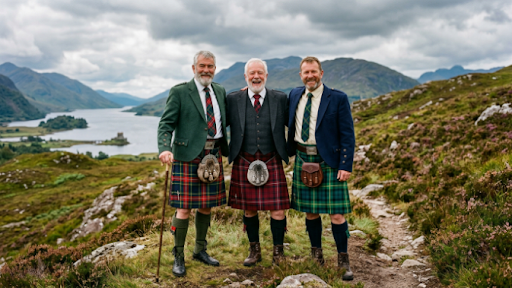
Tartan choice is the question that paralyzes most first-time kilt buyers. There are over 25,000 registered tartan prints in the official Scottish Register. Every one of them is technically available. Every one looks beautiful in some lighting. And almost none of them are right for your first kilt.
I’ve seen this paralysis firsthand. A friend asks me which tartan to choose. I send him three reasonable options. Three weeks later he’s deep in clan registries and color theory blogs, having now seen 200 tartans and feeling further from a decision than when he started.
The fix is to narrow the field aggressively. Not 25,000 options — just 12. The tartan prints below cover roughly 95% of what makes sense for a first men’s kilt buyer, ranked by their practical usefulness as a foundational kilt rather than by tradition or visual drama alone.
Here are 12 tartan prints, ranked from most universally useful to most situational, with notes on who each one suits.
Tier 1: Universal First-Kilt Choices
These four tartans are open to anyone, work across nearly every event, and won’t be regretted.
1. Black Watch — The Universal Default
The single most recommended first-kilt tartan in the world, and for good reason. Deep navy, forest green, and black overcheck. No red, no yellow, no flashy accents. Photographs beautifully, works at funerals through formal weddings, and never goes out of style.
Best for: Everyone. If you can’t decide, this is your answer.
Risk level: Zero. Cannot be wrong.
2. Royal Stewart — The Festive Universal
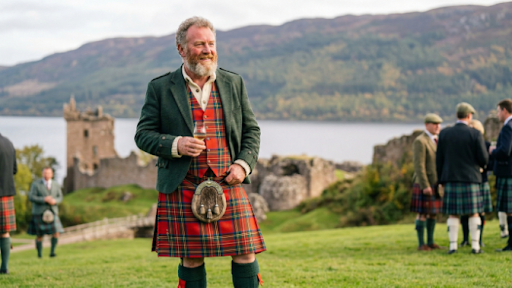
The Royal Family’s tartan kilt pattern , technically — but historically worn freely by all wearers. Bright red base with black, yellow, and green overchecks. Iconic and immediately recognizable as Scottish.
Best for: Festive events, Burns Night, weddings (especially as a guest), Christmas gatherings.
Risk level: Low for festive contexts. Less appropriate for solemn occasions.
3. Pride of Scotland — The Modern Universal
A relatively recent design (1990s) created specifically as an inclusive, no-clan-required tartan. Strong purple, deep green, and bold blue with white overcheck. Visually striking without being overwhelming.
Best for: Wearers who want something distinctive but universally appropriate.
Risk level: Low. Reads as modern but legitimate.
4. Caledonia — The Quiet Universal
A subtle tartan with predominantly green and blue tones, often overlooked because it lacks visual drama. Excellent for understated formal wear and for wearers who don’t want their kilt to be the loudest thing in the room.
Best for: Older wearers, formal contexts, quiet style preferences.
Risk level: Low. Universally appropriate but less photogenic than busier patterns.
Tier 2: Strong Heritage Options (If You Have the Connection)
The next four are clan tartans, but for clans common enough that many wearers have legitimate connections.
5. MacDonald — The Most Common Clan Tartan
The Clan MacDonald is the largest Scottish clan, and its tartan is one of the most worn clan patterns globally. Red and green with white and black overchecks. Distinct, traditional, and visually striking.
Best for: Anyone with MacDonald, McDonald, MacDonell, or related family connections.
Risk level: Low if you have a connection, awkward if you don’t.
6. Cameron — The Highland Drama
Predominantly red kilt with yellow and green striping. Visually rich and traditionally worn at significant Highland events. Particularly common among Cameron families and their descendants.
Best for: Cameron descendants, including spelling variants like Camron and Camron.
Risk level: Low if connected, somewhat overdramatic if not.
7. Mackenzie — The Northern Highland Tartan
Strong forest green with thin red and white overchecks. One of the most photogenic clan tartans, with depth and dimension that work in any lighting.
Best for: Mackenzie, McKenzie, Mackenzieson, and clan-related families.
Risk level: Low if connected, slightly underwhelming as a non-connection choice.
8. Stewart Hunting — The Sober Clan Tartan
A muted version of the Stewart family tartan, designed for hunting and outdoor wear. Earthy greens and browns with subtle red and yellow accents. Less formal than Royal Stewart, more substantial than dress tartans.
Best for: Stewart family connections, country events, outdoor heritage occasions.
Risk level: Low. Reads as serious and traditional.
Tier 3: Specialty Tartans for Specific Wearers
These four serve particular needs but aren’t right for every first-time buyer.
9. Irish National Tartan — The Modern Irish Default
Designed in the 1990s for Irish-Americans without specific county tartans. Predominantly green with orange, white, brown, and gold accents. Each color has documented symbolism connecting to Irish identity.
Best for: Irish-American wearers without specific clan connections.
Risk level: Low for Irish-themed events. Out of place at Scottish-only events.
10. Saffron — The Solid Irish Traditional
Not a tartan print at all, technically — a solid saffron-colored kilt rooted in medieval Irish tradition. Worn by Irish military pipe bands and cultural traditionalists.
Best for: Irish heritage events, particularly when authenticity matters more than visual variety.
Risk level: Low for Irish contexts. Confusing at non-Irish events.
11. Dress Stewart — The Wedding Specialty
A predominantly white tartan with red and green stripes, designed specifically for formal evening wear. The white base makes it dramatically lighter than other Stewart tartans.
Best for: Grooms at evening weddings, formal balls, white-tie equivalent events.
Risk level: Higher. Too formal and specialized for daily or general use.
12. Hunting MacLeod — The Earth-Toned Choice
Predominantly green and brown with subtle yellow accents. Designed for outdoor and hunting use historically. Modern interpretations work well for tweed-jacket events and country occasions.
Best for: MacLeod descendants, country wedding contexts, autumn events.
Risk level: Low for casual or country contexts. Underwhelming for formal events.
How to Actually Choose
After looking through the options, the practical decision-making process is straightforward.
Start with heritage. If you have any traceable Scottish, Irish, or Northern Irish ancestry, check whether a clan tartan applies to your family. Even a great-great-grandparent counts. The emotional weight of wearing your family’s pattern is genuinely meaningful.
If no heritage connection, default to Tier 1. Black Watch is the safest. Royal Stewart for festive contexts. Pride of Scotland for modern style. Caledonia for quiet preferences.
Don’t choose a clan tartan you have no connection to. The Scottish heritage community is welcoming, but wearing another family’s tartan is poor etiquette. It’s the equivalent of wearing a stranger’s family crest. You won’t be stopped, but it’s a small failure.
Consider your life context. A wearer who attends mostly formal events should prioritize tartans that photograph well at weddings (Black Watch, Caledonia). A wearer who attends festive cultural events can lean toward brighter patterns (Royal Stewart, MacDonald).
Avoid novelty and commercial tartans for your first purchase. Sports team tartans, branded patterns, and trendy designs lack the gravitas of established tartans and often look dated within a few years.
Tartan Variants Worth Knowing About
Within most established tartans, you’ll see “Modern,” “Ancient,” “Hunting,” and “Dress” variations. These aren’t different tartans — they’re different color treatments of the same pattern.
Modern — Brighter, sharper colors. Most common contemporary version. Widely available.
Ancient — Softer, muted colors meant to evoke natural plant dyes. Slightly more historical in feel.
Hunting — Earthier, darker colors. Designed historically for outdoor use; today often chosen for less formal events.
Dress — Lighter colors with more white or cream base. Designed for formal evening wear. Less common.
For most first-time buyers, Modern is the right choice. It’s visually clearest, most readily available, and most photogenic.
The Quality Question Behind the Tartan Question
Here’s the lesson most beginners learn the hard way: the tartan choice matters less than the kilt’s quality.
A simple Black Watch in pure wool from a recognized Scottish mill will outperform a fancy clan tartan in cheap polyester every time. The fabric, weave, and construction are what make a kilt look authoritative. The tartan is the decoration on top.
Spend on the construction first. Choose the tartan from what’s available in quality wool. Don’t compromise on fabric to get a more visually exciting tartan in a synthetic version.
A quality wool men’s kilt will serve you for decades. A polyester version of any of them will sit in your closet within a year.
What If You Want Something Not on This List?
That’s fine — but ask yourself why.
If the answer is “I have a family connection to a less common tartan,” that’s legitimate. Wear your family’s pattern. The emotional value justifies the choice.
If the answer is “I saw a really cool pattern online and I want it,” you’re probably making a decision you’ll second-guess. Visual excitement at the moment of buying often becomes regret at the third or fourth event when the pattern proves limiting.
The 12 tartans above weren’t chosen because they’re the most visually striking. They were chosen because they’re the most useful for actual wearers across actual events. There’s a difference.
Frequently Asked Questions
Is it offensive to wear a clan tartan I have no connection to?
Not deeply offensive, but considered poor etiquette in Scottish heritage circles. Universal tartans like Black Watch are the recommended choice if you lack a clan connection.
How do I find out if I have a clan tartan?
Search clan registries online for your surname or your mother’s maiden name. Clan Donald, Clan Mackenzie, Clan Cameron, and others maintain searchable databases of associated surnames.
Are sports tartans (e.g. Scottish national team) considered legitimate?
They’re recent commercial designs rather than heritage tartans. Wearing them is fine but lacks the cultural weight of traditional patterns.
What’s the difference between Royal Stewart and Stewart Hunting?
Royal Stewart is the bright red Stewart family tartan associated with the Royal Family. Stewart Hunting is the muted, earth-toned variant designed for outdoor and country wear.
Can I wear different tartans for different events?
Yes. Many wearers own one universal tartan kilt for general use and a clan tartan for family events. Two kilts cover most needs.
Is Black Watch boring as a first kilt?
It’s the safest, but it’s far from boring. The dark navy and green pattern photographs beautifully and reads as quietly authoritative. Many lifelong wearers consider Black Watch their favorite kilt.
Twelve tartan prints. One kilt to choose. Don’t overthink it. If you’re paralyzed, default to Black Watch. If you have heritage, lean into it. If you want something distinctive, choose Pride of Scotland. The kilt itself matters more than the tartan once it’s hanging in your closet.
