



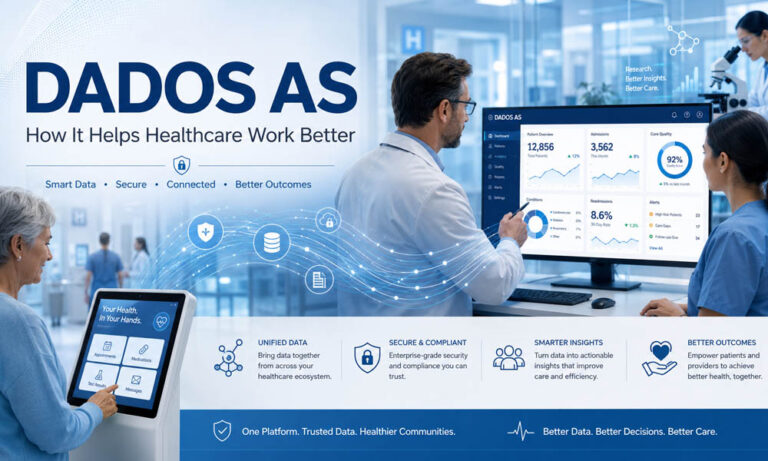
Healthcare in 2026 moves fast. Doctors, nurses, clinic teams, and researchers all need good data at the right time. If the data is slow, messy, or missing, care can become harder. Small problems can turn into big ones. A patient may fill out the same form twice. A staff member may enter the wrong detail. A report may come too late to help.
This is why tools like DADOS AS matter more now than ever. Healthcare is no longer only about visits, tests, and treatment. It is also about how well a clinic or research team collects and uses information. Good data helps people make better choices. It helps teams save time. It also helps patients feel more seen and heard.
So, what will we talk about in this article? We will look at what DADOS AS is, why it matters, how it works, and how it helps healthcare teams do their jobs better. We will also look at patient-reported outcomes, daily workflow support, better data quality, and how the platform connects with other systems. The goal is simple: to understand why DADOS AS is becoming such a useful part of modern healthcare and research.
What Is DADOS AS?
DADOS AS is a web-based platform that helps healthcare and research teams collect, manage, and study data in a smarter way. In simple words, it is a digital tool built to make data work easier. Instead of using paper forms, manual entry, and slow reports, teams can use one connected system to gather and organize information.
This matters because healthcare data can come from many places. A patient may answer a survey at home. A nurse may enter details during a clinic visit. A research team may collect study results across many locations. If these pieces stay separate, work becomes slow and confusing. DADOS AS helps bring them together in one smoother flow.
Another helpful thing about DADOS AS is that it supports both clinical care and research work. That means it is not only for hospitals or only for scientists. It can help both. A clinic may use it to follow patient progress. A research team may use it to collect study data. This makes the platform flexible and useful in different settings.
Why DADOS AS Matters in Healthcare
Healthcare today depends on more than skill and hard work. It also depends on timing, accuracy, and good communication. Imagine a busy clinic where patients are waiting, staff are answering calls, and doctors need quick updates before each visit. If the data is not easy to find, the whole day becomes harder. That is one reason why DADOS AS matters.
Many healthcare teams still deal with repeated forms, delayed reports, and systems that do not talk to each other well. These problems may sound small, but they can waste a lot of time. They can also lead to stress, mistakes, and missed chances to improve care. When a patient shares important health details, that information should not get stuck in a slow process.
DADOS AS helps by making the path from data collection to action much shorter. It gives teams a better way to collect information, clean it up, and use it quickly. This supports better planning and better care. It also helps healthcare feel more organized. In a world where both patients and providers expect smarter systems, DADOS AS fits right into that need.
How DADOS AS Works
At its core, DADOS AS works by making data collection simple and connected. Patients and staff can enter information through web forms, tablets, mobile devices, or kiosks. Instead of depending on paper or scattered tools, the platform brings these steps into one digital system. This makes the process easier to manage from start to finish.
Let’s say a patient comes in for a visit. Before seeing the doctor, that patient may answer a short health survey on a tablet or kiosk. In some cases, the patient may even fill it out from home before the visit. That information then becomes part of a larger care and reporting process. Staff can review it faster, and clinicians can use it during care decisions.
This is where DADOS AS becomes very helpful. It is not just a form tool. It also helps move data into reports, dashboards, and care workflows. So the platform does more than collect answers. It turns those answers into useful information. That is a big reason why many teams may see it as more than just a survey platform.
DADOS AS and Patient-Reported Outcomes
One of the most useful parts of DADOS AS is how it supports patient-reported outcomes, often called PROs. This simply means patients can report how they feel in their own words or through structured questions. They may share pain levels, daily function, quality of life, or other health changes. This gives care teams a better view of the patient’s real experience.
Think about a patient living with long-term pain or going through cancer treatment. Test results matter, of course, but so does the patient’s day-to-day life. Are they sleeping well? Can they walk easily? Are they feeling more tired than before? DADOS AS helps collect these important updates in a clear and organized way.
The platform also supports remote reporting, which is a big advantage in 2026. Patients do not always need to be inside the clinic to share useful health information. Through tools like DADOS Connect, they can report from home in a secure way. This can improve follow-up care, help doctors notice changes sooner, and make patients feel more involved in their own care.
DADOS AS Features That Make Work Easier
A big reason people pay attention to DADOS AS is its practical features. The platform is built to make daily work feel lighter, not harder. It supports custom forms, survey tools, real-time reports, dashboards, and analytics. These features help healthcare teams do more without adding extra stress.
One helpful part is flexibility. Different clinics and research teams do not all work in the same way. Some need patient intake forms. Others need study surveys. Some want quality-of-life tools. Others want symptom tracking. DADOS AS can support these different needs with templates and custom options, which makes it useful in many real situations.
Another strong point is that the platform is designed for actual workflow use. It is not only about storing information. It is about making the information easy to use. When a team can collect data, check it, and view it quickly, work becomes smoother. This can help save time and reduce the feeling that data work is just another burden.
DADOS AS and Better Data Quality
Good healthcare depends on good data. If the information is messy, missing, or entered in different ways each time, it becomes hard to trust. That is why data quality is such a big deal. DADOS AS tries to solve this by using standardized templates and automated checks that make data cleaner and more consistent.
For example, if a clinic wants to track pain, function, or quality of life, it helps to use the same format each time. That way, the results are easier to compare. The article information you shared also mentions PROMIS tools, which are often used to measure patient-reported health in a more structured way. This supports stronger tracking and better understanding over time.
Automation also helps reduce human mistakes. Manual entry always carries some risk. A number can be typed wrong. A field can be skipped. A form can be hard to read. DADOS AS lowers these risks by guiding the data process in a more organized way. Better data does not just look nice on a report. It leads to better insights and smarter choices.
DADOS AS Integration With EMR Systems
One common problem in healthcare is that systems often do not connect well. A patient may already have information inside an EMR system, but staff still need to type the same details again somewhere else. That takes time and increases the chance of errors. DADOS AS helps fix this with integration support.
The platform is designed to work with existing systems, including EMRs. That means patient information can be pulled into the workflow more smoothly. Instead of repeating the same steps over and over, teams can use connected data to keep things moving. This is especially helpful in busy clinics where even a few saved minutes can matter a lot.
DADOS AS also supports broader interoperability through open API support. In easy words, this means it can connect with other health tools too. That makes it more flexible for organizations with different software setups. In today’s healthcare world, a platform that works well with others is a lot more useful than one that works alone.
How DADOS AS Improves Daily Healthcare Workflows
Daily healthcare work can get messy very quickly. Patients arrive, forms need to be completed, staff must check details, and doctors need clear updates before making decisions. If even one part of that flow is weak, everything can slow down. DADOS AS helps make this daily process cleaner and more organized.
Take patient intake as an example. Instead of handing out paper forms and later typing everything into a system, staff can use digital forms, kiosks, or remote tools. Patients can share needed information more easily. Staff can review it faster. This helps reduce delays and keeps the visit moving in a smoother way.
Over time, these small workflow improvements can make a big difference. Teams may spend less time chasing data and more time focusing on care. Managers may get reports faster. Researchers may track study progress more clearly. This is one of the biggest strengths of DADOS AS. It is not only about technology. It is about helping real people do real work in a better way.
DADOS AS for Research Studies
DADOS AS is not only useful in daily patient care. It also has a strong place in research. In healthcare research, teams need to collect a lot of information in a careful and organized way. If the system is slow or messy, the whole study can suffer. This is where DADOS AS becomes very helpful.
For example, a research team may be running a study in one clinic or across many sites. They may need to track surveys, consent, patient updates, and outcome data. Doing all of this by hand can take a lot of time. It can also lead to mistakes. DADOS AS helps by giving researchers one digital space to collect and manage this information more clearly.
This is especially useful for single-center and multi-center studies. When different teams work from different places, they still need the same type of clean data. DADOS AS supports this by making data collection more standard and easier to share. That means research teams can spend less time fixing data problems and more time learning from the study itself.
DADOS AS Reporting and Analytics Tools
Collecting data is only part of the job. The next step is turning that data into something useful. That is why reporting and analytics matter so much. DADOS AS helps teams move from raw information to real insight in a much easier way.
With DADOS AS, teams can build real-time reports and custom dashboards. This means they do not have to wait days or weeks to understand what is happening. A doctor may want to see how a patient’s pain score has changed over time. A manager may want to track clinic trends. A research team may want to compare results across groups. The platform helps make that possible.
This fast access to data can make a big difference. When reports are easy to read and ready at the right time, people can act faster. They can spot patterns sooner. They can also ask better questions. In 2026, this kind of quick and clear reporting is no longer a nice extra. It is something many healthcare teams now expect.
DADOS AS Predictive Modelling Explained
One of the more advanced parts of DADOS AS is predictive modelling. This may sound like a big technical idea, but the basic meaning is simple. It means using good data to look for patterns and make smart guesses about what may happen next.
Let’s say a clinic wants to know which patients may need more support soon. Or maybe a care team wants to find early signs that someone’s condition is getting worse. With high-quality data, prediction tools can help point out these risks earlier. The article information you shared mentions DADOS Predict, which is built to support this kind of work.
This matters because healthcare works best when teams can act early, not late. Predictive modelling can help support that goal. It can turn collected data into practical help for decision-making. Of course, predictions do not replace doctors or care teams. But they can give useful support, especially when time and clarity matter most.
Benefits of Using DADOS AS
There are many reasons why healthcare groups may choose DADOS AS. One big reason is that it helps improve workflows. When data collection becomes smoother, daily tasks feel easier. Staff can spend less time on repeated entry and more time on work that truly matters. That alone can make a busy clinic feel more in control.
Another strong benefit is better data quality. Standard templates, guided forms, and validation checks help reduce mistakes. This leads to cleaner reports and more reliable information. When a team trusts its data, it can make stronger choices. That is important for both patient care and research work.
Then there is the bigger picture. DADOS AS can support better patient engagement, smarter reporting, stronger planning, and even cost savings over time. It may also help healthcare groups stay aligned with privacy rules and secure data practices. When all these pieces come together, the result is not just a better system. It is a better way of working.
DADOS AS Use Cases in Real Life
It is always easier to understand a platform when we imagine it in real life. Think about a cardiology clinic. Patients come in with different symptoms, health histories, and treatment plans. Before each visit, they can answer short health forms through DADOS AS. The care team can then see these updates before the appointment starts. This helps make the visit more focused and useful.
Now think about oncology care. Patients may need regular symptom tracking during treatment. Some may feel too tired to fill out long paper forms in the clinic. With DADOS AS, they may be able to share updates from home in a safer and easier way. That helps the care team see changes sooner and respond faster when needed.
The platform also works well in research settings. A team running a multi-site study can use DADOS AS to collect data from different places in one standard way. This makes results easier to compare and manage. In each of these examples, the value is the same. The platform helps turn a hard, scattered process into one that feels more connected and useful.
Is DADOS AS Right for Small Clinics and Large Systems?
One good thing about DADOS AS is that it is described as flexible and scalable. That means it is not only for huge health systems. Small clinics may also find it useful. A smaller practice may want simpler intake, fewer paperwork problems, and better follow-up with patients. In that kind of setting, even a small workflow improvement can have a big effect.
At the same time, larger hospitals and health networks often need tools that can connect across many teams and departments. They may need integration with EMRs, support for many users, strong reporting tools, and help with research or system-wide care tracking. DADOS AS appears designed to support that larger need as well.
So is it right for every organization? That depends on goals, budget, workflow needs, and how the team works today. But based on what this article explains, DADOS AS is built to serve a wide range of healthcare groups. That broad fit is one reason it stands out.
Data Safety and Privacy in DADOS AS
In healthcare, data safety is never a small issue. Patients share very private details, and healthcare groups must protect that information carefully. That is why any platform in this space must take privacy and security seriously. The article presents DADOS AS as a platform that supports secure data handling and compliance.
It mentions privacy rules like HIPAA and PIPEDA, which are important in healthcare data work. It also says patient information is protected with strong encryption, including AES. In simple words, that means the platform is presented as using secure methods to protect stored and shared data. This helps build trust for both patients and healthcare teams.
Of course, security is not only about technology. It is also about how people use the system, who can access the data, and how the organization manages privacy in daily work. Still, based on the details shared in the article, DADOS AS clearly puts a strong focus on safe and compliant data use. In 2026, that is something no healthcare platform can afford to ignore.
Conclusion
When we look at the full picture, DADOS AS comes across as a smart and useful platform for modern healthcare and research. It helps collect data, clean it, organize it, connect it with other systems, and turn it into useful reports and insights. That may sound simple, but in healthcare, doing these things well can change a lot.
What makes DADOS AS stand out is that it seems built for real-world work. It supports patients through tools like home reporting and PRO surveys. It supports staff through better workflows and less repeated data entry. It supports researchers through cleaner study data and easier coordination. And it supports better decisions through reporting and predictive tools.
In the end, the value of DADOS AS is not only in the technology itself. The real value is in what the technology helps people do. It helps clinics work better. It helps researchers stay organized. It helps patients have a voice. And it helps healthcare teams make smarter choices with less delay. That is why DADOS AS feels so relevant in 2026, when better data is no longer optional. It is part of better care.
You may also read: FintechZoom.com Nickel: Why Everyone Is Watching This Metal in 2026
